
Evaluating the Associated Clinic of Psychology Minneapolis Clinic Model vs. Specialized Care

The most convenient choice for your mental health might actually be the one that delays your progress. You likely feel that a large, multi-specialty setting like the associated clinic of psychology minneapolis clinic is the safest bet for comprehensive care, yet the reality of high-volume environments often leads to a "one size fits all" approach. I've spoken with many individuals who feel lost in the gap between psychiatry and psychology, worried they're just another number in a system that prioritizes throughput over precision. It's unsettling to face a complex cognitive struggle without knowing if your diagnostic assessment will meet the highest clinical standards.
I'm here to offer a different perspective grounded in the science of neuropsychology. This guide provides a clinical comparison between large group practices and specialized, board-certified services to help you secure the evidence-based care you need. You'll gain clarity on the 2024 benchmarks for diagnostic rigor and understand why board certification is a critical indicator of expertise. I'll provide a clear roadmap for selecting a provider who offers national-level insight, ensuring your evaluation leads to a meaningful improvement in your daily quality of life.
Key Takeaways
- Contrast the large-scale multi-specialty model of the associated clinic of psychology minneapolis clinic with specialized care to determine which environment best supports your clinical needs.
- Understand why diagnostic clarity is the essential first step in your journey, providing a precise roadmap that moves beyond general labels toward actionable solutions.
- Learn how evidence-based methodologies like CBT and ACT offer a scientific foundation for treatment, ensuring your care is grounded in proven research rather than anecdotal approaches.
- Gain a professional framework for evaluating providers based on board certification and clinical philosophy to ensure you are partnering with a seasoned expert.
- Explore how the PsyPact agreement and telehealth advancements allow you to access elite, specialized psychological expertise regardless of your geographic location.
Understanding the Multi-Specialty Model: The Associated Clinic of Psychology Framework
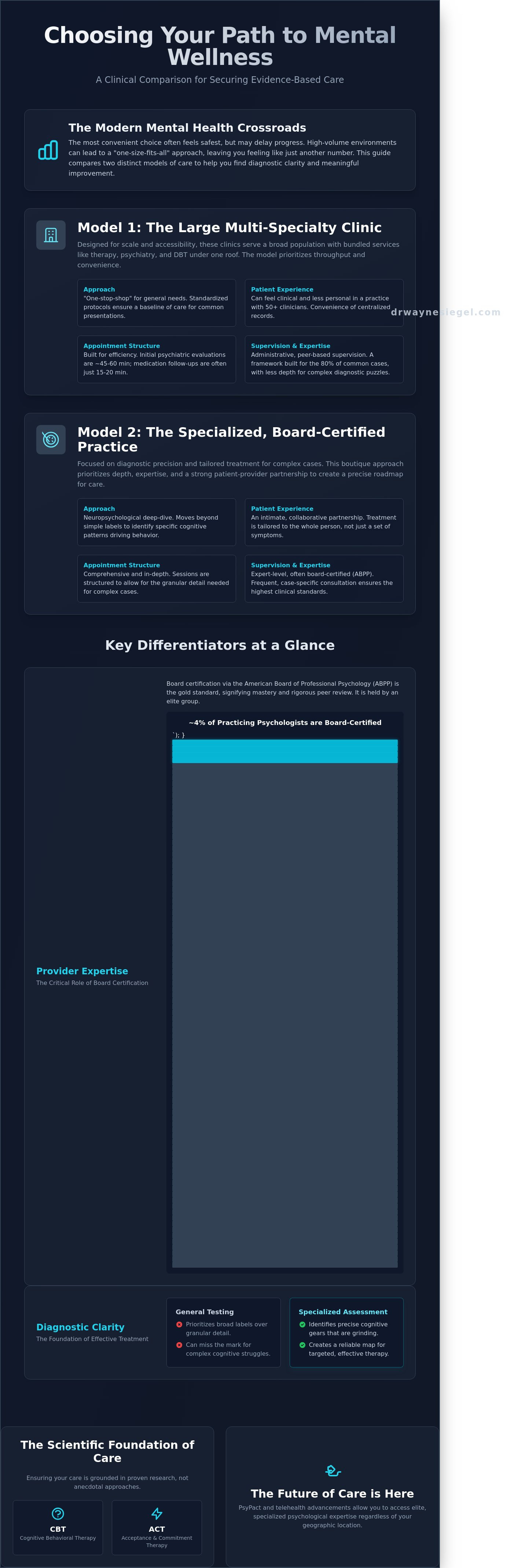
The multi-specialty behavioral health group practice is a cornerstone of modern mental health delivery. When we look at the associated clinic of psychology minneapolis clinic model, we see an administrative structure designed for scale. These institutions typically employ dozens of providers across multiple disciplines, including psychologists, social workers, and psychiatric nurse practitioners. This high-volume approach allows for a streamlined intake process where a central coordinator assigns patients to available providers based on insurance compatibility and general clinical needs. I've observed that this model prioritizes accessibility, ensuring that a patient can often see a provider within 7 to 10 days of their initial call.
Psychiatry and medication management are central to this framework. In a large-scale clinic, the proximity of therapists to prescribers aims to reduce communication gaps. However, the sheer volume of patients can lead to shorter appointment windows. For instance, initial psychiatric evaluations in these settings often last 45 to 60 minutes, with follow-up medication checks scheduled for 15 to 20 minutes. This efficiency supports broad access to care, but it requires a disciplined approach to patient tracking to ensure nothing is missed in the transition between therapy and medicine.
The Scope of Large-Scale Group Practices
Integrating therapy, psychiatry, and specialized programs like Dialectical Behavior Therapy (DBT) under one roof creates a "one-stop-shop" for general mental health. I often see patients who appreciate the convenience of having their records centralized in one system. The associated clinic of psychology minneapolis clinic serves a diverse population by offering these bundled services. Yet, institutional size can impact the patient-provider relationship. In a practice with over 50 clinicians, the experience may feel more clinical and less personal than in a smaller, boutique setting. It's a trade-off between the security of a large institution and the intimacy of a private partnership.
Evidence-Based Care in Institutional Settings
Large clinics maintain quality by implementing standardized treatment protocols. These frameworks ensure that every patient receives a baseline of care grounded in the principles of Clinical Psychology. While these protocols offer a safety net, maintaining deep niche expertise is a challenge. Generalist frameworks often prioritize breadth over the specialized depth found in independent practices. Supervision in a large group is usually administrative and peer-based, occurring in monthly meetings, whereas independent specialists often engage in more frequent, case-specific consultation. This structure provides a roadmap for the 80% of patients with common clinical presentations, though those with complex diagnostic puzzles may require a more tailored journey to find clarity.
Specialized Psychological Assessment vs. General Diagnostic Testing
Accurate diagnosis is the bedrock of effective mental health care. You wouldn't start a long journey without a reliable map; therapy works the same way. While the associated clinic of psychology minneapolis clinic offers a wide range of general services, specialized assessment provides the granular detail needed for complex cases. I focus on uncovering the specific cognitive patterns that drive behavior. This precision ensures that we aren't just treating a set of symptoms, but rather the whole person. Without diagnostic clarity, even the most well intentioned therapy can miss the mark.
The Rigor of Board-Certified Diagnostic Evaluations
Board certification through the American Board of Professional Psychology (ABPP) represents a level of expertise held by roughly 4% of practicing psychologists. This credential signifies that a practitioner has undergone rigorous peer review and demonstrated mastery in their specialty. In my practice, I use this expertise to move beyond simple labels. For an adult struggling with executive functioning, a specialized evaluation doesn't just result in an ADHD diagnosis. It identifies exactly where the cognitive gears are grinding; whether it's working memory, task initiation, or emotional regulation. This creates an actionable roadmap that empowers you to make real changes in your daily life. It's about moving from confusion to a clear, evidence based understanding of your own mind.
Psychological Testing as a Tool for Clinical Insight
General clinics often rely on brief screening tools like the PHQ-9 or GAD-7. These provide a surface level snapshot but lack the depth required for complex clinical pictures. In contrast, a formal diagnostic battery integrates data from 5 to 10 distinct standardized measures. This depth is essential when implementing evidence based protocols like Cognitive Behavioral Therapy (CBT) or Acceptance and Commitment Therapy (ACT). Precise data ensures that the intervention targets the root cause rather than just the surface symptoms.
I find that many patients come to me after years of general treatment that didn't quite fit. They often feel like they've failed therapy, when in reality, the therapy wasn't tailored to their specific neurocognitive profile. For complex or treatment-resistant cases, specialized assessment is the gold standard. It provides the "why" behind the struggle. If you've felt stuck in your progress at a high-volume facility like the associated clinic of psychology minneapolis clinic, a comprehensive evaluation might provide the missing piece of the puzzle. We look at the data to find your strengths, not just your challenges, so you can build a life that works with your brain instead of against it.
Evidence-Based Therapy: CBT and ACT Methodologies
I often meet individuals who feel discouraged because they've "tried therapy" in the past without seeing measurable results. This frustration frequently stems from a misunderstanding that all talk therapy is the same. In reality, the effectiveness of your care depends heavily on the specific framework your provider utilizes. When you look at the associated clinic of psychology minneapolis clinic model, you'll see a reliance on structured, research-backed methodologies. These aren't just clinical preferences; they're protocols proven to work through decades of rigorous study. I believe that providing you with a clear roadmap for your recovery starts with using the most reliable tools available today.
CBT: A Research-Grounded Approach to Change
Cognitive Behavioral Therapy (CBT) serves as the gold standard for many psychological challenges. It operates on the factual premise that our thoughts, feelings, and behaviors are inextricably linked. By identifying and modifying cognitive distortions, such as "catastrophizing" or "mind reading," we can directly improve emotional regulation. The data supporting this is substantial. A 2012 meta-analysis published in Cognitive Therapy and Research reviewed 106 separate studies and confirmed that CBT is exceptionally effective for anxiety, depression, and trauma recovery.
In my practice, I emphasize that CBT is more than just talking. It's a skill-building process. Research indicates that patients who engage in active cognitive restructuring can see a 50% to 75% reduction in symptoms within 12 to 20 sessions. This success requires a practitioner with specific training in evidence-based protocols. Without that precision, the therapy loses its clinical edge and becomes a series of supportive but ultimately stagnant conversations.
ACT: Building Psychological Flexibility
Acceptance and Commitment Therapy (ACT) represents a sophisticated evolution in modern care. While CBT focuses on changing the content of your thoughts, ACT focuses on changing your relationship with them. It centers on six core processes:
- Acceptance of difficult emotions
- Cognitive defusion (stepping back from thoughts)
- Being present in the moment
- Self as context (viewing yourself beyond your struggles)
- Identifying core values
- Committed action toward those values
A 2015 study in the journal Behavior Therapy demonstrated that ACT significantly increases psychological flexibility. This metric is a primary predictor of long-term resilience. I find that using ACT allows us to move beyond mere symptom reduction. We use your personal values as the metric for success. If you're living a life that feels meaningful and aligned with your principles, we've achieved something much more durable than a temporary lift in mood. When navigating the associated clinic of psychology minneapolis clinic options, it's vital to ensure your therapist understands how to apply these tools to your unique cognitive profile. I view every evaluation as a puzzle where these methodologies provide the pieces for a clearer, more stable future.
Choosing the Right Provider: A Comparison Framework
Selecting a mental health provider is a significant decision that impacts your long-term wellness and diagnostic clarity. When you evaluate an organization like the associated clinic of psychology minneapolis clinic, you're looking at a large-scale, multi-specialty model. These environments are designed for breadth. They provide a wide net of services under one roof, which is often helpful for families needing different types of therapy simultaneously. However, choosing the right fit requires a deeper look at the clinical philosophy and the administrative structure that supports your care.
Group Practice vs. Specialized Specialist
Large group practices offer a distinct advantage in medication management. Because they employ psychiatrists alongside therapists, the internal referral process is often streamlined. Recent data indicates that integrated care models can improve treatment adherence by 15% in general populations. This convenience is a strong draw for those managing chronic conditions that require frequent prescription adjustments.
In contrast, a specialized private practice prioritizes the depth of the expert-to-patient relationship. You won't navigate a complex phone tree or speak with a triage coordinator. You communicate directly with the specialist. This direct line ensures that your specific cognitive profile isn't lost in a large electronic filing system. When you seek a neuropsychological evaluation, you're looking for a roadmap. A specialist has the time to ensure that every turn on that map is backed by evidence-based research and a personal understanding of your history. Reputation in these smaller settings is built on meticulous, individual results rather than high-volume throughput.
The Value of Board Certification (ABPP)
Credentials provide a baseline, but board certification through the American Board of Professional Psychology (ABPP) signifies a higher tier of expertise. Currently, less than 5% of licensed psychologists in the United States hold this distinction. It's a voluntary, rigorous process that goes far beyond the standard state licensing requirements. To achieve ABPP status, a psychologist must submit their work for peer review and pass a demanding oral examination conducted by three senior experts in the field.
This certification is a reliable indicator of clinical excellence and ethical integrity. It means the provider's methods have been scrutinized and validated by the highest authorities in psychology. For a patient, this translates to a higher standard of care. You aren't just receiving an opinion; you're receiving a diagnostic conclusion that meets a nationally recognized gold standard. This level of rigor is essential when the goal is to move from a place of confusion to a place of actionable insight.
The Future of Care: Accessing Specialized Expertise Nationally
Patient care is no longer restricted by the physical distance between your home and a practitioner's office. While a local option like the associated clinic of psychology minneapolis clinic serves a specific community role, the modern healthcare landscape allows you to choose a specialist based on their clinical outcomes rather than their zip code. This shift toward national access ensures that individuals with complex cognitive or emotional needs can work with board-certified experts who utilize the most rigorous, evidence-based methodologies available today. Choosing a provider should be an intentional decision focused on expertise and the promise of a clear roadmap for your future.
Expanding Your Options with PsyPact
The Psychology Interjurisdictional Compact, or PsyPact, is a legal framework that currently allows licensed psychologists to practice telepsychology across 42 participating states. By consulting the PsyPact map, you can verify if your state is included in this growing network of care. This agreement removes traditional barriers; it allows you to maintain continuity of care even if you travel or relocate. Telehealth services under this framework adhere to strict privacy standards, including HIPAA-compliant platforms and encrypted data protocols. Finding a qualified PsyPact psychologist means you aren't limited to the generalists in your immediate vicinity. Instead, you can prioritize a provider who specializes in your specific cognitive profile or executive functioning needs. This borderless approach ensures that the quality of your diagnostic insight isn't dictated by your geography.
The Siegel Psychology Advantage
At Siegel Psychology Services, I integrate over 25 years of clinical experience to provide a steady guide through your mental health journey. My practice moves beyond the surface level of symptoms to uncover the "why" behind your specific challenges. This evidence-based approach is designed to improve daily quality of life through precise neuropsychological assessments and data-driven insights. Whether you're seeking clarity on a long-standing struggle or a new diagnosis, I provide a non-judgmental environment focused on your unique strengths. Choosing specialized care over a general model like the associated clinic of psychology minneapolis clinic allows for a deeper dive into the specific data that defines your life. My commitment is to deliver actionable meaning that empowers you to navigate your world with confidence. We focus on the whole person, ensuring that every assessment serves as a tool for practical, real-world improvement.
- Clinical Authority: Board-certified expertise focused on neuropsychological precision.
- Evidence-Based Clarity: Assessments grounded in the latest peer-reviewed research and diagnostic standards.
- National Reach: Secure, professional telehealth services available across state lines via PsyPact.
- Person-Centered Focus: A partnership that prioritizes your individual journey and long-term well-being.
Moving Toward Meaningful Diagnostic Insight
Choosing between a multi-specialty framework like the associated clinic of psychology minneapolis clinic and a specialized private practice depends on your need for targeted diagnostic depth. While general clinics offer broad utility, a specialized neuropsychological evaluation provides a precise roadmap for your cognitive health. I believe that effective treatment starts with an accurate "why" grounded in rigorous evidence. By utilizing proven methodologies like CBT and ACT, we move beyond simple labels to create actionable change in your daily life.
You deserve a partner who brings both clinical precision and a compassionate perspective to your journey. I've been board-certified by the American Board of Professional Psychology (ABPP) since 1996 and have spent over 25 years refining this specialized approach. Through my authorization with PsyPact, I provide these telehealth services across all participating states. It's about ensuring you don't just find an answer, but the right answer for your unique profile.
Your path to understanding starts here, and I'm ready to help you navigate it with confidence.
Frequently Asked Questions
What is the difference between a multi-specialty clinic and a private psychology practice?
A multi-specialty clinic houses diverse providers like psychiatrists and social workers under one roof, while a private practice typically focuses on a specialized niche. The associated clinic of psychology minneapolis clinic model emphasizes this integrated approach to provide broad access. I find that while large clinics offer variety, my private practice focuses on the depth of neuropsychological clarity for specific diagnostic puzzles to improve your daily life.
Do large clinics like the Associated Clinic of Psychology offer better insurance coverage?
Large clinics generally accept a wider range of insurance plans because they have the administrative resources to manage complex billing for multiple providers. Data from the Medical Group Management Association shows that clinics with over 10 providers participate in 40% more payer networks than solo practitioners. This makes a large associated clinic of psychology minneapolis clinic a practical choice for patients using Medicaid or specific employer-based HMOs who need affordable care.
Why should I look for a board-certified psychologist instead of a general therapist?
Board certification requires a rigorous peer-review process and specialized examinations that go far beyond the requirements for state licensure. I pursued board certification to ensure my patients receive the highest level of validated care. Only 4% of psychologists hold this distinction, which provides a roadmap for treatment based on the most current scientific research. This ensures your care is grounded in evidence rather than just clinical intuition.
What services are typically included in a diagnostic psychological evaluation?
A diagnostic evaluation typically includes a 60 minute clinical interview, standardized cognitive testing, and objective personality inventories. These tools allow me to build a comprehensive profile of your strengths and challenges. According to the American Psychological Association, using multiple assessment methods increases the accuracy of a diagnosis by 30% compared to a single interview. This process gives you the clarity needed to move forward with a focused plan.
Can I receive evidence-based therapy if my psychologist is in a different state?
You can receive evidence-based care from a psychologist in another state if they're part of the PSYPACT commission, which currently covers 40 states. This legal framework ensures that I can provide consistent care to my patients even when they travel or move. Research from 2022 confirms that the therapeutic alliance remains strong in remote settings. It's a reliable way to maintain your journey toward wellness without geographic barriers.
What is the difference between a psychiatrist and a clinical psychologist?
Psychiatrists are medical doctors who specialize in the biological and chemical aspects of mental health, often focusing on medication management. As a clinical psychologist, I hold a doctoral degree and focus on the psychological, social, and behavioral roots of distress. I use evidence-based assessments to help you understand the "why" behind your symptoms. This provides a level of insight that medication alone doesn't typically offer during a standard 15 minute checkup.
How do I know if I need a neuropsychological assessment for ADHD?
You should consider a neuropsychological assessment if your symptoms interfere with daily functioning and a standard clinical interview hasn't provided a clear answer. This process measures executive functions like working memory and inhibition with 95% statistical reliability. It's especially helpful because 50% of adults with ADHD have at least one co-occurring condition. I help you untangle these complex symptoms to create a precise roadmap for your personal and professional success.
Is telehealth as effective as in-person therapy for complex trauma or anxiety?
Telehealth is just as effective as in-person therapy for treating complex trauma and anxiety, according to a 2021 study in the Journal of Anxiety Disorders. I use secure platforms to deliver evidence-based protocols that produce measurable improvements in quality of life. Many patients feel safer processing difficult emotions from the comfort of their own homes. This comfort often makes it easier to engage deeply with the therapeutic process from the very first session.