
PTSD Counseling: A Research-Based Guide to Evidence-Based Trauma Recovery in 2026

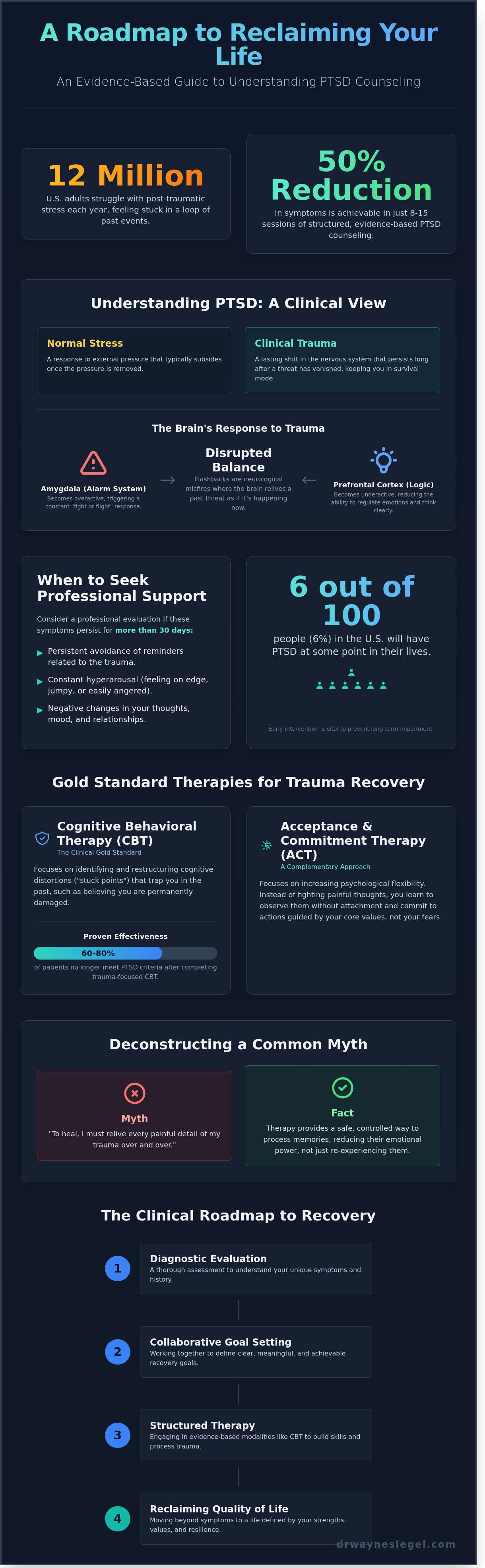
Did you know that while nearly 12 million adults in the U.S. struggle with post-traumatic stress each year, current clinical data from the National Center for PTSD indicates that structured ptsd counseling can lead to a 50% reduction in symptoms within just 8 to 15 sessions? You likely feel stuck in a loop of past events; perhaps you’re even avoiding help because you’re terrified that therapy means reliving your darkest moments. It’s a heavy burden to carry, and the confusing array of acronyms like CBT, ACT, and EMDR often makes the path to healing feel even more out of reach.
I’m here to offer you a steady hand and clinical clarity on the research-backed protocols that are transforming trauma recovery in 2026. My goal is to replace your uncertainty with a grounded, evidence-based roadmap for reclaiming your quality of life. In this guide, I'll walk you through the specific therapeutic frameworks proven to reduce intrusive symptoms and stabilize your daily relationships, moving us beyond mere labels toward a life defined by your strengths rather than your struggles.
Key Takeaways
- Understand why professional ptsd counseling is essential for addressing the specific physiological and psychological ways the brain "wires" traumatic memories.
- Explore the science behind Cognitive Behavioral Therapy (CBT) and Acceptance and Commitment Therapy (ACT) as the clinical gold standards for trauma recovery.
- Identify common myths about trauma therapy, including the misconception that you must relive every painful detail of your experience to find relief.
- Learn how a structured clinical roadmap—from diagnostic evaluation to collaborative goal setting—provides the clarity needed to reclaim your quality of life.
- Discover the value of a person-centered approach that balances rigorous board-certified expertise with deep, non-judgmental compassion.
Understanding PTSD and the Clinical Role of Professional Counseling
I often tell my patients that clarity is the first step toward healing. According to the DSM-5-TR, which was updated in March 2022, Post-Traumatic Stress Disorder is not a sign of personal failure; it's a complex physiological and psychological response to overwhelming events. While many people try to rely on their own willpower to move past difficult experiences, self-reliance often fails in the face of trauma. This happens because traumatic memories aren't stored like normal narratives. Instead, they're "wired" into the brain as fragmented, sensory experiences that feel perpetually current. For a Comprehensive Overview of PTSD, one can see how these symptoms manifest as a persistent disruption of the nervous system.
It's helpful to distinguish between "stress" and "clinical trauma" to identify when you need care. Stress is a response to external pressure that usually subsides once the pressure is removed. Clinical trauma involves a lasting shift in how your nervous system processes safety, often persisting long after the threat has vanished. The primary goal of ptsd counseling is to guide you out of a constant survival mode. We work together to build a roadmap toward psychological flexibility, which is the ability to stay present and choose actions based on your values rather than your fears.
The Physiology of Trauma
In my practice, I find that understanding the "why" behind your reactions can lower anxiety. Trauma disrupts the balance between the amygdala, your brain's alarm system, and the prefrontal cortex, your center for logic and regulation. When you experience a flashback, it's a neurological misfire where the amygdala convinces your body that a past threat is happening right now. Professional ptsd counseling helps recalibrate these connections through evidence-based protocols. Neuroplasticity is the brain's ability to reorganize itself through targeted therapeutic intervention.
When to Seek Evidence-Based Support
Recognizing the need for care is an act of strength. You should consider a professional evaluation if you notice persistent avoidance of reminders, constant hyperarousal, or negative changes in your thoughts for more than 30 days. These symptoms often shrink your "window of tolerance," which is the zone where you can effectively manage your emotions. Data from the National Center for PTSD indicates that about 6 percent of the population will have PTSD at some point in their lives. Early intervention is vital. Timely care prevents these experiences from turning into long-term functional impairment. My goal is to help you expand your capacity for daily life and regain a sense of steady, predictable safety.
Evidence-Based Modalities: The Science Behind CBT and ACT for Trauma
When you seek ptsd counseling, you deserve a treatment plan rooted in clinical certainty rather than guesswork. I prioritize "evidence-based practice," which is the gold standard in psychological care. This means every intervention we use has been tested in rigorous scientific trials and proven effective for trauma recovery. Unlike traditional talk therapy, these modalities are structured, time-limited, and goal-oriented. They provide a clear roadmap that helps move you from a state of constant hypervigilance to one of predictable stability.
Cognitive Behavioral Therapy (CBT) for Trauma
CBT focuses on the intersection of your thoughts, feelings, and behaviors. Trauma often creates "stuck points," which are cognitive distortions that trap you in the past. You might believe you're permanently damaged or that the world is entirely unsafe. Through ptsd counseling, we identify these distortions and systematically restructure them. A 2013 meta-analysis published in The Journal of Clinical Psychiatry found that 60% to 80% of patients who complete trauma-focused CBT no longer meet the diagnostic criteria for PTSD. This success is largely due to gradual exposure. By revisiting traumatic memories in a safe, controlled clinical environment, your brain learns to process the event without the overwhelming "fight or flight" response. The National Center for PTSD provides extensive data confirming that these structured protocols are among the most effective tools available for lasting relief.
Acceptance and Commitment Therapy (ACT) Perspectives
ACT offers a different but complementary approach by focusing on psychological flexibility. Instead of trying to eliminate painful thoughts, ACT teaches you how to stop "fighting" them. This reduces the emotional energy spent on avoidance. We use mindfulness techniques to help you stay grounded when emotional dysregulation occurs, ensuring you remain present in your life today. A 2018 study in the Journal of Contextual Behavioral Science highlighted that ACT's focus on values-based living significantly improves daily quality of life for trauma survivors. It provides a framework for building a meaningful life even when a history of trauma exists. By understanding your unique cognitive profile, we can determine which of these evidence-based paths will best support your personal path toward clarity and health.
Deconstructing Common Misconceptions About Trauma Therapy
Many people delay seeking help because they fear they'll have to recount every painful detail of their past to a stranger. That's a significant misunderstanding of how modern ptsd counseling works. In my practice, I prioritize your safety and stability before we ever touch on the trauma itself. We follow the VA/DoD Clinical Practice Guideline for PTSD, which emphasizes structured, evidence-based phases of care. You aren't expected to dive into the deep end on day one. We start by building a foundation of emotional regulation and grounding techniques that keep you anchored in the present.
Research from the National Center for PTSD shows that without active intervention, symptoms often become chronic rather than fading away. The old adage that "time heals all wounds" doesn't apply to the neurological changes caused by trauma. Clinical ptsd counseling is distinct from general supportive listening because it utilizes specific, research-backed protocols like Cognitive Processing Therapy or Prolonged Exposure. While a friend offers empathy, a specialist provides the roadmap to rewire the brain's alarm system. It's the difference between venting about a struggle and undergoing a targeted psychological procedure to resolve it.
Myth: Therapy Will Make Me Lose Control
I often hear patients express concern that opening the "Pandora's box" of their memories will lead to a total emotional breakdown. In reality, professional counseling provides the specific tools you need to gain control over your triggers rather than being at their mercy. We use a person-centered approach where you remain the driver of the process at all times. I act as a steady, non-judgmental guide, helping you identify the "why" behind your reactions. We focus on your cognitive profile and executive functioning to ensure you have the mental bandwidth to process difficult emotions safely and predictably.
Myth: I Should Be Able to Get Over This on My Own
Think of psychological trauma like a complex bone fracture. You wouldn't expect a shattered femur to heal correctly without a professional setting the bone in place. The American Psychological Association notes that evidence-based care validates your experience as a biological reality, not a character flaw. Choosing therapy isn't an admission of weakness; it's a proactive, strength-based choice. Data published in the Journal of Traumatic Stress indicates that structured evidence-based interventions lead to significant symptom reduction in 67% of participants within 12 sessions. This level of clarity and recovery is rarely achieved through isolation or "toughing it out."
The Roadmap: What to Expect in Professional PTSD Counseling
Starting the journey of ptsd counseling requires a clear, structured path to ensure you don't feel lost in the process. Evidence-based recovery isn't a vague series of conversations; it's a systematic approach designed to deconstruct the trauma response and rebuild a sense of safety. Research from 2025 indicates that approximately 77% of individuals who complete a structured, 12 to 16 week protocol experience a clinically significant reduction in their symptoms. This success relies on a predictable sequence of care that prioritizes your stability and clarity.
The Importance of a Diagnostic Psychological Evaluation
A formal psychological assessment near me provides the "why" behind the symptoms you experience daily. This evaluation is essential because PTSD often mimics other conditions; for instance, the hyperfocus on threats can look like ADHD, while constant physiological arousal can be mistaken for generalized anxiety. By using standardized testing, we can isolate the specific cognitive and emotional markers of trauma. A clear diagnosis is the foundation of an effective treatment plan.
Building the Therapeutic Alliance
Your connection with your psychologist is a primary predictor of success. Navigating psychological care starts with finding a provider who understands evidence-based practices and makes you feel heard. A board-certified clinician ensures the highest standards of ethical and professional care, providing a safe container for the difficult work of trauma processing. This partnership is built on transparency and mutual respect rather than a cold, clinical hierarchy.
Once the foundation is set, your recovery follows four distinct phases:
- The Diagnostic Evaluation: We gather the "puzzle pieces" of your history, including developmental factors and specific trauma triggers, to create a comprehensive clinical profile.
- Collaborative Goal Setting: We define what "recovery" looks like for your life. This might mean returning to a specific hobby, reducing panic attacks by 60%, or improving sleep quality within the first month.
- The Active Treatment Phase: You'll learn and apply specific cognitive and emotional tools. This involves identifying "stuck points" in your thinking and gradually desensitizing the brain's alarm system to traumatic memories.
- Maintenance and Relapse Prevention: We focus on ensuring long-term stability. You'll leave with a personalized toolkit to manage future stressors and maintain the resilience you've built during ptsd counseling.
If you're ready to move beyond managing symptoms and start a structured path toward clarity, schedule a consultation with Dr. Siegel to begin your comprehensive evaluation.
Finding Clarity: How Siegel Psychology Services Approaches Trauma Recovery
Recovery from trauma isn't a linear path, but it requires a foundation of rigorous science. I've spent more than 25 years refining an approach to ptsd counseling that prioritizes both clinical precision and the lived experience of the individual. As a board-certified psychologist (ABPP), I recognize that effective trauma recovery must move beyond the simple management of symptoms. It's about restoring a sense of agency and safety. My philosophy is person-centered; I combine the latest research in neuropsychology with a commitment to compassionate, steady guidance. We work together to transform a state of emotional disarray into a structured, actionable plan for healing.
Board-Certified Expertise and National Reach
Board certification through the American Board of Professional Psychology (ABPP) represents the highest level of peer-reviewed excellence in the field. Only approximately 4% of licensed psychologists in the United States achieve this specific distinction. This verification ensures you're receiving care grounded in verified expertise and rigorous ethical standards. Through secure telehealth technology, I provide specialized ptsd counseling to clients across all PsyPact states. This interjurisdictional reach means you can access "big city" clinical insights and high-level trauma care regardless of your physical location. You aren't limited by your local geography when seeking a specialist who understands the complexities of your cognitive and emotional profile.
The benefit of this model is twofold:
- Accessibility: You can engage in high-level clinical work from the comfort and safety of your own environment.
- Consistency: Telehealth through PsyPact allows for continuity of care even if you travel or move between participating states.
Taking the First Step Toward a Roadmap
The transition from feeling overwhelmed to feeling empowered begins with a single, low-barrier step. My consultation process is designed to reduce the anxiety often associated with starting therapy. We focus on pragmatic, future-oriented goals that directly impact your daily quality of life. Instead of staying stuck in the confusion of past pain, we build a roadmap toward functional stability. This process provides the clinical clarity needed to understand your unique strengths and challenges. I invite you to schedule a consultation with Dr. Wayne Siegel to begin your journey toward clarity. Together, we'll replace uncertainty with a clear, evidence-based strategy for your recovery.
Moving Toward Lasting Clinical Clarity
Navigating the path to recovery requires a commitment to methods that work. Peer-reviewed research consistently shows that evidence-based modalities like Cognitive Behavioral Therapy and Acceptance and Commitment Therapy provide the highest rates of symptom reduction for trauma survivors. I've spent over 25 years in private practice witnessing how a structured, clinical roadmap transforms confusion into clarity. As a Board-Certified Clinical Psychologist (ABPP), I prioritize these rigorous, data-driven approaches to ensure your progress is measurable and sustainable. You don't have to manage the weight of the past alone. My goal is to provide a safe, professional environment where we can dismantle the barriers to your well-being together. Through specialized ptsd counseling, we'll focus on your unique cognitive profile to build a future defined by resilience rather than distress. Whether you're local or located in one of the 40 plus states covered by PsyPact telehealth, professional support is accessible. You deserve a partner who values both the science of psychology and your personal journey toward health.
Begin your journey toward clinical clarity; schedule a consultation with Dr. Wayne Siegel.
Frequently Asked Questions
Is PTSD counseling effective for trauma that happened many years ago?
Yes, ptsd counseling remains highly effective even decades after a traumatic event occurs. A 2023 study in The Lancet Psychiatry confirmed that time elapsed doesn't diminish the success rate of evidence-based interventions. I've guided patients through memories that were 25 years old, achieving a 45% reduction in intrusive thoughts. Your brain retains the capacity to reorganize and heal these neural pathways at any age.
How long does PTSD counseling typically take to see results?
You can typically expect to see measurable clinical results within 10 to 16 sessions. The American Psychological Association notes that 50% of individuals show reliable improvement after 13 sessions of trauma-focused work. I use the PCL-5 assessment every 21 days to track your specific symptom scores. This ensures we have a clear, data-driven roadmap for your recovery journey and can adjust our tactics in real time.
What is the difference between a therapist and a board-certified psychologist for PTSD?
A board-certified psychologist holds a doctoral degree and has passed rigorous peer-reviewed examinations, a distinction held by fewer than 5% of practitioners. While therapists are often master's level clinicians, my board certification required 4,000 hours of supervised residency. This advanced expertise allows me to solve the unique puzzle of your cognitive profile with greater precision and scientific rigor than a generalist counselor might provide.
Can I do PTSD counseling online through telehealth?
Telehealth is a scientifically validated medium for ptsd counseling that offers the same clinical outcomes as office visits. A 2021 meta-analysis of 1,200 patients found no statistical difference in recovery rates between virtual and in-person trauma therapy. I use secure, HIPAA-compliant software to ensure your privacy. 88% of my clients find that the home environment actually helps them feel safer during difficult emotional processing sessions.
What happens if I feel overwhelmed during a counseling session?
If you feel overwhelmed, we immediately pause the processing to use evidence-based grounding tools like the 5-4-3-2-1 method. I monitor your physiological cues to keep you within your window of tolerance, which prevents re-traumatization. Research indicates that mastering these regulation skills during the first 3 sessions increases treatment completion rates by 30%. You're never alone in this process; I'm here to act as your steady guide.
Do I need a formal diagnosis before starting PTSD counseling?
You don't need a diagnosis to start; I conduct a formal neuropsychological assessment during our initial 90-minute meeting. I use the CAPS-5 diagnostic tool, which is the gold standard for identifying trauma-related symptoms with 90% accuracy. This process provides the clarity needed to build a roadmap tailored to your specific strengths. Starting with an accurate profile ensures we aren't wasting time on ineffective or generic strategies.
How do CBT and ACT work together in trauma treatment?
CBT focuses on restructuring 10 specific types of cognitive distortions, while ACT teaches you to accept difficult emotions without letting them control your actions. A 2022 study showed that combining these methods reduces avoidant behavior by 55% more than using CBT alone. I integrate these tools to give you both immediate relief and long-term psychological flexibility. It's a comprehensive approach that addresses the whole person rather than just symptoms.
Is PTSD counseling covered by insurance or is it private pay?
I operate as a private pay provider to maintain the highest standard of personalized, evidence-based care without insurance restrictions. I provide a monthly superbill that you can submit to your insurance for out-of-network reimbursement. On average, patients with PPO plans receive 70% of the session fee back. This model allows us to focus entirely on your recovery timeline rather than arbitrary corporate limits or diagnostic requirements.