
Online Trauma-Informed Therapist: A Research-Based Guide to Evidence-Based Recovery in 2026

Why does traditional talk therapy often feel like it's circling the surface while your nervous system remains stuck in a state of high alert? If you've felt that standard sessions don't address the physiological depth of your experiences, you aren't alone. Data from early 2026 indicates that over 35% of all outpatient mental health visits are now conducted via teletherapy, yet many patients still struggle to find a specialized online trauma-informed therapist who uses verified, research-backed protocols. I recognize the hesitation you might feel about the safety and efficacy of discussing your history through a video connection.
You deserve a clear roadmap that moves beyond general support toward clinical resolution. This guide will help you gain the clarity needed to find a practitioner who utilizes evidence-based protocols to support your recovery across PsyPact states. We'll explore how to establish a safe therapeutic partnership that effectively reduces symptoms of hypervigilance and avoidance. By understanding the current landscape of specialized care, you can transition from feeling stuck to experiencing a structured path forward in your healing journey.
Key Takeaways
- Learn why the clinical shift from "what is wrong with you" to "what happened to you" is the essential foundation for a qualified online trauma-informed therapist.
- Discover the specific research-validated protocols that ensure trauma processing remains rigorous and effective within a structured virtual environment.
- Understand why Board Certification (ABPP) serves as the gold standard when evaluating a psychologist’s expertise in complex trauma recovery and evidence-based care.
- Gain clinical clarity on the digital safety protocols and containment strategies that ensure your therapeutic environment remains secure during moments of dysregulation.
- Identify how a personalized roadmap integrating ACT and CBT can move you beyond symptom management toward a measurable improvement in your daily quality of life.
What is an Online Trauma-Informed Therapist?
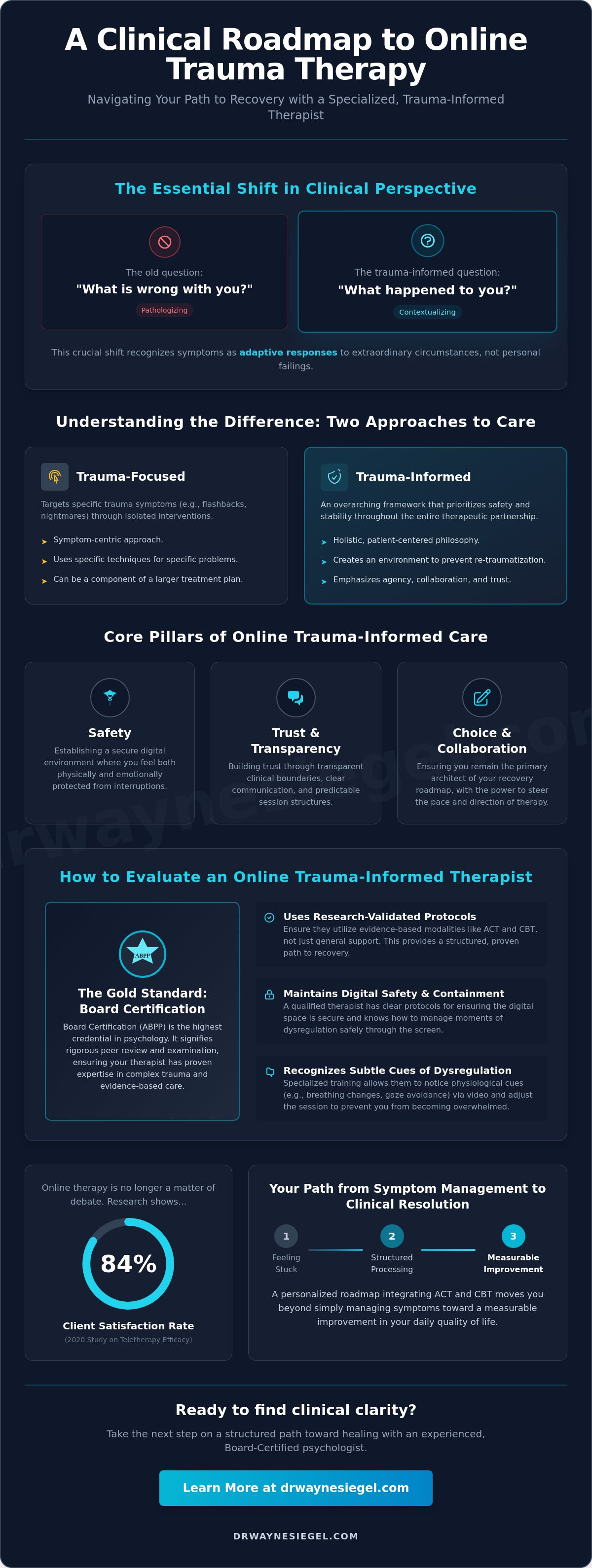
An online trauma-informed therapist is a specialized psychologist who integrates a deep understanding of trauma’s pervasive impact into every facet of the therapeutic process. This approach represents a fundamental shift in clinical philosophy; I move away from the pathologizing question of "What is wrong with you?" and instead ask, "What happened to you?" By centering your history as the essential context for your current struggles, I can help you build a more accurate and compassionate cognitive profile. This transition in perspective is not just a semantic change; it's a clinical foundation that recognizes your symptoms as adaptive responses to extraordinary circumstances.
It's vital to distinguish between being trauma-focused and being trauma-informed. A trauma-focused approach typically targets specific symptoms like nightmares or flashbacks through isolated interventions. In contrast, being trauma-informed creates an overarching environment of care that prioritizes your safety and stability throughout our entire partnership. This distinction ensures that the very process of seeking help doesn't become a source of additional stress or re-traumatization. When I work with you, the goal isn't just to treat a diagnosis, but to provide a secure framework where you feel heard and understood without being overwhelmed.
The Five Pillars of Trauma-Informed Care
In my practice, I prioritize three core pillars to ensure the digital space is as effective as an in-person office. First, safety involves establishing a secure digital environment where you feel both physically and emotionally protected from external interruptions. Second, trustworthiness is built through transparent clinical boundaries and predictable session structures, which help reduce the anxiety of the unknown. Finally, choice and collaboration ensure you remain the primary architect of your recovery roadmap. I act as your steady guide, but you retain the power to steer the pace and direction of our work.
Why Specialization Matters in Trauma Recovery
Choosing an online trauma-informed therapist is a critical step in preventing re-traumatization during sessions. Specialized practitioners are trained to recognize subtle physiological cues of dysregulation, such as changes in breathing patterns or gaze avoidance, even through a video screen. I use these insights to pause or adjust the session before your nervous system becomes overwhelmed. Trauma-informed care is a clinical framework that prioritizes the patient's sense of agency above all else. This specialized lens transforms therapy from a clinical obligation into a collaborative journey toward clarity and a higher daily quality of life.
Evidence-Based Modalities for Online Trauma Recovery
Evidence-based recovery isn't a generic promise; it's a clinical requirement. Research confirms that the effectiveness of remote delivery for trauma treatment is no longer a matter of debate. A 2020 study reported that 84% of clients rated their teletherapy experience as "good" or "excellent," showing that the therapeutic alliance remains strong through a screen. When considering is online therapy right for you?, it's essential to prioritize practitioners who utilize research-validated protocols. These structured models ensure that your recovery isn't based on guesswork, but on methods proven to reduce the physiological and psychological burden of trauma.
Clinical data suggests that telehealth outcomes for trauma treatment, specifically for PTSD, are comparable to in-person care. This parity relies on the therapist’s ability to maintain protocol fidelity while adapting to the digital environment. Board certification (ABPP) serves as a critical indicator that your online trauma-informed therapist possesses the rigorous training required to navigate these complex modalities safely. This credential signifies that the psychologist has undergone extensive peer review and examination, ensuring they can provide high-level care across PsyPact states. I view these modalities as the tools we use to solve the unique puzzle of your experience.
Cognitive Behavioral Therapy (CBT) for Trauma
CBT focuses on the powerful triad of thoughts, feelings, and behaviors. By utilizing structured ptsd counseling techniques, we can begin to dismantle the maladaptive core beliefs often forged in the aftermath of traumatic events. In a controlled remote environment, I apply exposure-based principles to help you manage intrusive thoughts without becoming overwhelmed. This process provides a measurable way to track your progress toward recovery, moving beyond mere symptom management to achieve true cognitive clarity. It's a step-by-step progression designed to restore your sense of control.
Acceptance and Commitment Therapy (ACT)
ACT offers a person-centered roadmap for long-term emotional stability. Rather than fighting the presence of a traumatic history, we work together to build psychological flexibility. This involves acknowledging difficult memories while moving toward a value-driven life. ACT helps reduce the impact of trauma-related avoidance, which is often a primary barrier to daily functioning. It's a pragmatic approach that prioritizes your daily quality of life over simple symptom suppression. If you're seeking a structured path toward healing, I invite you to learn more about my approach to individual psychotherapy.
How to Evaluate an Online Trauma-Informed Therapist
Finding the right professional shouldn't be based on a search for the fastest response or a vague sense of "vibes." When you're looking for an online trauma-informed therapist, the primary indicator of clinical excellence is Board Certification through the American Board of Professional Psychology (ABPP). This credential represents the gold standard of expertise, ensuring that the psychologist has undergone rigorous peer review and demonstrated a high level of competency in their specialty. It's a level of scrutiny that goes far beyond basic state licensing, providing you with a necessary layer of clinical security and peace of mind.
A deep understanding of What is Trauma-Informed Therapy? involves more than just a sympathetic ear. You should look for a practitioner who utilizes specific, research-backed protocols and can clearly articulate how they adapt these models for a digital space. During a consultation, don't hesitate to ask about their specific training in trauma-informed care. A qualified professional will prioritize a person-centered approach, focusing on your individual strengths and goals rather than just assigning a diagnostic label. This collaborative spirit is essential for building a safe, effective therapeutic partnership that respects your agency.
Regulatory Safeguards: PsyPact and State Licensing
As of February 2026, the regulatory environment for telehealth has become more structured to protect consumers. It's essential to understand how psypact states influence your care. PsyPact is an interstate compact that allows licensed psychologists to practice telepsychology across state lines in participating jurisdictions. This framework ensures that your therapist meets high national standards for education and ethical practice, regardless of your physical location. You can verify a psychologist’s credentials through national databases like the ASPPB to confirm they're authorized to provide services in your area, ensuring you receive regulated, high-tier care.
The Clinical Interview and Assessment Process
I believe that a comprehensive psychological assessment near me, even when conducted online, is the essential first step in your recovery. This diagnostic evaluation provides the data necessary to create a personalized recovery roadmap tailored to your unique cognitive and emotional profile. A thorough assessment identifies the "why" behind your challenges, allowing us to move beyond surface-level symptoms. I utilize standardized tools to measure your progress objectively, ensuring that our work remains focused on achieving tangible improvements in your daily quality of life.
Addressing Objections: Is Online Trauma Therapy Safe and Effective?
A common misconception suggests that trauma recovery requires a physical presence for emotional containment. I understand the anxiety about discussing sensitive history via video, but the data tells a different story. A 2018 study found that 91% of clients reported high satisfaction with teletherapy services. In 2020, research confirmed that 84% of clients rated their experience as "good" or "excellent," specifically highlighting the strength of the therapeutic alliance. The bond between patient and provider isn't limited by a screen; it's built on mutual trust and the clinician's expertise.
When you work with a specialized online trauma-informed therapist, safety isn't left to chance. I establish a formal "Safety Plan" before we begin any trauma-focused work. This protocol outlines exactly what we'll do if the connection drops or if you experience significant dysregulation during a call. My training allows me to monitor subtle physiological shifts, such as changes in your breathing or muscle tension, ensuring I can help you stabilize in real time. This structured approach provides the same level of emotional containment you'd expect in a physical office.
Creating a Safe Physical Environment for Your Sessions
Your physical surroundings at home are just as important as the digital ones. To secure your privacy, I recommend these actionable steps:
- Use noise-canceling headphones to ensure our conversation remains private.
- Place "grounding" tools, like a weighted blanket or a textured sensory object, within easy reach.
- Ensure you're in a room where you won't be interrupted by family or pets.
I always leave time at the end of our sessions to help you ground and stabilize before you return to your daily life. This careful pacing prevents you from feeling "opened up" and then left without support. If you're ready to explore a structured path toward healing, I invite you to schedule a professional consultation to discuss your specific needs.
Technological Security as an Extension of Care
Public platforms like Skype or FaceTime are insufficient for trauma-informed care because they lack the necessary encryption to protect your sensitive narratives. I utilize professional-grade, HIPAA-compliant platforms designed specifically for healthcare. This ensures that our communication channels remain encrypted and secure from end to end. Digital security is the modern foundation of the 'safe space' in therapy. By prioritizing these technical safeguards, I protect the integrity of your journey and maintain the clinical boundaries essential for your recovery.
The Path to Clinical Clarity with Siegel Psychology Services
Building a therapeutic partnership with an online trauma-informed therapist requires a foundation of clinical rigor and demonstrated expertise. I bring over 25 years of experience as a board-certified clinical psychologist to our sessions, ensuring your recovery is guided by the highest standards in the field. My approach moves beyond surface-level symptom management to uncover the "why" behind your struggles. By integrating research-driven protocols like Cognitive Behavioral Therapy (CBT) and Acceptance and Commitment Therapy (ACT), I help you navigate complex emotional landscapes with precision and care. Through the PsyPact interstate compact, I provide this specialized care to patients across the majority of the United States, ensuring that geographic location is no longer a barrier to expert-level psychological support.
A Roadmap Toward Meaningful Change
I view every clinical interaction as a unique puzzle to be solved with meticulous attention to detail. Our work follows a logical, step-by-step progression that moves from the initial identification of a struggle toward the gain of actionable insight. This roadmap is designed to provide you with a clearer picture of your life, moving beyond diagnostic labels to find functional meaning. My goal is to improve your daily quality of life, helping you reclaim a sense of agency and purpose. I balance clinical authority with warm, approachable empathy, creating a stable environment where you can explore difficult history without fear of judgment. This steady rhythm of care is designed to lower the barrier of anxiety often associated with trauma recovery, positioning me as a reliable guide in your healing journey.
Beginning Your Journey to Recovery
The first step toward recovery is establishing a secure clinical fit. I invite you to schedule a professional consultation, which serves as a quiet, focused dialogue to discuss your history and goals. During this time, we'll determine if my specialized approach aligns with your specific needs. If we move forward, we'll begin with a thorough diagnostic evaluation process. This assessment isn't just about identifying symptoms; it's about creating a comprehensive cognitive and emotional profile that informs every subsequent session. This structured start ensures that our partnership is built on data and clarity rather than guesswork. I am committed to uncovering your strengths and providing the tools necessary for long-term stability.
Contact Siegel Psychology Services to begin your evidence-based recovery journey.
Reclaiming Your Daily Quality of Life
Recovery is a deliberate process that requires clinical precision and a secure therapeutic partnership. We've explored how evidence-based protocols like CBT and ACT provide a structured roadmap for healing; these models move beyond surface symptoms to address the root of your challenges. With research from 2020 confirming that 84% of teletherapy users report positive outcomes, the efficacy of remote care is well-established. Your choice of an online trauma-informed therapist should be grounded in verifiable expertise, such as board certification and a commitment to whole-person care.
I offer 25+ years of experience as a Board-Certified clinical psychologist (ABPP) and provide national coverage through PsyPact states to ensure you receive high-tier care regardless of your location. You don't have to navigate this complex emotional landscape alone. It's time to transition from feeling stuck to gaining actionable insight into your cognitive and emotional profile. Schedule a Consultation with Dr. Wayne Siegel to begin your journey toward insight and lasting clarity. Healing is possible, and a research-driven path can help you regain the agency you deserve.
Frequently Asked Questions
Can an online trauma-informed therapist diagnose PTSD?
Yes, a licensed psychologist can provide a formal diagnosis of Post-Traumatic Stress Disorder (PTSD) through a remote diagnostic psychological evaluation. I utilize standardized assessment tools and clinical interviews to establish an accurate cognitive and emotional profile. This process ensures that your treatment plan is built on a foundation of clinical clarity rather than a general set of symptoms.
How do I know if my therapist is truly trauma-informed?
You can verify a therapist's depth of expertise by looking for board certification (ABPP) and specific training in evidence-based trauma protocols. A qualified online trauma-informed therapist will clearly explain their safety containment strategies and how they adapt models like CBT for the digital space. They should prioritize your sense of agency and focus on the "why" behind your current challenges.
Is online therapy as effective as in-person therapy for trauma?
Clinical research confirms that telehealth outcomes for trauma recovery are comparable to traditional in-person sessions. A 2020 study reported that 84% of clients rated their teletherapy experience as "good" or "excellent." The effectiveness relies on the clinician's ability to maintain protocol fidelity and recognize subtle physiological cues of dysregulation through professional-grade video platforms.
What should I do if I feel overwhelmed during an online session?
We utilize a pre-established safety plan that includes specific grounding techniques to help you stabilize in real time. If you feel overwhelmed, I will guide you through sensory exercises or breathing adjustments to regulate your nervous system before we proceed. This structured approach ensures that you remain within your "window of tolerance" and prevents the session from becoming a source of re-traumatization.
Does insurance cover online trauma-informed therapy?
Yes, the Affordable Care Act mandates that health insurance plans cover mental health care, and many states have enacted telehealth parity laws. As of early 2026, the average copay for an online therapy session with insurance typically ranges between $20 and $50. It's always best to verify your specific plan's coverage for out-of-network specialized care before beginning your journey.
What is the difference between a trauma counselor and a trauma-informed psychologist?
The primary difference lies in the level of clinical training and the scope of services provided. A psychologist holds a doctoral degree (Ph.D. or Psy.D.) and is qualified to perform complex diagnostic psychological evaluations and ADHD assessments. This advanced education allows for a deeper integration of neuropsychological insights into your recovery roadmap compared to general counseling approaches.
Can I see an online therapist if they are located in a different state?
Yes, you can receive care from a psychologist in another state if they participate in the PsyPact interstate compact. As of February 2026, PsyPact allows regulated professionals to practice telepsychology across participating state lines, providing you with access to specialized experts regardless of your physical location. This framework ensures that your therapist meets high national standards for ethical and legal practice.
How long does trauma-informed therapy typically take to show results?
The timeline for recovery varies, but structured evidence-based protocols often show measurable progress within 12 to 20 sessions. We use standardized tools to track your improvements in daily quality of life and symptom reduction throughout our partnership. While the journey is unique for everyone, the focus remains on gaining actionable insight and achieving long-term emotional stability at a pace that feels respectful.