
What Is Hidden Depression? Understanding the Reality of High-Functioning Distress

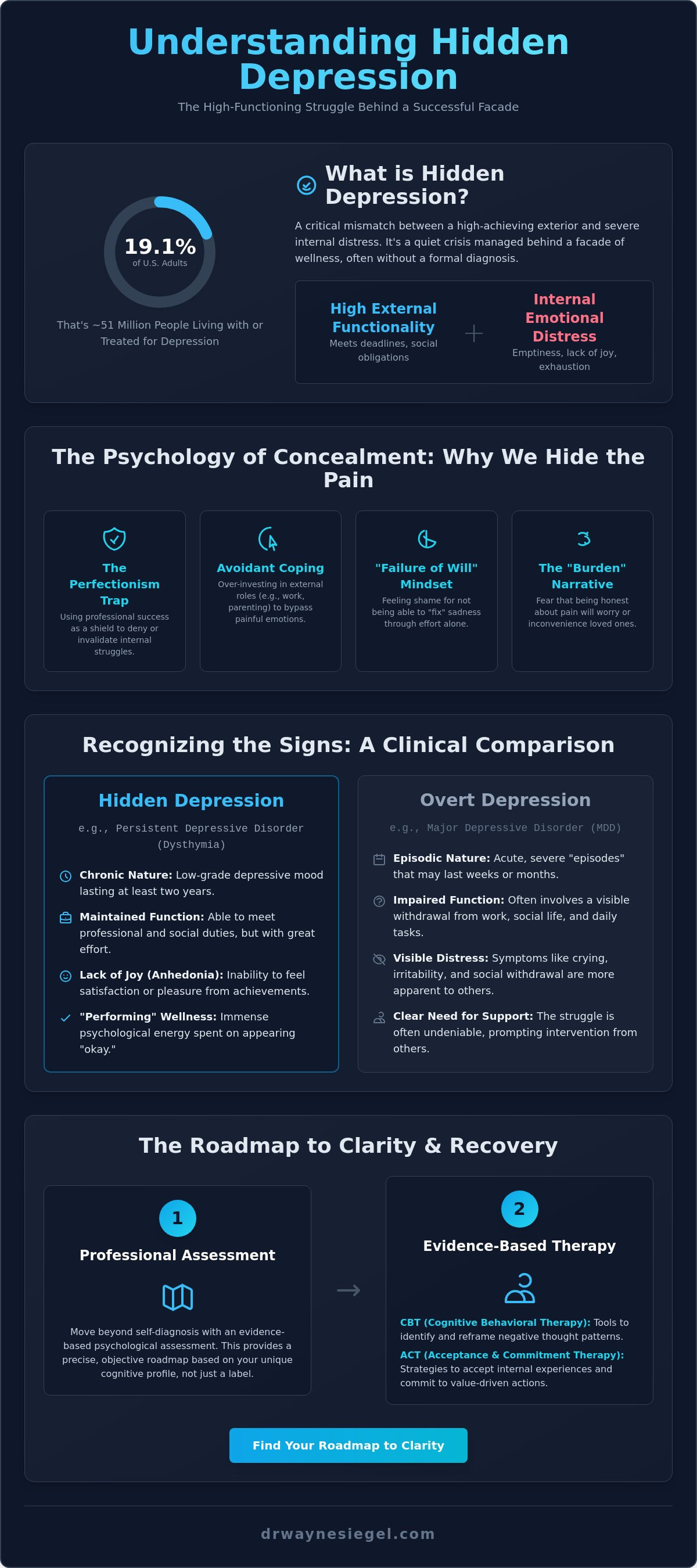
In the first quarter of 2026, 19.1% of U.S. adults reported currently living with or being treated for depression, yet many of these individuals continue to meet every professional and social obligation without a visible crack in their armor. This phenomenon often leads people to ask: what is hidden depression? While the DSM-5-TR, published in March 2022, doesn't list this as a formal diagnosis, it's a very real descriptive state for those who manage high levels of achievement while carrying a heavy internal burden. You may feel like a fraud for struggling when your life looks successful on paper; perhaps you're simply exhausted from the daily performance of wellness.
I understand it's difficult to seek help when you fear your struggle isn't real enough. This article provides the validation you've been looking for by clarifying the distinction between transient sadness and high-functioning depressive states. We'll explore why these symptoms often go unnoticed by others and how evidence-based psychological assessments can offer a precise roadmap for your recovery. By moving beyond labels and looking at your unique cognitive profile, we can find the clarity you need to improve your daily quality of life.
Key Takeaways
- Gain a clinical understanding of what is hidden depression by identifying how high achievement often coexists with the internal symptoms of Persistent Depressive Disorder.
- Uncover the psychological drivers behind the "perfectionism trap" and how avoidant coping strategies can unintentionally mask your need for clinical support.
- Learn to distinguish between everyday fatigue and the chronic micro-symptoms of high-functioning distress that persist despite your external success.
- Discover how an evidence-based psychological assessment moves beyond self-diagnosis to provide a precise roadmap and objective data for your mental health journey.
- Explore how therapeutic modalities like CBT and ACT offer proven tools to improve your daily quality of life and restore long-term emotional balance.
What Is Hidden Depression? Defining the Masked Struggle
Most people associate depression with a total withdrawal from life, picturing an inability to leave bed or a complete loss of interest in work. While these are common presentations, they don't represent the full clinical picture. In my practice, I frequently meet individuals who ask what is hidden depression because their internal experience doesn't match the public stereotypes. They continue to meet every professional deadline and attend every social event, yet they feel a profound sense of emptiness once the door is closed. This state is defined by a significant mismatch between high external functionality and internal emotional distress.
I view this "smiling" facade not as a lack of illness, but as a sophisticated internal management of symptoms. It's a way of performing wellness that allows a person to keep their life moving while their mental health remains in a state of quiet crisis. According to data from early 2026, 19.1% of U.S. adults are living with or being treated for depression, which equates to roughly 51 million people. A substantial portion of these individuals fall into the "hidden" category, where their struggle remains invisible to colleagues, friends, and sometimes even family members. Understanding this reality is the first step toward finding a roadmap to genuine clarity.
The Clinical Spectrum: From Dysthymia to MDD
While hidden depression isn't a standalone diagnosis in the DSM-5-TR, published in March 2022, it is a recognized clinical state. Most often, it manifests as Persistent Depressive Disorder (Dysthymia), a condition characterized by a chronic, low-grade depressive mood that lasts for at least two years. Unlike Major Depressive Disorder (MDD), which may involve acute "episodes" that halt daily life, PDD allows for continued executive functioning. You might still be productive and reliable, but you lack the ability to feel joy or satisfaction in your achievements. This persistent nature makes it particularly draining, as there's rarely a break from the underlying gloom.
Why 'Smiling' Can Be Deceptive
Maintaining a "normal" exterior requires immense psychological energy. When you're constantly "on," you're experiencing a form of cognitive dissonance where the person you present to the world is a stranger to the person you feel like inside. This performance is exhausting. In 2026, research highlights that 20% of U.S. adults feel significant daily loneliness, a feeling that's often amplified when you're hiding your true self. I want to be clear: "hidden" does not mean "mild." The risk of burnout and the weight of the suffering are just as real as they are in overt cases. The effort to appear okay is itself a symptom that deserves professional attention and a tailored clinical approach.
The Psychology of Concealment: Why We Hide Our Pain
Understanding what is hidden depression requires us to look beyond the symptoms and examine the psychological strategies used to mask them. For many, concealment isn't a simple act of privacy. It's a complex defense mechanism. I often see patients who utilize "avoidant coping," a strategy where they bypass painful internal states by over-investing in external roles. By focusing entirely on being the "perfect" employee or parent, they create a psychological distance from their own distress. This allows them to function, but it leaves the underlying depression unaddressed and isolated.
Many high-achievers view mental health struggles through a lens of "failure of will." They've spent years solving problems through sheer effort, so they apply the same logic to their mood. When they can't "fix" their sadness, they feel a sense of shame that further drives the need for secrecy. This is often compounded by the "burden narrative," the persistent fear that being honest about their pain will worry or inconvenience their loved ones. Research from the National Institute of Mental Health highlights that these internal pressures are significant barriers to seeking the clinical support needed for long-term recovery.
The Role of Perfectionism and High Achievement
There's a strong clinical link between maladaptive perfectionism and hidden depressive symptoms. In this context, professional success becomes a shield. If you're hitting every target, you can convince yourself that you aren't "truly" depressed. This is common in "over-controlled" personality types, individuals who possess high levels of self-discipline but struggle with emotional flexibility. They use their achievements to validate their worth, making the prospect of admitting to a struggle feel like a total collapse of their identity. If you find yourself trapped in this cycle, a psychological assessment near me can help you move past these shields to find actionable meaning.
Cultural and Social Influences on Masking
Societal expectations of resilience play a major role in how we hide our pain. We live in a culture that prizes "grit," often at the expense of emotional health. This is amplified by digital life, where curated identities on social media create a standard of constant happiness that is impossible to maintain. In 2026, data shows that 20% of U.S. adults experience significant daily loneliness; this feeling is often at its peak when we are performing "emotional labor" at work. This is the energy spent maintaining a cheerful professional demeanor while feeling internally depleted. Over time, this labor leads to profound exhaustion, making the "hidden" nature of the struggle even more difficult to sustain.
Recognizing the Signs: High-Functioning vs. Overt Depression
Identifying what is hidden depression involves looking for subtle "micro-symptoms" that persist even when your professional life is thriving. Unlike overt depression, where symptoms like an inability to get out of bed are obvious, high-functioning distress is often characterized by a chronic fatigue that sleep cannot fix. You might find that activities which once brought joy now feel like items on a checklist. This loss of pleasure, or anhedonia, is a clinical hallmark of the condition. Instead of outward sadness, many high-achievers experience heightened irritability or a "short fuse," which they often misattribute to workplace stress rather than an underlying mood state.
I find that many people dismiss their struggles because they don't fit the stereotypical image of clinical depression. However, the internal burden is often just as heavy. According to data from early 2026, nearly 20% of U.S. adults report experiencing depression, yet many of them continue to meet every external expectation. This disconnect between your internal reality and your external performance is a primary indicator that you may be navigating a high-functioning depressive state.
Internal Symptoms vs. External Presentation
The disparity between how you feel and how you appear can be jarring. While others see a reliable professional, you may be living with a constant stream of self-criticism. This often leads to a phenomenon I call the "Saturday Collapse."
- Internal: Persistent self-doubt, a sense of hopelessness, and "brain fog" that makes simple tasks feel monumental.
- External: Maintaining a reputation for punctuality, professional reliability, and being socially active.
- The Saturday Collapse: Using 100% of your psychological energy to survive the work week, resulting in a total physical and emotional shutdown once the weekend arrives.
Changes in Cognitive Functioning
Depression significantly impacts executive functioning, which includes your ability to plan, focus, and recall information. Clinical studies show that depression can slow decision-making speed by as much as 20% in complex tasks compared to healthy control groups. This cognitive slowing is frequently mistaken for ADHD; however, while ADHD is a neurodevelopmental trait, this specific "brain fog" is a symptom of an underlying mood disorder. Because these symptoms can overlap, a professional assessment is vital to provide the clarity needed to distinguish between different cognitive profiles and ensure your roadmap to recovery is accurate.
The Roadmap to Clarity: Why Professional Assessment Matters
While identifying the signs of emotional distress is a vital first step, understanding what is hidden depression through self-reflection often lacks the clinical precision required for a sustainable recovery. Many high-achievers spend years attempting to self-manage their symptoms, viewing their internal struggle as a personal shortcoming. I believe that seeking a professional evaluation is a sophisticated, data-driven decision. It's the transition from guessing about your mental health to gaining objective insight into your unique cognitive and emotional profile. This process moves you beyond the limitations of online screenings to a comprehensive understanding of your well-being.
A psychological assessment near me provides the evidence-based data necessary to build a roadmap to clarity. While a standard screening might identify the presence of low mood, a full diagnostic evaluation explores the "why" behind the symptoms. It's a structured journey that transforms a complex set of internal experiences into a clear, actionable plan for improvement.
What to Expect in a Diagnostic Evaluation
The evaluation process begins with a detailed clinical interview. This isn't just a conversation; it's a meticulous exploration of your history, including the subtle ways you've masked your distress to maintain your professional and social roles. I use standardized testing and validated tools to measure the impact of depression on your cognitive functioning. These tests provide a clear picture of how your mood may be affecting your memory, focus, and executive functioning. The final result isn't just a label from the DSM-5-TR, published in March 2022; it's a comprehensive roadmap that highlights your strengths while addressing your challenges.
Differentiating Depression from Related Conditions
One of the most critical roles of a professional assessment is differentiating between "hidden" depression and other conditions that present with similar symptoms. In early 2026, many individuals misidentify their chronic exhaustion as situational burnout. However, burnout is typically tied to a specific environment, whereas hidden depression is a pervasive internal state. A thorough evaluation also distinguishes between depression and adult ADHD or anxiety, ensuring that the treatment you receive is targeted to your actual needs. Additionally, we must rule out physiological causes for low energy, such as thyroid dysfunction or vitamin deficiencies. By finding a clinic for psychology that prioritizes evidence-based care, you ensure that your treatment plan is built on a foundation of scientific integrity and clinical expertise.
Evidence-Based Pathways: CBT, ACT, and Reclaiming Your Life
Once we've identified the specific nuances of your internal struggle through a clinical assessment, the focus shifts to creating a sustainable recovery plan. When we address what is hidden depression, we aren't just looking for a temporary lift in mood. Our goal is a meaningful improvement in your daily quality of life. This involves using research-backed modalities that respect your high level of functionality while addressing the underlying distress. I view the treatment process as a partnership where we use objective data to select the tools that best fit your unique cognitive profile.
It's helpful to know that these evidence-based therapies are more accessible than ever. Under the Mental Health Parity and Addiction Equity Act, most insurance plans cover these services similarly to medical care. While individual sessions for specialized modalities like CBT and ACT typically cost between $100 and $250 without insurance, many patients find that their in-network copays range from $20 to $50. This financial clarity is a practical part of the roadmap toward health.
The Power of CBT for High-Functioning Individuals
Cognitive Behavioral Therapy (CBT) remains the gold standard for identifying the "thinking traps" that often plague high-achievers. I frequently see patients who struggle with "all-or-nothing" thinking; the belief that if they aren't performing at 100% capacity, they've failed entirely. CBT helps us deconstruct these patterns. We also utilize behavioral activation, which involves small, research-backed steps to re-engage with activities that provide genuine joy rather than just a sense of duty. If your assessment reveals that past experiences are contributing to your current state, we may also integrate principles of ptsd counseling to ensure a comprehensive recovery.
ACT: Moving Toward Values-Based Living
Acceptance and Commitment Therapy (ACT) is particularly effective for those navigating high-functioning distress because it focuses on psychological flexibility. Rather than fighting against every difficult thought, ACT teaches a clinical, non-mystical form of mindfulness. This allows you to observe your internal weather without being swept away by it. A core component of this journey is identifying your true values. When your daily actions align with what you actually care about, the "mask" becomes unnecessary. For many of my patients, accessing this specialized care is made simpler through online therapy in PsyPact states, which allows for interjurisdictional telehealth across much of the country. This ensures that even with a demanding schedule, you can maintain the consistent support needed to reclaim your life.
Step Into a Life of Clinical Clarity and Authentic Joy
You've now explored the sophisticated internal management that defines what is hidden depression. We've discussed how high-achievers often use professional success as a shield while navigating chronic fatigue and anhedonia. Recognizing these micro-symptoms is a vital start, but the next step is moving from self-management to a data-driven roadmap. A comprehensive psychological assessment provides the objective clarity needed to distinguish between transient burnout and persistent mood disorders.
With over 25 years of clinical experience, I'm committed to providing evidence-based care grounded in the latest research. As a practitioner board-certified by the American Board of Professional Psychology (ABPP), I focus on using proven modalities like CBT and ACT to help you align your daily life with your core values. You don't have to carry this internal burden alone. I invite you to schedule a consultation with Dr. Wayne Siegel for evidence-based clarity and support.
Your journey toward emotional stability and a higher quality of life begins with a single, professional step. We can work together to uncover the "why" behind your challenges and build a future that feels as good on the inside as it looks on the outside.
Frequently Asked Questions
How do I know if I have hidden depression or if I'm just stressed?
Stress is typically a response to an external trigger; once the project ends or the conflict resolves, the tension fades. In contrast, hidden depression is a persistent internal state that continues regardless of your external circumstances. Data from early 2026 shows that 28.0% of adults aged 18 to 29 experience depression, often characterized by a chronic lack of joy that persists even during successful moments. If your "stress" feels like an unbreakable weight, it may be a clinical mood state.
Can high-functioning depression lead to a crisis if left untreated?
Yes, maintaining a high-performance facade is psychologically exhausting and can lead to a sudden emotional or physical collapse. When you ignore your internal distress to meet external goals, you increase the risk of severe burnout or a major depressive episode. Worldwide, over 280 million people suffer from depression, and many of those who attempt to "power through" without help find their coping mechanisms eventually fail. Seeking an early assessment provides the roadmap needed to prevent a crisis.
Is 'smiling depression' a real medical diagnosis?
No, "smiling depression" is a descriptive term used to humanize a complex clinical reality rather than a formal diagnosis in the DSM-5-TR. I find this term helpful for explaining what is hidden depression to my patients because it validates the effort they put into appearing okay. Clinically, this state usually maps to Persistent Depressive Disorder or Major Depressive Disorder with atypical features. A professional evaluation helps us move past these informal labels to find actionable meaning for your specific symptoms.
What is the first step to take if I suspect I have hidden depression?
The first step is to schedule a comprehensive psychological assessment to establish an objective baseline for your mental health. This process allows us to look behind the mask you've been wearing and identify the specific cognitive and emotional factors at play. I use this data to move beyond simple screenings and create a personalized plan for your recovery. Taking this data-driven step is a sign of strength and a commitment to your long-term quality of life.
Does insurance cover psychological assessments for depression?
Yes, most health insurance plans are required to cover mental health evaluations at the same level as medical services under the Mental Health Parity and Addiction Equity Act. As of January 1, 2026, Medicare has also increased its reimbursement rates for outpatient psychological services, making these evaluations more accessible. While costs vary, many patients with in-network coverage find their copays range from $20 to $50 per session. I recommend verifying your specific benefits to ensure you get the evidence-based care you need.
How long does it take for evidence-based therapy to show results?
While every individual's journey is unique, many patients begin to experience measurable shifts in their cognitive patterns and mood within 8 to 12 sessions of CBT or ACT. These therapies focus on providing you with practical tools to identify thinking traps and increase your psychological flexibility. We monitor your progress through regular clinical check-ins to ensure your roadmap to clarity is working. The goal is to build sustainable skills that improve your daily functioning and overall emotional well-being.
Can I do a psychological evaluation via telehealth?
Yes, telehealth has become a permanent and standard feature of mental health care, including most insurance plans and Medicare. I offer interjurisdictional telehealth services through PsyPact, which allows me to work with patients across many states. This option is particularly beneficial for high-functioning individuals with demanding professional schedules who need consistent, specialized care. It lowers the barrier to entry and ensures that your location doesn't prevent you from accessing a board-certified expert.
What happens if I ignore the signs of high-functioning depression?
Ignoring these signs often leads to chronic loneliness and a significant erosion of your executive functioning. In 2026, research shows that 33% of people who feel lonely also suffer from depression, creating a cycle of isolation that is difficult to break alone. Over time, the energy required to hide your pain will impact your memory, focus, and decision-making speed. Addressing what is hidden depression early allows you to reclaim your vitality before these symptoms begin to compromise your professional success and personal relationships.