
Overcoming Feelings of Hopelessness: An Evidence-Based Guide to Reclaiming Agency

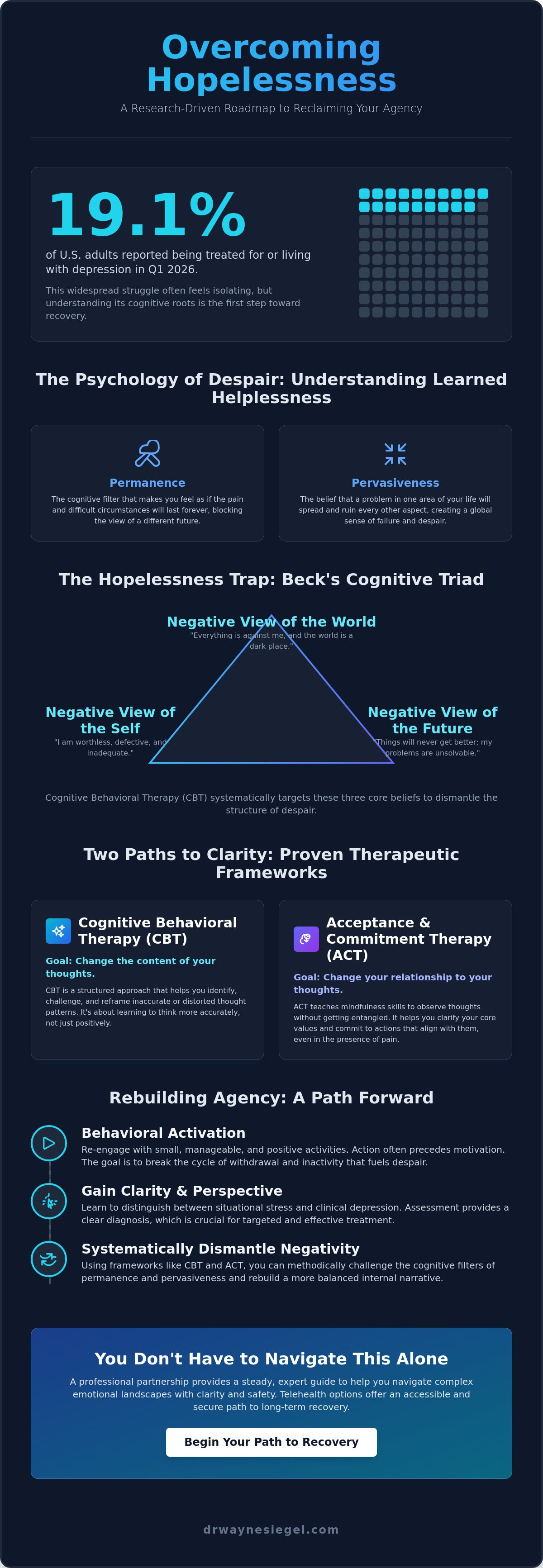
In the first quarter of 2026, approximately 19.1% of U.S. adults reported being treated for or living with depression. This statistic highlights a widespread struggle, yet when you're in the middle of it, the experience feels isolating and final. You might feel stuck in a relentless cycle of negative thoughts, fearing that overcoming feelings of hopelessness is simply not possible for someone in your position. It's natural to feel skeptical of generic platitudes when your daily reality feels so heavy and uniquely beyond repair.
I understand this skepticism. The science of neuropsychology shows us that hopelessness isn't a permanent state of being; instead, it's often a cognitive filter that we can systematically dismantle. I promise to show you how to shift from a state of paralysis to one of active agency using clinically proven frameworks. I'm here to act as a steady guide, providing the professional partnership you need to navigate these complex emotional landscapes with clarity and safety.
This article provides a research-driven exploration of the cognitive mechanisms that sustain despair and offers a clear roadmap for recovery using proven therapeutic methods. We'll move beyond vague advice to look at the data-backed steps you can take to rebuild your life and find actionable meaning.
Key Takeaways
- Understand the cognitive mechanisms behind "Learned Helplessness" and how they impact your motivation and persistence.
- Discover how gold-standard treatments like CBT and ACT systematically dismantle negative views of the self, world, and future.
- Learn to distinguish between situational stress and clinical depression, a critical step in overcoming feelings of hopelessness.
- Gain actionable, research-driven strategies for behavioral activation to help you reclaim agency in your daily life.
- Explore the benefits of a professional partnership and how telehealth options provide a safe, accessible path to long-term recovery.
The Psychology of Hopelessness: Understanding the Mechanism of Despair
Hopelessness is often misunderstood as a simple mood or a lack of willpower. In my practice, I find it helpful to define it as a specific cognitive-emotional state. It's characterized by a perceived lack of agency and a deeply negative view of the future. When you're focused on overcoming feelings of hopelessness, it's vital to recognize that your brain is currently using a specific set of filters to process reality. These filters create a sense of being stuck, regardless of the objective facts of your situation. This state isn't just a feeling; it's a structured way of thinking that limits your ability to see potential solutions.
Martin Seligman’s research on the "Learned Helplessness" model provides a foundation for understanding this state. His work suggests that when people face repeated stressors they cannot control, they eventually stop trying to change their circumstances. This isn't a failure of character; it's a learned response that impacts motivation and persistence. By studying the psychology of hopelessness, we see how the brain begins to favor "permanence" and "pervasiveness" filters. Permanence makes you feel like the pain will last forever. Pervasiveness makes you feel like one problem will ruin every area of your life. These filters are part of a larger set of cognitive biases that maintain despair by ignoring positive data and magnifying perceived threats.
The Biological and Psychological Interplay
The prefrontal cortex is the area of your brain responsible for executive functioning and future-oriented thinking. It's the part of you that plans, solves problems, and imagines a different tomorrow. During periods of intense despair, stress hormones like cortisol can effectively "cloud" this region. This makes logical perspective-taking feel nearly impossible. Hopelessness is a temporary cognitive constriction rather than a permanent character trait.
Learned Helplessness vs. Personal Agency
Decades of research demonstrate that repeated exposure to stressors can lead to a helpless response, but agency is a skill you can rebuild. Personal agency is the belief in your ability to affect change in your own life. While objective circumstances can be incredibly difficult, the internal narrative we build around those circumstances often dictates our level of hope. Overcoming feelings of hopelessness involves shifting this narrative from one of total defeat to one where small, manageable actions are possible again. I work with my patients to identify these small points of leverage to restore their sense of self-efficacy. By distinguishing between your objective situation and the internal story you tell about it, you can begin to reclaim your power to act.
Cognitive Frameworks: How CBT and ACT Address the Hopelessness Trap
To move beyond the state of despair described previously, we rely on established clinical frameworks that offer a structured path for change. Cognitive Behavioral Therapy (CBT) is widely considered the gold standard for addressing the cognitive patterns that keep us stuck. It's not about positive thinking; it's about accurate thinking. Aaron Beck, the pioneer of CBT, identified what he called the "Cognitive Triad," a three-pronged internal perspective that fuels despair. This triad consists of a negative view of yourself, your world, and your future. When these three areas feel dark, overcoming feelings of hopelessness requires a systematic dismantling of these specific beliefs.
While CBT focuses on changing the content of your thoughts, Acceptance and Commitment Therapy (ACT) offers a different, yet complementary, approach. ACT focuses on changing your relationship to those thoughts. Instead of trying to argue with a negative thought, you learn to observe it without letting it dictate your actions. This shift is crucial for building psychological flexibility. By identifying your core values, you create a sense of direction even when your current destination feels obscured by fog. Engaging in individual psychotherapy allows us to apply these evidence-based frameworks to your unique cognitive profile, providing the clarity needed to move forward.
Dismantling the Cognitive Triad
Hopelessness often relies on "all-or-nothing" thinking. You might think, "If I failed today, I'll always fail." This is a cognitive distortion. Cognitive restructuring involves looking at the actual evidence for these thoughts, much like a scientist testing a hypothesis. Research consistently shows that CBT is highly effective at reducing depressive symptoms and mitigating suicidal ideation by helping patients break these rigid thought cycles.
Psychological Flexibility and Values-Based Living
Psychological flexibility is the ability to stay present, even when things are difficult. ACT uses a technique called "defusion" to help separate your identity from your feelings. You aren't "hopeless"; you're a person experiencing a feeling of hopelessness. This distinction creates space for action. This shift is essential for overcoming feelings of hopelessness because it prevents a temporary emotion from becoming a permanent roadblock. When you align your daily choices with your core values, you're building a roadmap for recovery that doesn't depend on how you feel in a single moment.
Assessment and Clarity: Distinguishing Between Situational Stress and Clinical Depression
Sadness is a universal human experience, but there's a significant clinical distinction between situational stress and a diagnosable condition like Major Depressive Disorder (MDD). In my practice, I often see individuals who've attempted self-screening tools only to find themselves more confused about their symptoms. Gaining a professional psychological assessment near me is a vital step in moving beyond labels toward true understanding. It's the difference between guessing at the cause of your pain and having a scientifically validated map of your cognitive landscape.
Differentiating "normal" grief or situational sadness from MDD requires looking at the depth and pervasiveness of the symptoms. Situational despair often has a clear trigger and may fluctuate, whereas MDD involves a persistent low mood that interferes with daily functioning. By utilizing clinical strategies for overcoming hopelessness, we can begin to untangle these threads. A formal evaluation doesn't just look at depression; it explores underlying factors like ADHD or trauma that may be the actual drivers of your distress. Understanding these "why" factors is essential for overcoming feelings of hopelessness effectively. Clarity is always the first step toward an effective treatment plan.
When Is a Professional Evaluation Necessary?
Indicators that it's time to seek a specialist include symptoms lasting two weeks or longer without significant reprieve, severe functional impairment in work or relationships, and physical symptoms like disrupted sleep or appetite. A dedicated clinic for psychology provides the objective data necessary to make these distinctions. In many cases, neuropsychological testing reveals executive functioning deficits. These deficits can mimic the paralysis of hopelessness but actually stem from specific cognitive processing challenges that require different interventions.
The Roadmap Provided by a Diagnosis
I view a diagnosis not as a permanent label, but as a strategic tool for targeted intervention. When we name the specific mechanism at play, the weight of shame often begins to lift. You're no longer "failing" at life; you're managing a documented clinical condition with a known recovery path. Overcoming feelings of hopelessness becomes a logical, step-by-step process once we identify your unique cognitive profile. A thorough assessment identifies your inherent strengths, such as resilience or high verbal reasoning, which we then leverage to fuel your journey toward recovery.
Evidence-Based Strategies for Rebuilding Agency and Perspective
Recovery requires more than just waiting for a shift in mood. It's a deliberate, step-by-step process that relies on a structured roadmap rather than a quick fix. When you're in the depths of despair, your brain's reward system often feels offline. This makes the prospect of overcoming feelings of hopelessness seem insurmountable. However, by using strategies empirically shown to improve mood and outlook, we can begin to shift the internal landscape. We focus on two primary pillars: changing what you do and changing how you evaluate your thoughts. Agency is a skill.
Behavioral Activation: Moving Toward Action
One of the most effective tools in my practice is behavioral activation. This is an "outside-in" approach where we focus on changing your behaviors to eventually influence your emotional state. Instead of waiting to feel motivated, we set "Micro-Goals." These are tiny, achievable tasks that are manageable even when your energy is at its lowest. For example, a micro-goal might be as simple as sitting on the porch for five minutes or responding to one text message. These small successes provide the objective data your brain needs to start questioning the narrative of total helplessness. Consistent routines are also vital. They help stabilize the nervous system by providing a predictable environment, which reduces the cognitive load on an already taxed mind.
Cognitive Reframing and Evidence-Gathering
Cognitive reframing involves teaching yourself to act as a detective rather than a judge. When a thought like "nothing will ever change" arises, I encourage you to look for counter-evidence. Have there been moments, however brief, where the weight felt slightly lighter? By gathering these data points, you begin to dismantle the "permanence" filter discussed earlier. Mindfulness plays a key role here. It creates a small but significant gap between a hopeless thought and a hopeless action. This space allows you to acknowledge the thought without letting it dictate your behavior. If you're ready to begin this process, you can schedule a professional consultation to discuss a personalized plan.
Addressing Trauma-Informed Hopelessness
For some, hopelessness is rooted in a history of trauma. When someone has experienced significant trauma, their nervous system can become "frozen" in a state of past-oriented despair. This isn't just a mood; it's a survival mechanism that hasn't switched off. In these cases, a safety-first approach is essential. Utilizing ptsd counseling offers a specialized path for evidence-based trauma recovery. We work to ground the person in the present, ensuring they feel secure before processing the events that led to their current state. Overcoming feelings of hopelessness in the context of PTSD requires this specialized, research-backed attention to ensure long-term stability and healing.
The Role of Professional Partnership in Overcoming Hopelessness
I view the therapeutic process as a deliberate partnership rather than a top-down clinical instruction. When you're focused on overcoming feelings of hopelessness, having a steady, non-judgmental guide is essential for navigating the complex cognitive terrain we've discussed. A person-centered, board-certified approach ensures that we aren't simply checking off symptoms on a list. Instead, we work together to solve the unique puzzle of your experience. I provide a stable, safe environment where we can examine the mechanics of your despair with intellectual curiosity. This collaborative effort transforms a clinical service into a shared journey toward clarity and reclaimed agency.
In my practice, the doctor acts as a guide who helps you interpret the data of your own life. We move beyond the "dictator" model of medicine to create an environment where you feel heard and understood. This professional relationship is built on a foundation of rigorous science, but it's humanized by a commitment to your well-being. By positioning Siegel Psychology Services as a steady anchor, I help you lower the barriers of anxiety that often prevent people from seeking the help they need. We work to ensure that the science serves the person, not the other way around.
What to Expect in a Professional Partnership
In our work together, you'll find an emphasis on rigorous science combined with deep compassion. We don't stop at identifying your struggles; we move toward uncovering actionable meaning. This means taking the diagnostic clarity from your assessment and turning it into a functional strategy for your daily life. Every session is designed with precision and care to improve your overall quality of life. We focus on your strengths as much as your challenges, ensuring that the roadmap we build is both realistic and empowering.
Accessing Care Nationally
I understand that finding specialized, evidence-based care can be difficult depending on where you live. The expansion of telehealth has significantly changed this landscape, offering convenience and efficacy for those with limited local options. For individuals residing in psypact states, I can provide interjurisdictional support that maintains the highest clinical standards. My board certification is a reflection of my commitment to ethical, research-driven care, ensuring you receive the same level of expertise online as you would in a physical office. Overcoming feelings of hopelessness requires a reliable partner and a clear path forward. Schedule a consultation with Dr. Wayne Siegel to begin your roadmap to clarity and start your journey toward recovery today.
Reclaiming Your Sense of Agency and Future
We've explored how hopelessness functions as a cognitive mechanism rather than a reflection of your true potential. By understanding the psychology of despair and utilizing frameworks like CBT and ACT, you can begin to dismantle the filters of permanence and pervasiveness. Whether your struggle is rooted in situational stress or a clinical condition, gaining diagnostic clarity is the essential first step toward sustainable change. Overcoming feelings of hopelessness is a process of reclaiming agency through small, research-backed actions that restore your sense of self-efficacy.
You don't have to navigate this complex landscape alone. As a board-certified clinical psychologist with over 25 years of experience, I specialize in providing the evidence-based tools you need to move from paralysis to action. Through my national reach via PsyPact telehealth, I offer a stable and non-judgmental environment to help you find actionable meaning in your journey. It's time to move beyond labels and start building a life aligned with your core values. Begin your journey toward clinical clarity with Dr. Wayne Siegel and take the first step toward a clearer, more purposeful future.
Frequently Asked Questions
Is hopelessness a symptom of a larger mental health condition?
Hopelessness often serves as a central clinical feature of Major Depressive Disorder and is frequently observed in individuals living with PTSD or Generalized Anxiety Disorder. While it can occur in response to situational stressors, persistent despair often indicates a broader psychological challenge. I use diagnostic evaluations to determine if these feelings are symptomatic of a larger condition. This ensures the treatment roadmap addresses the root cause rather than just the surface emotion.
Can feelings of hopelessness be treated without medication?
Evidence-based psychotherapies like Cognitive Behavioral Therapy and Acceptance and Commitment Therapy are highly effective for treating despair without pharmacological intervention. These frameworks focus on cognitive restructuring and behavioral activation to rebuild agency. While some individuals find medication helpful, research shows that learning specific psychological skills provides long-term resilience and tools for overcoming feelings of hopelessness by addressing the underlying cognitive mechanisms directly.
How long does it typically take to start feeling hopeful again in therapy?
The timeline for recovery varies based on individual circumstances, but many patients begin to notice shifts in their perspective within 12 to 20 sessions of structured therapy. Initial progress often involves a reduction in the intensity of negative thoughts rather than a sudden return of hope. I focus on setting micro-goals to build momentum, helping you see objective evidence of change as you work through the therapeutic process.
What happens if I feel hopeless but do not have a diagnosis of depression?
Experiencing profound despair is possible even without meeting the full clinical criteria for Major Depressive Disorder. Feelings of hopelessness can stem from chronic loneliness, which 21% of U.S. adults reported in 2026, or from executive functioning deficits associated with ADHD. A professional evaluation helps identify these specific drivers. This clarity allows us to create a targeted plan that addresses your unique situation, even in the absence of a traditional depression diagnosis.
Is there a difference between hopelessness and suicidal ideation?
Hopelessness is a cognitive state regarding the future, whereas suicidal ideation refers specifically to thoughts of self-harm. While hopelessness is a significant risk factor for ideation, they are distinct clinical constructs. It's possible to feel hopeless without having active plans for self-harm. If you're experiencing these thoughts, a diagnostic evaluation can help us assess the severity and ensure your treatment plan prioritizes safety while addressing the underlying despair.
Can online therapy be as effective as in-person sessions for overcoming despair?
Research consistently demonstrates that telehealth is as effective as in-person sessions for delivering evidence-based treatments like CBT and ACT. The convenience of online therapy can actually lower the barrier to care for individuals experiencing the low energy associated with despair. My practice utilizes secure platforms to provide a stable, safe environment for patients across PsyPact states, ensuring that geographic location doesn't prevent access to high-quality psychological support.
What should I do if a loved one is expressing feelings of hopelessness?
Supporting a loved one involves active listening and validating their experience without offering generic platitudes. Encourage them to seek a professional diagnostic evaluation to gain clarity on their symptoms. You can help by researching clinics or offering to assist with the logistics of their first appointment. It's vital to provide a non-judgmental space while gently guiding them toward evidence-based resources that can offer a structured roadmap for recovery.
How does a psychological assessment help in overcoming hopelessness?
A psychological assessment serves as a diagnostic roadmap, moving beyond surface-level symptoms to uncover the specific cognitive or biological drivers of your distress. By identifying whether despair is linked to trauma, executive functioning issues, or clinical depression, the assessment provides the clarity needed for overcoming feelings of hopelessness. This objective data helps shift the focus from what is wrong to how we solve this specific puzzle with precision and care.