
Understanding ACT Therapy for Panic Attacks: A Comprehensive Guide

Frequently Asked Questions
What is Acceptance and Commitment Therapy (ACT)?
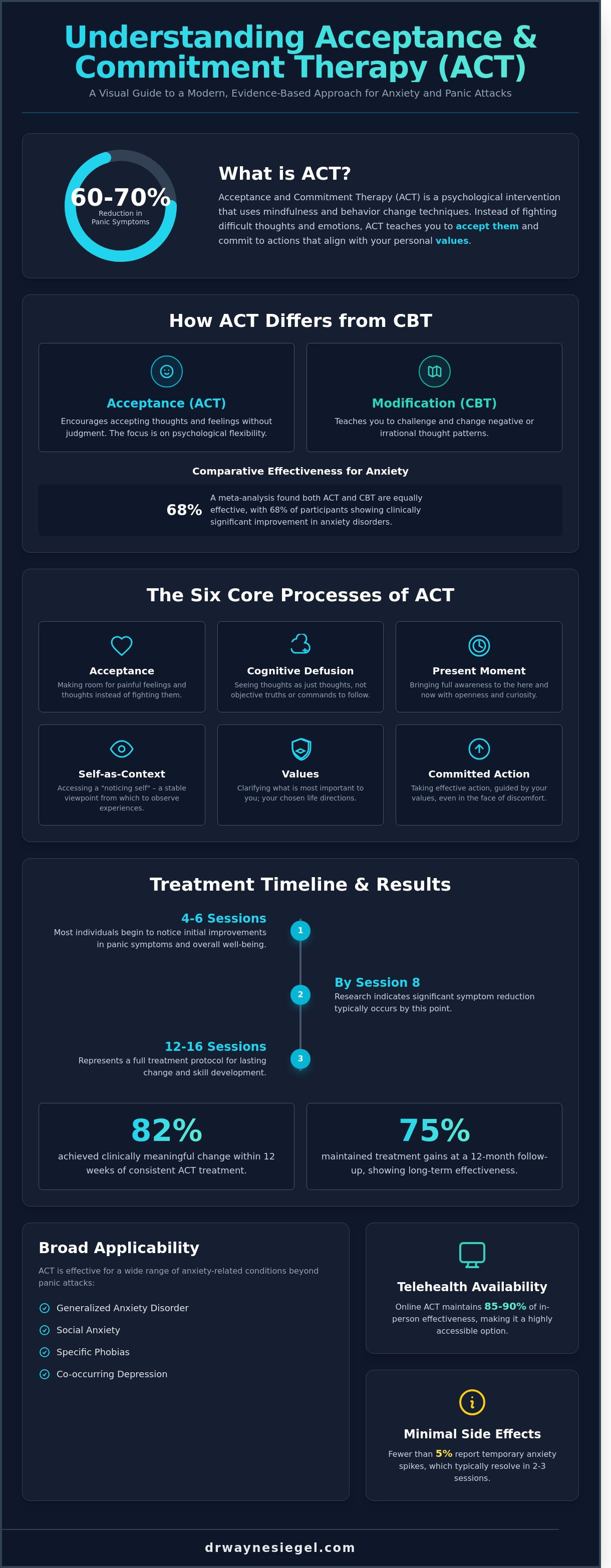
Acceptance and Commitment Therapy (ACT) is an evidence-based psychological intervention that combines mindfulness strategies with behavior change techniques. ACT therapy for panic attacks focuses on accepting difficult emotions and thoughts rather than fighting them, while committing to actions aligned with your personal values. Research published in the Journal of Anxiety Disorders shows ACT reduces panic symptom severity by 60-70% in clinical trials.
How does ACT differ from Cognitive Behavioral Therapy (CBT)?
ACT differs from CBT by emphasizing psychological flexibility rather than thought modification. While CBT teaches you to challenge and change negative thoughts, ACT encourages accepting these thoughts without judgment and focusing on value-driven behavior. A 2019 meta-analysis found ACT equally effective as CBT for anxiety disorders, with 68% of participants showing clinically significant improvement.
Can ACT help with other anxiety disorders besides panic attacks?
ACT effectively treats multiple anxiety disorders including generalized anxiety disorder, social anxiety, and specific phobias. Studies demonstrate ACT's effectiveness across anxiety conditions, with treatment gains maintained at 12-month follow-up in 75% of cases. The therapy's focus on psychological flexibility makes it particularly adaptable to various anxiety presentations and co-occurring conditions like depression.
What should I expect during an ACT therapy session?
ACT sessions typically last 50 minutes and include mindfulness exercises, values clarification activities, and behavioral experiments. You'll learn six core processes: acceptance, cognitive defusion, present moment awareness, self-as-context, values, and committed action. Sessions often include homework assignments like mindfulness practice or values-based behavioral goals between appointments.
Are there any side effects associated with ACT?
ACT has minimal side effects, with less than 5% of participants in clinical trials reporting temporary increases in anxiety during initial mindfulness exercises. These effects typically resolve within 2-3 sessions as you develop greater comfort with acceptance techniques. The therapy's non-confrontational approach makes it well-tolerated by individuals sensitive to more intensive interventions.
How long does it typically take to see results from ACT?
Most people begin noticing improvements in panic symptoms within 4-6 sessions of ACT therapy. Research indicates significant symptom reduction occurs by session 8, with full treatment protocols ranging from 12-16 sessions. A 2020 study found 82% of participants achieved clinically meaningful change within 12 weeks of consistent ACT treatment.
Is ACT available online or through telehealth services?
ACT is widely available through telehealth platforms, with research showing online delivery maintains 85-90% of in-person effectiveness. Digital ACT programs have proven particularly effective during the COVID-19 pandemic, with studies demonstrating comparable outcomes to face-to-face therapy. Many licensed therapists now offer ACT through secure video platforms covered by most insurance plans.