
What to Do When Antidepressants Aren’t Enough: A Research-Based Guide

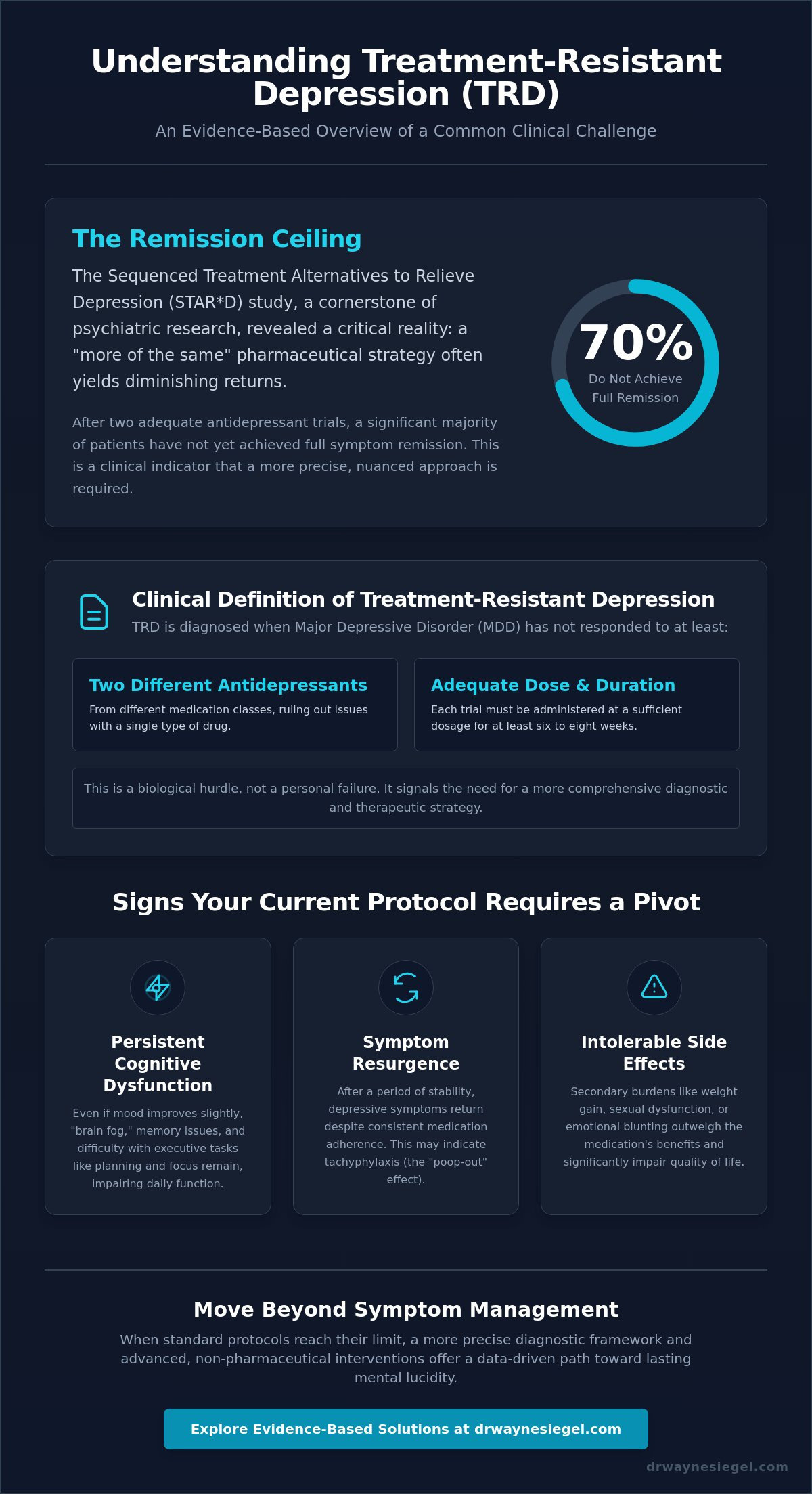
About 70% of patients don't achieve full symptom remission after two adequate antidepressant trials. If you've spent years cycling through prescriptions only to be met with persistent fatigue or numbing side effects, you aren't "unfixable." You're likely experiencing a common clinical challenge. I understand the profound exhaustion that comes from the psychiatric trial-and-error approach; it can feel like your recovery has hit a therapeutic ceiling. However, research indicates that specialized therapy for treatment-resistant depression offers hope by targeting the brain's unique neuroplasticity rather than just adjusting chemical levels.
I believe that a lack of progress isn't a personal failure. It's a signal that we need a more precise diagnostic framework to understand your specific cognitive and emotional landscape. This guide provides evidence-based strategies to help you regain a sense of agency in your recovery journey. We'll explore how advanced diagnostic psychological evaluations can uncover hidden barriers to healing; we'll also examine the efficacy of non-pharmaceutical interventions like fMRI-guided TMS and targeted psychotherapy. You'll gain a clear, structured roadmap designed to move you beyond mere labels toward a life of mental lucidity and improved daily quality.
Key Takeaways
- Understand why approximately 70% of individuals don't find full relief from initial medications and what this means for your specific clinical outlook.
- Learn how a comprehensive diagnostic psychological evaluation provides a necessary reset by identifying the complex neurobiological factors that standard psychiatric checks often miss.
- Discover how evidence-based therapy for treatment-resistant depression physically reshapes brain structure to foster long-term mental lucidity and resilience.
- Explore how the expansion of the PsyPact network allows you to partner with specialized experts across state lines for high-level clinical care regardless of your location.
- Shift your perspective from merely managing symptoms to achieving a higher quality of life through a structured, data-driven path forward.
Defining the Limit: Understanding Treatment-Resistant Depression (TRD)
The clinical definition of Treatment-Resistant Depression (TRD) is precise. It describes a situation where a person's Major Depressive Disorder hasn't responded to at least two different classes of antidepressant medications, each taken at an adequate dose for at least six to eight weeks. For a deeper look at the diagnostic criteria and staging models, I recommend Understanding Treatment-Resistant Depression. Research indicates that approximately one-third of adults with depression meet these criteria. This isn't a reflection of your willpower or your capacity to heal. Instead, it's a clinical indicator that your neurobiology requires a more nuanced approach than standard medication management can provide.
I often encounter patients experiencing "breakthrough depression," where symptoms resurface despite ongoing treatment. This is sometimes linked to tachyphylaxis, commonly known as the "poop-out" effect. This occurs when a medication that was once effective slowly loses its therapeutic impact over time. When this happens, simply increasing the dosage or switching to a similar drug may not be the answer. It's often the point where specialized therapy for treatment-resistant depression becomes a vital part of the recovery strategy. We must acknowledge that hitting a medication ceiling is a biological hurdle, not a personal failure.
The STAR*D Study and the Reality of Remission
The Sequenced Treatment Alternatives to Relieve Depression (STAR*D) study remains a cornerstone of modern psychiatric research. It revealed that only about one-third of people achieve full remission from their first medication. By the time a patient has undergone two adequate trials, approximately 70% still haven't reached full remission. The data shows that the likelihood of success drops significantly with each subsequent pharmaceutical attempt. These findings suggest that a "more of the same" strategy often yields diminishing returns. Relying solely on pharmaceutical rotation can lead to a cycle of exhaustion. This is why we prioritize diagnostic precision and evidence-based psychological interventions to break the cycle.
Signs Your Current Protocol Requires a Pivot
Recognizing when your current treatment has reached its limit is the first step toward finding a solution that works. I look for specific markers that suggest a patient needs a different level of care:
- Persistent Cognitive Dysfunction: You might feel a slight lift in your mood, but "brain fog," memory issues, or difficulty with executive tasks like planning and focus remain.
- Symptom Resurgence: After a period of relative stability, you notice the familiar weight of depression returning, even though you haven't missed a dose.
- Intolerable Side Effects: Weight gain, sexual dysfunction, or emotional blunting might create a secondary burden that outweighs the drug's benefits, significantly impairing your quality of life.
When these signs appear, it's a clear signal that the biological and environmental factors driving your depression need a more comprehensive evaluation. Moving beyond traditional medication management allows us to explore therapy for treatment-resistant depression that targets the underlying causes of your struggle.
The Biological and Environmental Ceiling of Pharmaceutical Intervention
The traditional "chemical imbalance" narrative is a significant oversimplification of how depression functions in the human brain. While neurotransmitters like serotonin and dopamine play a role, your neurobiology is far more complex than a simple lack of specific chemicals. When antidepressants fail to provide relief, it's often because the brain has reached a biological or environmental ceiling. This limit is frequently influenced by chronic cortisol elevation. High levels of this stress hormone, sustained over time, can actually override the therapeutic effects of SSRIs. It creates a state of neuro-inflammation that prevents the brain from utilizing the medication effectively. Research into advanced treatments for depression shows that we must look beyond the synapse to understand why recovery stalls.
The brain is also a homeostatic organ. It constantly seeks to maintain a steady internal state. When you introduce a long-term pharmaceutical intervention, your brain may adapt by downregulating receptors, essentially "pushing back" against the medication to return to its previous baseline. This biological resistance, combined with unresolved life transitions or chronic grief, can keep you in a depressive state regardless of your dosage. If you feel stuck in this biological stalemate, a diagnostic psychological evaluation can help identify which specific factors are stalling your progress.
The Impact of Environmental and Lifestyle Stressors
I often describe medication as a "floor" for stability rather than a "ceiling" for recovery. A pill can help keep you from sinking further, but it rarely facilitates long-term neural change if your environment remains static and stressful. Poor sleep architecture and metabolic issues like insulin resistance further degrade pharmaceutical efficacy. Without addressing these foundational lifestyle factors, the brain lacks the necessary resources to rebuild the neural pathways required for mental lucidity. This is where therapy for treatment-resistant depression becomes essential; it provides the tools to change the environment that the medication alone cannot reach.
Co-occurring Conditions and Physiological Interactions
Sometimes, what looks like resistant depression is actually a complex interaction of multiple conditions. Untreated anxiety, PTSD, or ADHD can mimic the symptoms of TRD, leading to a "trial-and-error" approach that never hits the mark. Physiological issues also play a significant role. Thyroid dysfunction, autoimmune inflammation, and even the regular use of alcohol can disrupt neurotransmitter regulation and sabotage medication performance. Effective therapy for treatment-resistant depression involves a meticulous look at these co-occurring factors. We treat the whole person, ensuring that we aren't just chasing a symptom while the underlying cause remains unaddressed.
Diagnostic Precision: The Role of Comprehensive Psychological Assessment
When standard treatments fail, the most productive step isn't necessarily a different medication; it's often a diagnostic "re-set." Many individuals stuck in the trial-and-error cycle aren't actually resistant to treatment. Instead, they may be receiving treatment for the wrong condition. A typical 15-minute psychiatric check is designed for symptom management, which is often insufficient for complex cases. In contrast, a multi-hour, data-driven diagnostic psychological evaluation treats your history as a unique puzzle to be solved. We use objective testing to move beyond surface-level observations and find actionable meaning. This level of precision is the cornerstone of effective therapy for treatment-resistant depression because it ensures we're targeting the correct mechanism of struggle.
I frequently find that "resistant" symptoms are actually "The Great Mimickers." For instance, Bipolar II disorder often presents as chronic, heavy depression. If the subtle hypomanic episodes are missed during a brief intake, the resulting treatment plan will likely be ineffective. Similarly, certain personality dynamics or cognitive processing styles require specialized interpersonal strategies that standard SSRIs cannot provide. Without a clear diagnostic picture, you're essentially applying a general solution to a highly specific problem. A personalized roadmap based on objective data removes the guesswork and provides a sense of agency in your recovery.
Distinguishing Depression from Adult ADHD
Executive dysfunction is frequently misidentified as depressive lethargy or a lack of motivation. If you struggle to initiate tasks, manage time, or maintain focus, it might not be a mood deficit. It could be an under-addressed neurodivergent trait. Treating these symptoms as "depression" while the underlying ADHD remains unaddressed is a significant clinical risk that often leads to treatment failure. If you are searching for a psychological assessment near me, I provide the rigorous testing needed to separate these overlapping conditions and clarify your path forward.
Uncovering the Trauma Response
The human nervous system has a "freeze" response that can create a physiological state nearly identical to clinical depression. This state of dorsal vagal shutdown results in emotional blunting and physical heaviness. However, ptsd counseling requires fundamentally different interventions than standard care for Major Depressive Disorder. SSRIs are often limited in their ability to address somatic trauma storage or a dysregulated nervous system. By identifying these trauma markers through a formal evaluation, we can pivot toward therapy for treatment-resistant depression that actually addresses the root of the "freeze" state rather than just the symptoms.
Evidence-Based Psychotherapy as a Mechanism for Neuroplastic Change
Many people view counseling as a secondary support system, a "soft" addition to the "hard" science of medication. This perspective overlooks a fundamental reality of neuroscience: learning and behavior change are biological processes. Evidence-based therapy for treatment-resistant depression acts as a direct mechanism for neuroplastic change. While medication provides a baseline of chemical stabilization, specialized psychotherapy physically alters the brain's structure by strengthening neural pathways associated with emotional regulation and cognitive flexibility. Research comparing outcomes indicates that while medication can stabilize the "floor" of depression, the remission achieved through psychological intervention often proves more durable over time.
I view the therapeutic process as a partnership where we utilize the brain's inherent ability to reorganize itself. Unlike pharmaceutical interventions that target chemical levels globally, specialized therapy allows us to target specific cognitive and behavioral loops with precision. Studies show that psychotherapy, such as CBT or MBCT, carries a remission rate of approximately 40 to 48% for individuals struggling with resistant symptoms. This success is rooted in the synergy between biological stabilization and the active development of new mental assets. It provides a structured path forward that moves beyond symptom management toward true mental lucidity.
CBT for Treatment-Resistant Depression
Cognitive Behavioral Therapy (CBT) for complex cases targets the "Depressive Triad," which is the rigid, negative view of the self, the world, and the future. By systematically restructuring these patterns, we aren't just "thinking positive"; we're retraining the brain to process environmental data more accurately. Behavioral Activation is another critical component. It breaks the cycle of depressive withdrawal by strategically reintroducing rewarding activities. This combination of cognitive restructuring and behavioral change helps prevent the high relapse rates frequently seen with medication-only protocols. If you're ready to explore how these evidence-based protocols can facilitate your recovery, I invite you to learn more about my approach to individual psychotherapy.
Acceptance and Commitment Therapy (ACT)
Acceptance and Commitment Therapy (ACT) offers a different, highly effective path when symptoms persist. Instead of focusing solely on symptom elimination, ACT teaches you how to cultivate psychological flexibility. It helps you decouple your identity from your depressive symptoms, allowing you to pursue a "valued life" even during difficult periods. Research supports ACT’s efficacy in treating recurring and treatment-resistant episodes because it addresses the underlying relationship you have with your thoughts. By fostering a sense of agency and purpose, ACT helps you move toward a higher quality of life that isn't dictated by the presence or absence of a specific symptom.
Accessing Specialized Care: National Expertise and the PsyPact Network
Finding a local provider who specializes in therapy for treatment-resistant depression can be a significant challenge. Many generalist clinics lack the advanced diagnostic tools or the specialized training required to navigate complex neurobiological landscapes. I believe that your location shouldn't dictate the quality of your care. For individuals experiencing the profound exhaustion of TRD, the energy required to travel to a specialized clinic is often a barrier itself. This is why interjurisdictional telehealth has become a cornerstone of modern psychological practice. It allows you to access high-level clinical care and diagnostic psychological evaluations from the safety and stability of your own environment.
When seeking a specialist for a complex case, I recommend looking for board certification through the American Board of Professional Psychology (ABPP). This certification signifies that a practitioner has undergone rigorous peer review and demonstrated a high level of expertise beyond basic licensure. In the context of treatment resistance, this level of scrutiny ensures that the methodology used to assess your condition is both meticulous and evidence-based. It offers a layer of clinical authority that is essential when standard interventions have reached their limit.
Leveraging PsyPact for Expert Consultations
The expansion of the Psychology Interjurisdictional Compact (PSYPACT) has transformed how we approach specialized care. As of early 2026, 43 psypact states and territories participate in this network, allowing licensed psychologists to practice telepsychology across state lines legally and ethically. This framework provides a secure, regulated way to seek a second opinion from a national expert who might identify the "mimickers" or biological ceilings discussed in previous sections. A specialized consultation can offer the diagnostic clarity that a local generalist might miss, providing a more transparent understanding of your life and a structured path forward.
Your Path to Clinical Clarity
Navigating treatment resistance requires a person-centered approach that prioritizes your unique daily quality of life. As you prepare for a diagnostic consultation, I suggest gathering your treatment history, including specific dosages and durations of previous medications. Ask potential providers about their experience with therapy for treatment-resistant depression and their specific process for objective testing. If you're looking for broader guidance on finding a specialized clinic for psychology, resources are available to help you navigate these choices with confidence. My goal is to help you move beyond mere labels and find actionable meaning through a personal partnership focused on your well-being.
Reclaiming Your Path to Mental Lucidity
A lack of progress with medication isn't a failure of character. It's a biological signal that your treatment requires a more precise diagnostic lens. By moving beyond the chemical imbalance myth and addressing the environmental factors that stall recovery, you can reclaim your sense of agency. The evidence is clear: specialized therapy for treatment-resistant depression physically reshapes the brain through neuroplasticity. This provides a durable path to remission that medication alone often fails to sustain.
I'm here to help you solve the unique puzzle of your mental health. I am board-certified in Clinical Psychology (ABPP) with over 25 years of specialized experience. My practice focuses on evidence-based CBT and ACT protocols designed to move you toward actionable meaning and improved daily quality of life. I invite you to schedule a diagnostic consultation with Dr. Wayne Siegel today. We'll build a structured, data-driven roadmap together. You don't have to navigate this complex landscape alone; a clearer path forward is within reach.
Frequently Asked Questions
What qualifies as treatment-resistant depression in 2026?
Treatment-resistant depression is clinically defined as a major depressive disorder that hasn't responded to at least two different classes of antidepressants. These medications must have been taken at an adequate dose for a sufficient duration, which is typically six to eight weeks. Research indicates that approximately one-third of adults with depression meet these criteria. If you've reached this pharmaceutical ceiling, it's a signal that your neurobiology requires a more multifaceted approach.
Can therapy be effective if my depression is purely biological?
Yes, therapy is highly effective even for biologically driven depression because of neuroplasticity. Evidence-based therapy for treatment-resistant depression physically alters brain structure by strengthening pathways for emotional regulation. While medication stabilizes your biological "floor," specialized psychotherapy builds the cognitive and behavioral assets needed for long-term remission. This process helps you move beyond symptom management toward true mental lucidity and a higher quality of life.
What are the signs that I might have been misdiagnosed with depression?
Signs of misdiagnosis include a complete lack of response to multiple medications or the presence of symptoms that overlap with other conditions. Persistent executive dysfunction might actually be adult ADHD rather than depressive lethargy. Similarly, emotional blunting or a "freeze" response might indicate a trauma-related condition like PTSD. A diagnostic psychological evaluation can help separate these "mimickers" and ensure your treatment protocol targets the correct underlying cause.
Is it common for antidepressants to stop working after several years?
It's relatively common for antidepressants to lose their efficacy over time, a phenomenon known as tachyphylaxis or the "poop-out" effect. Your brain seeks a steady internal state and may adapt by downregulating receptors in response to long-term medication use. This homeostatic response can cause symptoms to resurface despite ongoing treatment. When this happens, a diagnostic reset is often more productive than simply increasing your current dosage.
What is the clinical difference between a psychiatrist and a psychologist for TRD?
Psychiatrists are medical doctors who primarily focus on biological interventions and medication management. Psychologists specialize in diagnostic psychological evaluations and evidence-based psychotherapy. In cases of TRD, a psychologist provides the deep, data-driven assessment needed to identify underlying cognitive patterns or misdiagnosed conditions. This partnership focuses on the whole person, utilizing therapy for treatment-resistant depression to address the root causes that medication alone cannot reach.
Can I see an out-of-state psychologist for a specialized diagnostic assessment?
You can absolutely consult with an out-of-state expert if they participate in the PSYPACT network. As of early 2026, 43 states and territories allow licensed psychologists to practice telepsychology across state lines legally. This interjurisdictional framework ensures you can access board-certified specialists for a diagnostic consultation regardless of your physical location. It removes the barrier of local generalist care and provides a structured path toward clinical clarity.
How long does it typically take for CBT or ACT to show results?
Measurable results from structured protocols like CBT or ACT typically emerge within 12 to 20 sessions. While individual progress varies, these evidence-based therapies focus on actionable change and psychological flexibility. Unlike the trial-and-error approach of medication, these therapies provide you with specific tools to manage your symptoms. The goal is to foster a sense of agency and improve your daily quality of life relatively early in the process.
What should I do if I feel my medication is exacerbating my symptoms?
If you feel your medication is worsening your symptoms, you should consult your prescribing physician immediately to discuss side effects or adverse reactions. It's also an ideal time to seek a comprehensive diagnostic psychological evaluation. This process helps determine if your struggle is truly resistant depression or if another underlying condition, such as ADHD or a trauma response, is being exacerbated by your current pharmaceutical protocol.