
Evidence-Based Therapy for Fear of Abandonment: A Clinical Roadmap to Emotional Security

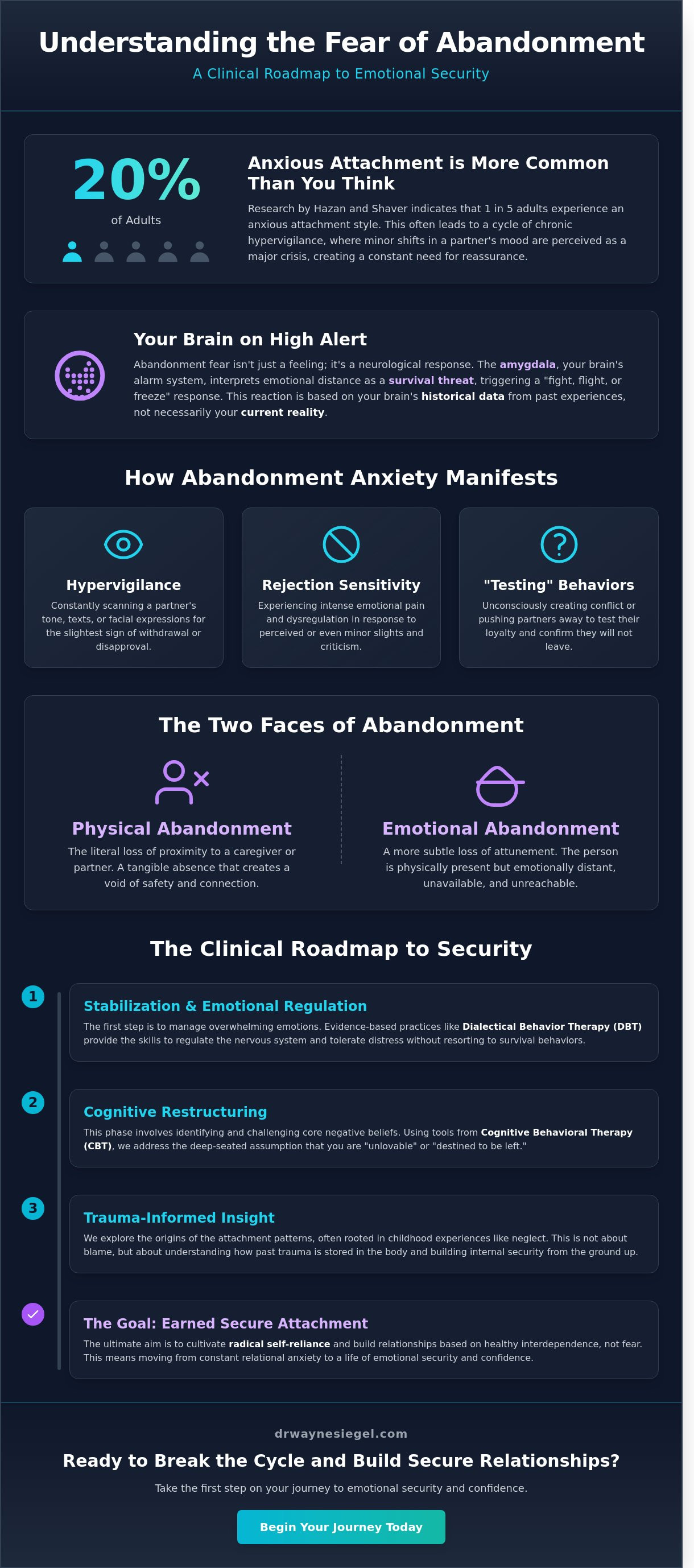
Did you know that research by psychologists Cindy Hazan and Phillip Shaver indicates that approximately 20% of adults experience an anxious attachment style? This often creates a need for specialized therapy for fear of abandonment to manage the chronic hypervigilance that makes every minor shift in a partner's mood feel like an impending crisis. You've likely felt that surge of emotional dysregulation when a loved one seems distant, or perhaps you've even pushed people away to gain control before they could leave you. It's an exhausting cycle, but it's one rooted in your brain's historical data rather than your current reality. I'm here to help you find the clarity you need to break these patterns.
This article serves as your clinical roadmap, offering a guide grounded in evidence-based practices like Dialectical Behavior Therapy (DBT), which has been a gold standard for emotional regulation since the 1990s. We'll examine the neurological mechanisms of abandonment anxiety and outline a structured plan to help you achieve an earned secure attachment style. You'll gain a clear understanding of the steps required to move from constant relational fear to a life of emotional security and confidence.
Key Takeaways
- Learn how the neurobiology of the amygdala processes perceived distance as a survival threat, providing a scientific lens for your emotional experiences.
- Gain clarity on the distinction between physical and emotional abandonment and how these patterns are rooted in established Attachment Theory.
- Discover how structured therapy for fear of abandonment utilizes evidence-based interventions like CBT to address the underlying belief that one is unlovable.
- Understand the clinical roadmap to recovery, moving from initial stabilization and emotional regulation to long-term psychological insight.
- Explore the path toward radical self-reliance, allowing you to build relationships based on healthy interdependence rather than fear-based survival.
Understanding the Clinical Presentation of Abandonment Anxiety
Abandonment anxiety isn't a standalone diagnosis in the DSM-5. Instead, I view it as a profound psychological phenomenon that signals a disruption in your sense of relational safety. When we explore The Science of Attachment, we find that these fears often stem from two distinct types of loss. Physical abandonment involves the literal loss of proximity to a caregiver or partner. Emotional abandonment is more subtle; it's a loss of attunement where the other person is physically present but emotionally unreachable.
Patients seeking therapy for fear of abandonment often present with specific, measurable symptoms. These aren't character flaws, but rather neurological survival strategies. Common presentations include:
- Hypervigilance: Constantly scanning a partner's tone or facial expressions for signs of withdrawal.
- Rejection sensitivity: An intense emotional response to even perceived or minor slights.
- "Testing" behaviors: Pushing others away or creating conflict to see if the partner will remain loyal.
I find that providing clinical clarity helps you move from feeling "broken" to realizing your reactions are actually adaptive responses to past instability. When we identify these patterns as survival mechanisms, we can begin the process of cognitive restructuring with compassion rather than judgment.
The Intersection of Abandonment and Personality Disorders
The fear of being left is a core pillar of Borderline Personality Disorder (BPD). The DSM-5 lists "frantic efforts to avoid real or imagined abandonment" as the first of nine diagnostic criteria. While generalized anxiety involves broad worries about the future, this specific fear is interpersonal and urgent. Rejection sensitivity dysphoria (RSD) is the extreme emotional pain triggered by the perception of being rejected or criticized by important people in your life. In my practice, I differentiate these frantic efforts from standard anxiety to create a more precise treatment roadmap.
Abandonment as a Symptom of Complex Trauma
Chronic childhood neglect often manifests as a deep-seated "fear of the void" in adulthood. Data from the CDC indicates that approximately 1 in 7 children experienced child abuse or neglect in the past year, which sets a neurological foundation for Complex PTSD. When a child's needs aren't met, they don't just feel lonely; they feel a visceral sense of annihilation when alone. Traditional talk therapy often falls short here because it focuses on the mind while the trauma is stored in the body. Effective therapy for fear of abandonment requires a trauma-informed lens to regulate the nervous system and build internal security.
The Science of Attachment: Why Abandonment Fear Persists
The foundation of how we connect with others was established in the mid-20th century through the pioneering work of John Bowlby and Mary Ainsworth. Their research into attachment theory revealed that our earliest interactions with caregivers create a lifelong blueprint for intimacy and trust. These early bonds aren't just emotional memories; they're encoded into our biology. When a caregiver is inconsistent or emotionally unavailable, the brain's amygdala begins to interpret emotional distance as a survival threat. This primal alarm system reacts to perceived rejection as if it were a physical danger, triggering a "fight, flight, or freeze" response that can feel overwhelming in adult relationships.
This cognitive framework is known as the "internal working model." It serves as a mental script that dictates what you expect from others and how you view your own worthiness of love. If your early needs weren't reliably met, you may find yourself trapped in a "biological paradox." This occurs when you instinctively seek safety and comfort from the very people who cause you fear or distress. It's a confusing cycle that keeps the nervous system in a state of high alert. Engaging in Clinical Presentation of Abandonment Anxiety helps us identify these deep-seated patterns so we can begin to address the root causes of the distress.
Insecure-Anxious vs. Insecure-Avoidant Patterns
The "Anxious-Preoccupied" style is often defined by a heightened sensitivity to a partner’s moods. You might find yourself constantly scanning for signs of withdrawal or rejection, leading to a persistent need for reassurance. Conversely, "Dismissive-Avoidant" individuals often mask their fear of being left by projecting an image of extreme self-reliance. They may push others away as a preemptive strike to avoid the pain of being abandoned first. In many clinical settings, we observe the "Anxious-Avoidant trap." This is a high-conflict dynamic where one person’s pursuit of closeness triggers the other’s fear of engulfment, creating a painful loop of chasing and distancing.
Neuroplasticity and the Hope for Change
Your brain's architecture isn't fixed for life. Research in neuroplasticity suggests that the brain remains malleable well into adulthood, meaning neural pathways can be reorganized through new, consistent experiences. Within the context of therapy for fear of abandonment, the relationship between the clinician and the patient serves as a "secure base." This professional partnership provides a safe environment to practice vulnerability and emotional regulation. Through this process, individuals can achieve what we call "earned secure attachment." This state is reached when a person makes sense of their difficult history and develops a healthy, stable way of relating to others. If you're looking for a path forward, finding clarity through a specialized assessment can help you build the roadmap toward lasting emotional security.
Comparing Evidence-Based Modalities for Abandonment Recovery
While sharing your story provides a sense of relief, I've observed that lasting change requires moving beyond venting. We must utilize structured, evidence-based interventions to address the neurological roots of distress. Research published in the Journal of Consulting and Clinical Psychology indicates that structured CBT can reduce anxiety symptoms significantly in patients with interpersonal fears. I focus on these proven methods because they offer a clear roadmap toward stability. Without a strategic framework, talk therapy can inadvertently reinforce the very cycles of rumination we aim to break.
A person-centered approach serves as the essential foundation for this work. I prioritize building a secure therapeutic alliance where you feel heard and safe. This trust is the first step in learning that you can rely on another person without the constant threat of rejection. Once this safety is established, we can begin the rigorous work of cognitive restructuring and behavioral change.
CBT for Restructuring Core Beliefs
Cognitive Behavioral Therapy (CBT) targets maladaptive schemas, which are deeply held beliefs that you're fundamentally unlovable. When you experience a perceived rejection, automatic thoughts often spiral into catastrophe. I help you identify these triggers the moment they occur. We use behavioral experiments to gather objective data and test the validity of your fears. For instance, if a friend misses a call, we track the outcome over the following 48 hours. Does the relationship end? Usually, the data shows a 90% or higher rate of benign explanations. This process helps us build a factual roadmap of evidence against the fear of being alone.
ACT: Moving Toward Values-Based Security
In therapy for fear of abandonment, I also employ Acceptance and Commitment Therapy (ACT). This modality focuses on cognitive defusion, which helps you unhook from the thought "they are going to leave me." Instead of fighting the thought, we acknowledge it as a mental event rather than an absolute truth. I've found that expansion techniques are particularly effective here. These methods teach you to breathe into the physical discomfort of anxiety instead of fleeing from it. By defining your core relationship values, you learn to let your principles drive your actions. This ensures your behavior is guided by the person you want to be, rather than by a frantic need for constant reassurance.
By combining these modalities, we address both the cognitive distortions and the emotional reactivity associated with loss. This dual approach provides the clarity and tools necessary to navigate complex emotional landscapes with confidence.
The Roadmap to Security: What to Expect in Clinical Treatment
Clinical treatment isn't a vague series of conversations. It's a structured, evidence-based progression designed to move you from a state of hyper-vigilance to one of internal safety. When seeking therapy for fear of abandonment, you should expect a process that prioritizes clarity and actionable steps. This journey typically unfolds in three distinct phases: stabilization, processing, and integration. It's a journey that transforms reactive fear into proactive security through a methodical approach.
The Assessment Process as a Tool for Insight
A thorough psychological assessment near me serves as your essential roadmap. This isn't just paperwork; it's a diagnostic tool that identifies the specific variables fueling your anxiety. For instance, clinical data indicates that executive functioning challenges or ADHD can significantly heighten rejection sensitivity. This makes a perceived slight feel like a total abandonment. By uncovering these co-occurring conditions, we create a precise baseline for your care. This formal evaluation ensures your treatment plan targets the root cause rather than just managing surface-level symptoms. It moves you from confusion to clinical clarity.
Skill-Building and Emotional Regulation
The first phase of therapy focuses on stabilization. You'll learn to identify the physical sensations of a trigger before it spirals into a panic response. We prioritize several key areas:
- Self-soothing: Developing techniques that build internal resilience without relying on constant external reassurance.
- Protest Behavior vs. Healthy Protest: Recognizing the difference between "protest behavior," such as repeated texting or withdrawing to test a partner, and "healthy protest," which involves expressing a need clearly and calmly.
- The Mindfulness Gap: Using mindfulness to create a cognitive gap between a perceived threat and your emotional reaction.
This gap is where your power lies. Instead of reacting to a late text with a flurry of anxious thoughts, you learn to sit with the discomfort. Once you've gained these tools, we move into insight-oriented work. This phase investigates the "why" behind your fears, often tracing patterns back to early attachment experiences. Research shows that understanding these origins is vital for long-term change.
Finally, phase three focuses on integration. You'll apply new relational boundaries in real-time. Data from longitudinal studies suggests that consistent application of these skills leads to measurable reductions in relational distress and an increase in relationship satisfaction. This structured approach ensures that the progress you make in my office translates to a more secure life outside of it. You don't have to navigate this alone.
Cultivating Lasting Emotional Resilience and Autonomy
The transition from "surviving" a relationship to thriving with emotional autonomy marks the final stage of recovery. When you first seek therapy for fear of abandonment, your focus is often on stopping the immediate pain of perceived rejection. However, my goal is to help you move toward radical self-reliance. This concept doesn't suggest you should live in isolation; rather, it functions as a necessary complement to healthy interdependence. It's the ability to trust your own internal resources so that your well-being isn't solely dependent on the presence or approval of another person.
Evidence-based therapy provides more than just a reduction in anxiety. Research published by the American Psychological Association indicates that approximately 75 percent of people who enter psychotherapy show significant improvement in their overall quality of life and daily functioning. My approach to person-centered care involves seeing you as a whole individual rather than a collection of symptoms. We look at your strengths, your cognitive profile, and your history to create a roadmap for your future. This comprehensive perspective ensures that the progress you make is durable and integrated into every aspect of your life.
Building a Secure Internal Roadmap
The journey to security requires shifting your focus from external validation to an internal sense of worthiness. In our sessions, we work to dismantle the belief that your value is tied to your relationship status. You'll learn to set healthy boundaries, which function as acts of self-respect rather than fear-based walls designed to keep people away. Relational resilience is the capacity to maintain a stable sense of self and emotional balance even when experiencing interpersonal conflict or periods of physical distance. By developing this internal anchor, you gain the clarity needed to choose partners and friends based on shared values instead of a desperate need for safety.
Accessing Care via Telehealth and PsyPact
High-quality, specialized care should be accessible regardless of your geographic location. I provide clinical services through a secure virtual environment that maintains the same rigor and therapeutic alliance found in traditional office settings. For those living in PsyPact states, this means you can access expert therapy for fear of abandonment across state lines. As of 2024, over 40 states have joined this interjurisdictional compact, allowing for a seamless continuity of care. This virtual framework offers the flexibility to integrate deep, transformative work into your existing schedule without the burden of a long commute. The journey to emotional security is a process that requires both clarity and commitment, and I'm here to guide you through each step of that transformation.
Taking the Next Step Toward Lasting Security
Moving from the distress of abandonment anxiety to a state of emotional autonomy requires more than just willpower; it demands a structured, evidence-based approach. The evidence highlights how early attachment patterns shape the brain's threat-response system and why modalities like Cognitive Behavioral Therapy (CBT) and Acceptance and Commitment Therapy (ACT) are essential for rewiring these deep-seated fears. Clinical research consistently shows that targeted therapy for fear of abandonment can significantly reduce symptoms of interpersonal anxiety by fostering secure internal working models. By focusing on these proven methods, you can replace reflexive panic with a steady, grounded sense of self-assurance.
I've spent over 25 years as a Board-Certified Clinical Psychologist helping individuals navigate these complex emotional landscapes. My practice focuses on providing a clear, clinical roadmap that integrates the latest findings in behavioral science to help you build a more stable life. Whether we connect through PsyPact telehealth services available nationally or in a clinical setting, our goal is to gain the clarity you need to move forward. You don't have to carry the weight of past attachment wounds alone. Begin your journey toward clinical clarity and emotional security with Siegel Psychology Services.
Your path to a more secure and autonomous future is ready to be mapped out starting today.
Frequently Asked Questions
Is fear of abandonment a mental illness?
Fear of abandonment isn't a standalone mental illness in the DSM-5-TR, but it's a clinical symptom often associated with Borderline Personality Disorder or complex trauma. Research indicates that 75 percent of individuals with BPD experience this intense fear as a core diagnostic criterion. I view it as a learned survival mechanism that we can address through a structured roadmap. By identifying the "why" behind your anxiety, we move toward a clearer cognitive profile and improved daily stability.
Can CBT really help with deep-seated abandonment issues?
Cognitive Behavioral Therapy is highly effective for restructuring the core beliefs that drive your distress. A 2012 meta-analysis published in Cognitive Therapy and Research confirmed that CBT significantly reduces anxiety symptoms by targeting maladaptive schemas. When you engage in therapy for fear of abandonment, I help you challenge the 3 or 4 recurring thoughts that trigger your panic. This evidence-based approach provides a predictable rhythm for your recovery and builds lasting internal security.
How long does therapy for abandonment issues typically take?
The duration of treatment depends on your specific cognitive profile, but many patients see measurable progress within 12 to 20 weekly sessions. According to the American Psychological Association, 50 percent of patients show significant improvement after 15 to 20 sessions. My goal is to provide you with a clear roadmap so you aren't left wondering about the timeline. We focus on actionable meaning from day one to ensure your journey toward clarity is both efficient and thorough.
What is the difference between separation anxiety and fear of abandonment?
Separation anxiety is a specific clinical diagnosis characterized by excessive distress when away from home, while fear of abandonment is a broader emotional pattern. The DSM-5-TR requires 3 specific symptoms for a Separation Anxiety Disorder diagnosis in adults. Fear of abandonment often manifests as hyper-vigilance regarding perceived rejection in adult relationships. I work with you to gain insight into these distinctions, ensuring your treatment plan addresses the precise roots of your struggle.
Can I recover from abandonment fear if I am not currently in a relationship?
You can absolutely recover from these fears while single, as this time provides a unique opportunity to strengthen your internal executive functioning. Studies in attachment theory show that "earned security" is possible through individual reflection and therapeutic intervention. Without the immediate pressure of a partner, we can focus on the 2 or 3 core strengths that will stabilize your future interactions. This proactive work ensures you're prepared for a healthy partnership when the time feels right.
What happens if my fear of abandonment is linked to actual past trauma?
If your fear stems from past trauma, we integrate specialized protocols like EMDR or Trauma-Focused CBT to process those memories. A 2017 study in the Journal of EMDR Practice and Research found that 84 percent of single-trauma victims no longer met PTSD criteria after only 3 sessions. I guide you through this process with a steady, non-judgmental hand to ensure you feel safe. We don't just label the trauma; we work to reduce its physiological impact on your current life.
Is online therapy as effective as in-person therapy for deep emotional work?
Online therapy is just as effective as in-person sessions for deep emotional work, as supported by a 2020 study in the Journal of Affective Disorders. The research found no statistical difference in treatment outcomes between the two formats for anxiety-related conditions. I've found that the comfort of your own environment can actually lower the barrier to vulnerability. This digital partnership allows us to maintain a consistent, rhythmic dialogue that fits into your actual daily life.
How do I know if my therapist is using evidence-based practices?
You can verify evidence-based practices by asking your therapist about their specific treatment protocols and how they track your progress. A professional following APA guidelines will use standardized assessments to create a roadmap for your care. I provide my patients with regular updates on their cognitive profile to ensure our work remains grounded in data. Transparency is a hallmark of ethical practice, and you deserve to know the scientific "why" behind every step we take.