
Feeling Anxious for No Reason: Understanding the Science of Sudden Anxiety

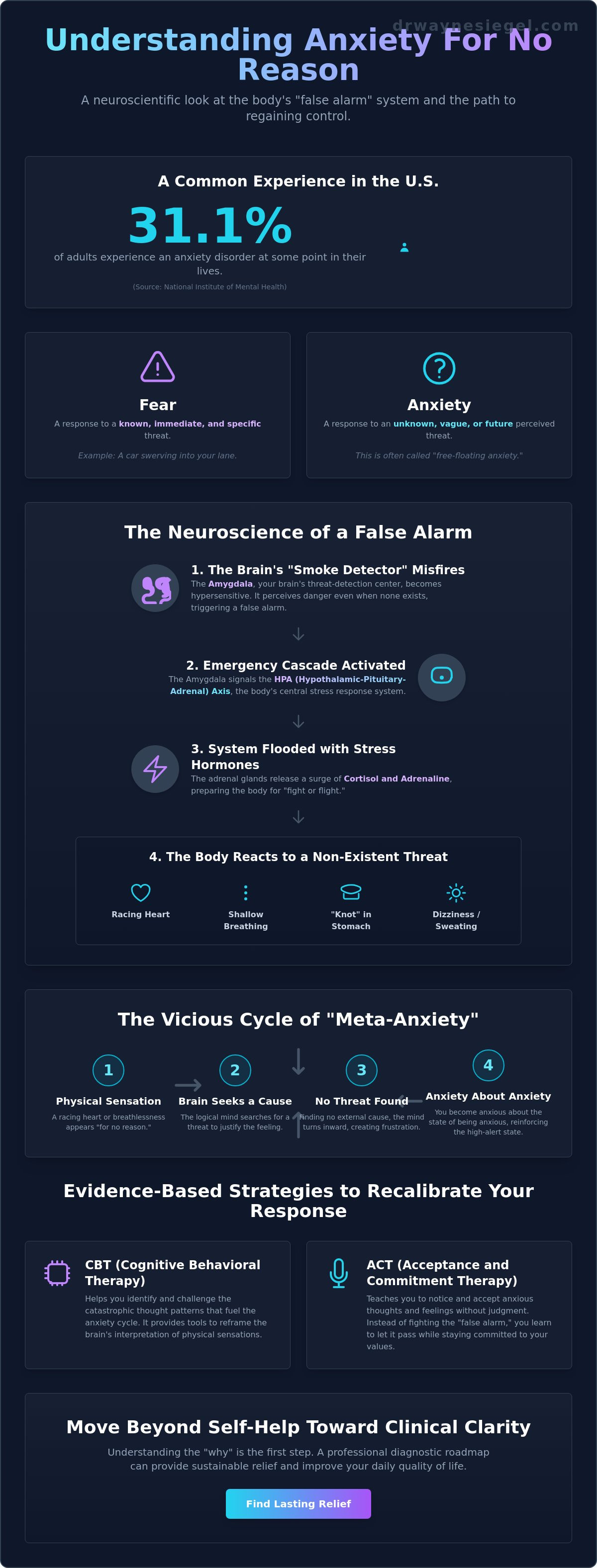
What if the physical "alarm" sounding in your chest isn't a sign of a hidden illness, but a miscommunication between your brain's protective centers? I understand how unsettling it feels when a racing heart or sudden breathlessness interrupts a perfectly calm moment. You might spend hours scanning your environment for a threat that isn't there, leading to a profound sense of mental fatigue. It's a common experience. The National Institute of Mental Health reports that 31.1 percent of U.S. adults encounter an anxiety disorder at some point in their lives. You aren't "crazy" for feeling anxious for no reason, and there's a logical, biological explanation for your distress.
I've written this to help you move beyond the confusion by uncovering the physiological and psychological drivers behind these sudden surges. We'll look at how the amygdala can trigger a "fight or flight" response even when the prefrontal cortex sees no immediate danger. This article provides a roadmap to clinical clarity by exploring evidence-based strategies to regulate your nervous system and regain your sense of stability. By understanding the "why" behind your symptoms, we can begin the journey toward lasting relief and improved daily quality of life.
Key Takeaways
- Distinguish between specific fears and "free-floating" anxiety to understand how your brain processes perceived threats without an obvious source.
- Explore the neuroscience of the HPA axis and how a hyper-reactive amygdala can trigger a physiological "false alarm" in the body.
- Identify the hidden lifestyle and biological factors that contribute to feeling anxious for no reason, from sleep patterns to cortisol fluctuations.
- Learn how evidence-based strategies like CBT and ACT can help you recalibrate your nervous system and challenge the narrative of danger.
- Discover how a professional diagnostic roadmap can help you move beyond self-help toward clinical clarity and sustainable relief.
What Does It Mean to Feel Anxious for No Reason?
I often hear patients describe a heavy, tightening sensation in their chest that arrives without an invitation or an obvious cause. They tell me they're feeling anxious for no reason, a state that clinicians often refer to as "free-floating anxiety." Unlike situational stress, which has a clear origin like a looming deadline or a difficult conversation, this type of anxiety lacks a tangible target. It's the difference between fear and anxiety; fear is a response to a known threat, such as a car swerving into your lane, while anxiety is a response to an unknown or perceived future threat that hasn't materialized.
The absence of a visible trigger often makes the experience more distressing. When you can point to a problem, you can work toward a solution. When the source is invisible, the mind feels powerless, which often leads to a secondary layer of frustration. This persistent, non-specific state is frequently categorized as Generalized Anxiety Disorder (GAD), a condition where the nervous system remains in a high-alert state regardless of external circumstances. My goal is to help you find clarity by looking at the neurological and psychological patterns that keep you in this loop.
The Difference Between Normal Worry and Clinical Anxiety
Distinguishing between everyday worry and a clinical condition is a vital step in your journey toward wellness. I look for specific markers of duration and intensity to provide an accurate cognitive profile. The primary diagnostic standard is the "six-month rule," which tracks how long these feelings have persisted. When anxiety becomes chronic, it moves beyond a temporary mood and begins to interfere with your executive functioning, impairing your ability to organize thoughts, make decisions, or regulate emotions effectively.
Clinical anxiety is defined by the DSM-5 as excessive worry occurring more days than not for at least six months about a number of events or activities, which the individual finds difficult to control. This standard helps us move beyond vague descriptions and into a structured roadmap for treatment.
Why Your Brain Scans for Problems When None Exist
The human brain is a master at pattern recognition, but an anxious mind often falls into a trap of confirmation bias. When your body experiences the physical sensations of a "fight or flight" response, such as a racing heart or shallow breathing, your brain feels compelled to justify those sensations. If there isn't a real-world problem to solve, your mind may invent one, or it might fixate on minor inconveniences and amplify them into catastrophes.
This often creates a cycle of "meta-anxiety," which is the process of worrying about the fact that you're worrying. You might start feeling anxious for no reason and then become increasingly stressed because you can't find the "why" behind the feeling. This loop reinforces the brain's high-alert state, making it feel as though danger is just around the corner, even when your environment is perfectly safe. Understanding this mechanism is the first step in regaining a sense of stability and peace.
The Neuroscience of the False Alarm: Why Your Body Reacts
When you're feeling anxious for no reason, it often feels like your body has betrayed you. This experience is rooted in the amygdala, a small, almond-shaped structure that acts as your brain's primary smoke detector. Its fundamental role is to scan your environment for threats and initiate a survival response. When the amygdala perceives danger, it signals the hypothalamus to activate the HPA (Hypothalamic-Pituitary-Adrenal) axis. This trigger causes a rapid cortisol spike, flooding your system with the energy needed to survive a crisis. The problem arises when this system becomes hypersensitive. In a state of chronic, simmering stress, your nervous system's baseline shifts. The alarm begins to sound not because there's a predator in the room, but because the "smoke detector" has become calibrated to catch even the slightest hint of heat.
The Physiology of a Misfiring Nervous System
Adrenaline floods the system within milliseconds of a perceived threat, immediately increasing your heart rate and redirecting blood flow away from the digestive tract toward your large muscle groups. This biological redirection explains why sudden anxiety often includes a "knot" in the stomach or a racing pulse. This is a "bottom-up" process; the physical sensations originate in the primitive brain stem and reach your body before the logical prefrontal cortex can even process the situation. You cannot always "think" your way out of a physical feeling because the body is reacting faster than the conscious mind can intervene. Over time, neuroplasticity can create a well-worn path for these responses. If your brain practices anxiety frequently, it becomes more efficient at triggering it. Identifying personal anxiety triggers can help you begin to distinguish between an actual threat and a biological misfire.
The Role of Neurotransmitters: GABA and Serotonin
Chemical balance is essential for maintaining emotional stability and a calm physical state. Serotonin helps regulate mood and sleep, while GABA acts as your brain's primary inhibitory neurotransmitter. Specifically, GABA functions to inhibit over-active neural firing, essentially acting as the "brakes" for your nervous system. When these chemical levels are low, your threshold for stress drops, making you more susceptible to feeling anxious for no reason. Interestingly, research indicates that 95 percent of the body's serotonin is produced in the gastrointestinal tract, highlighting a powerful link between gut health and mental clarity. Understanding these biological markers is the first step toward regaining control. My goal is to help you gain clarity on your unique cognitive profile so we can address these physiological roots with precision and care.
Identifying Hidden Triggers: It Might Not Be "No Reason"
When you experience a sudden surge of panic while sitting on your couch, it feels like your brain is malfunctioning. I often tell my patients that feeling anxious for no reason is usually a signal that your body is reacting to a trigger your conscious mind hasn't identified yet. Bessel van der Kolk’s research on how the "body keeps the score" shows that unprocessed trauma can live in our nervous system for decades. A specific scent or a subtle change in someone's tone can trigger a fight or flight response before you even realize you're uncomfortable.
Daily habits also play a massive role in your baseline stability. For instance, a 2022 study published in Psychopharmacology noted that even moderate caffeine intake can mimic the physiological symptoms of a panic attack in sensitive individuals. Similarly, when your blood sugar drops below 70 mg/dL, your body releases adrenaline to compensate. This chemical spike can make you feel shaky and terrified, even if your life is perfectly calm. Poor sleep hygiene further compounds this by increasing amygdala reactivity by as much as 60 percent, making you hyper-aware of every internal sensation.
Anxiety as a Symptom of Undiagnosed ADHD
In my clinical practice, I frequently see a significant overlap between chronic restlessness and undiagnosed Adult ADHD. When your executive functions struggle to organize tasks, your brain enters a state of constant high alert. This creates a persistent sense of impending doom because you're subconsciously waiting for the next ball to drop.
This "masking" exhaustion often leads to sudden emotional crashes that look exactly like generalized anxiety. You aren't just worried; your brain is fatigued from the manual effort of navigating a world not built for your cognitive profile. If this resonates with you, a formal ADHD Assessment can provide the roadmap you need to find actionable meaning behind your struggles.
Medical Mimics of Anxiety
It's vital to remember that the mind and body aren't separate. Physical imbalances often present as emotional distress. For example, hyperthyroidism can accelerate your heart rate to over 100 beats per minute, tricking your brain into thinking you're in danger. This is a core component of the neuroscience of the body's false alarm, where the amygdala reacts to internal physiological shifts rather than external threats.
Other common culprits include:
- Vitamin B12 deficiency: This can cause neurological irritability and mood swings.
- Low Vitamin D levels: Research suggests a 30 percent higher risk of anxiety in individuals with significant deficiencies.
- Hormonal shifts: Fluctuations in estrogen or cortisol can disrupt emotional regulation and sleep patterns.
If you're tired of feeling anxious for no reason, we can use a comprehensive diagnostic psychological evaluation to distinguish between a primary anxiety disorder and these underlying medical or neurodevelopmental factors. My goal is to help you move beyond labels and find the clarity you deserve.
Evidence-Based Strategies to Recalibrate Your Response
When you're feeling anxious for no reason, your brain's internal alarm system is essentially misfiring. I often explain to my patients that we aren't trying to "fix" a broken brain; we're retraining a highly sensitive one. Clinical data from the Journal of Clinical Psychiatry shows that structured interventions can reduce symptom severity by 50% or more. We achieve this by teaching the amygdala that physiological sensations, while uncomfortable, aren't indicators of an actual threat.
The "Exposure" principle is the cornerstone of this retraining. When you experience a surge of adrenaline and choose to stay present rather than fleeing, you facilitate a process called habituation. You're proving to your nervous system that the feeling isn't fatal. Over time, this weakens the neural pathways that trigger the "danger" narrative, allowing your baseline to return to a state of calm stability.
CBT Techniques for Unexplained Anxiety
Cognitive Behavioral Therapy (CBT) helps you identify the stories your mind tells to explain physical tension. I use cognitive restructuring to help patients label "catastrophizing" when it starts. If your heart races, your mind might jump to a health crisis. We interrupt this by testing the evidence. Socratic questioning involves a structured dialogue where you examine the evidence for and against your anxious thoughts to determine their objective validity.
- Worry Time: I recommend scheduling exactly 15 minutes at 4:30 PM to process concerns, which helps contain generalized anxiety to a specific window.
- Labeling: Identifying a thought as "just a thought" reduces its emotional power.
- Grounding: Using the 5-4-3-2-1 technique engages the prefrontal cortex to override the limbic system's distress.
The ACT Approach: Expansion and Acceptance
Acceptance and Commitment Therapy (ACT) shifts the focus from eliminating anxiety to changing your relationship with it. I utilize "defusion" techniques to help you see thoughts as transient mental events rather than absolute truths. You aren't an anxious person; you're a person experiencing the sensation of anxiety. This distinction is vital for maintaining your sense of self during a flare-up.
The "Guest House" metaphor is a powerful tool in this process. You learn to treat anxiety like a temporary visitor in your home. You don't have to like the guest, but you don't have to fight them either. By allowing the feeling to exist without letting it drive your actions, you can maintain values-based living. This means you continue moving toward what matters to you, even while feeling anxious for no reason. Research into Mindfulness-Based Stress Reduction (MBSR) confirms that an 8-week practice can significantly decrease amygdala reactivity, providing a clearer path forward.
If you're ready to move beyond symptoms and find a path toward lasting clarity, a neuropsychological evaluation can provide the objective roadmap you need.
Moving Toward Clinical Clarity: The Path to Relief
While lifestyle adjustments and mindfulness apps can offer temporary support, they often reach a plateau when you're feeling anxious for no reason. When sudden anxiety persists, it usually indicates that the underlying neurobiological or psychological drivers require more than self-help. I've found that true relief begins with a transition from managing symptoms to understanding their origin. A board-certified psychologist offers the diagnostic precision necessary to identify whether your anxiety stems from autonomic nervous system dysregulation, cognitive processing patterns, or specific life stressors.
Evidence-based therapy provides a distinct advantage over generalized wellness advice. Methods such as Cognitive Behavioral Therapy (CBT) and Exposure and Response Prevention (ERP) are grounded in decades of clinical research. These frameworks don't just offer a temporary distraction; they provide a toolkit for long-term cognitive restructuring. According to data from the American Psychological Association, evidence-based treatments lead to significant symptom reduction in approximately 75 percent of patients. This scientific rigor ensures that we aren't just guessing at what might work, but rather applying proven protocols to your specific experience.
I understand that finding the right expert can feel like another hurdle. However, accessibility has expanded significantly through professional networks. Through PsyPact, a national interstate compact, I can provide high-level psychological care via telehealth to individuals in over 40 participating states. This ensures that your location doesn't limit your access to specialized clinical expertise and a clear path toward recovery.
What to Expect in Professional Therapy
Our work begins with a comprehensive diagnostic assessment. This process moves us beyond surface-level descriptions to create a detailed map of your cognitive and emotional landscape. From there, we develop a personalized treatment plan. This isn't a rigid set of instructions, but a collaborative, person-centered effort. We work as partners to refine your goals and track your progress. If you're currently evaluating your options, I recommend reviewing this guide on choosing a clinic for psychology to ensure your provider meets the highest standards of care.
Your Roadmap to a Calmer Future
The journey from the confusion of feeling anxious for no reason to a state of clinical insight is transformative. By relying on evidence-based practices, we move toward measurable milestones. We use data and objective observation to confirm that you're gaining mastery over your anxiety. My goal is to provide you with the clarity needed to regain control of your daily life. You don't have to navigate these complex emotional landscapes alone; there is a structured, scientific, and compassionate way forward.
Finding Clarity and a Roadmap for Relief
Understanding the neuroscience behind your body's false alarms is the first step toward regaining control. While it often feels like you're feeling anxious for no reason, your nervous system is likely reacting to hidden triggers or ingrained patterns that we can identify through a clinical lens. I utilize evidence-based frameworks, specifically Cognitive Behavioral Therapy (CBT) and Acceptance and Commitment Therapy (ACT), to help you recalibrate these responses. Research consistently shows that these structured approaches provide a reliable roadmap for long-term emotional stability.
With over 25 years of experience as a board-certified clinical psychologist, I specialize in helping patients move beyond symptoms toward a clearer picture of their health. As a PsyPact provider, I offer these specialized telehealth services across multiple states, ensuring professional support is accessible regardless of your location. You don't have to navigate this complex cognitive landscape alone. We can work together to transform your biological false alarms into actionable insights.
Gain clarity on your anxiety; schedule a consultation with Dr. Wayne Siegel today.
I look forward to helping you find the stability and peace of mind you deserve.
Frequently Asked Questions
Is it possible to have a panic attack for no reason?
Yes, it's entirely possible to experience an "unexpected" panic attack without a recognizable external trigger. The DSM-5 classifies these as spontaneous events that can occur even during a state of relaxation. Research indicates that 22.7% of adults in the U.S. will experience a spontaneous panic attack during their lifetime. I've found that while the cause isn't visible, it's often a result of the brain's internal alarm system misfiring due to accumulated physiological stress.
What is the "3-3-3 rule" for sudden anxiety?
The 3-3-3 rule is a sensory grounding technique where you name three things you see, identify three sounds you hear, and move three distinct parts of your body. This practice helps shift focus from internal distress to the external environment. When you're feeling anxious for no reason, this method provides a structured roadmap to calm the nervous system. It's an evidence based tool that helps re-engage your brain's logical processing centers during a sudden surge of fear.
Can lack of sleep cause anxiety for no reason?
Sleep deprivation is a primary physiological trigger for sudden unease. A 2019 study from UC Berkeley demonstrated that a single night of total sleep loss can increase anxiety levels by 30%. Without restorative rest, the amygdala becomes overactive, making you more reactive to minor stressors. I often see patients whose unexplained anxiety is actually a biological response to a persistent sleep debt that prevents the brain from regulating emotions effectively.
How do I tell the difference between anxiety and a heart problem?
Anxiety often causes a rapid heart rate, but cardiac issues usually involve persistent chest pressure or pain radiating to the jaw and left arm. According to the American Journal of Medicine, about 25% of patients who visit emergency rooms for chest pain are actually experiencing a panic episode. I recommend getting a physical screening first to ensure your heart is healthy. Once cleared, we can focus on the neuropsychological factors contributing to your physical symptoms.
Why do I feel anxious as soon as I wake up?
Morning anxiety is frequently linked to the Cortisol Awakening Response, which is a natural rise in cortisol that occurs about 30 minutes after you wake up. For many, this surge is higher than normal, leading to a physical sensation of dread. A 2017 study found that individuals with high levels of perceived stress show a much sharper cortisol spike in the morning. This biological process explains why you might feel panicked before you've even started your day.
Can certain foods or drinks trigger unexplained anxiety?
Caffeine is a well-documented trigger, as consuming more than 400 milligrams can induce heart palpitations and tremors that mimic a panic attack. A study in General Hospital Psychiatry notes that caffeine sensitivity varies, but it consistently increases physiological arousal. Additionally, reactive hypoglycemia from high-sugar diets can trigger an adrenaline release. These physical changes often lead to a feeling of being anxious for no reason because the brain is simply reacting to a chemical shift in the body.
When should I see a psychologist for my anxiety?
You should seek a professional evaluation if your anxiety persists for over six months or disrupts your ability to function at work or in relationships. The American Psychological Association notes that early intervention leads to better long-term outcomes. I treat these assessments as a collaborative journey to uncover the "why" behind your struggles. My goal is to provide you with the clarity and actionable insights needed to improve your daily quality of life and emotional stability.