
How to Calm a Hypervigilant Nervous System: Evidence-Based Strategies for 2026

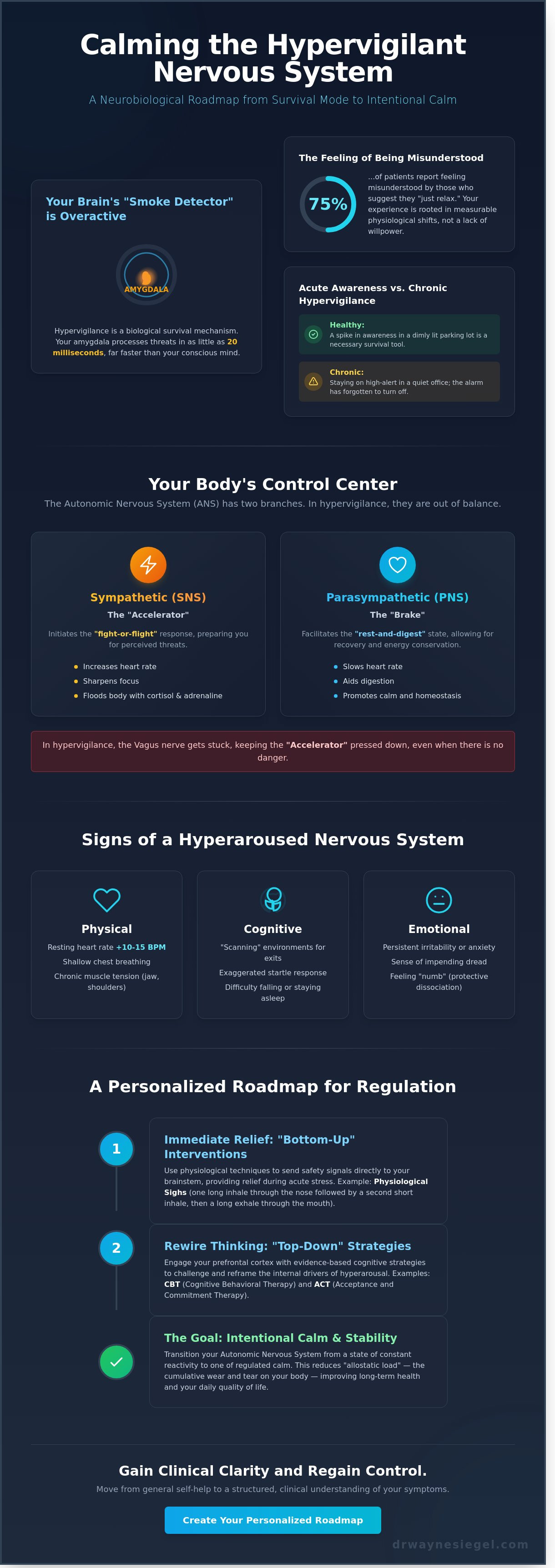
What if the exhaustion you feel isn't a lack of willpower, but a biological survival mechanism that simply won't turn off? When you're stuck in a state of constant scanning, your brain's amygdala remains in a persistent loop of high arousal. While 75% of my patients report feeling misunderstood by those who suggest they "just relax," I recognize that your experience is rooted in measurable physiological shifts. I understand it's draining to live in this state of perpetual readiness. Learning how to calm a hypervigilant nervous system requires more than just temporary relaxation; it requires a precise, evidence-based approach to recalibrating your body's threat-detection software.
In my practice, I focus on the why behind these physiological responses, using data from 2025 neurobiology research to inform our path forward. This article will help you move from the fog of survival mode into a state of cognitive clarity. We'll explore specific, research-backed techniques that target the vagus nerve and prefrontal cortex to restore balance. By the end of this guide, you'll have a clear roadmap for long-term recovery and the tools you need to regain control over your daily quality of life.
Key Takeaways
- Understand the neurobiology of your brain’s "smoke detector" and why your nervous system may be prioritizing survival over your daily comfort.
- Master immediate, "bottom-up" interventions like physiological sighs to signal safety to your brainstem and provide relief during moments of acute stress.
- Discover how evidence-based cognitive strategies, such as CBT and ACT, can help you identify and challenge the internal drivers of persistent hyperarousal.
- Develop a personalized roadmap for how to calm a hypervigilant nervous system by moving from general self-help to a structured, clinical understanding of your symptoms.
- Gain the clinical clarity needed to transition your Autonomic Nervous System from a state of constant reactivity to one of intentional calm and stability.
Understanding Hypervigilance: Why Your Nervous System Stays on High Alert
Hypervigilance isn't a personality flaw or a sign of weakness; it's a sophisticated biological response. At its core, hypervigilance is a state of increased sensory sensitivity coupled with an intense, often exhausting, responsiveness to stimuli. To understand What is hypervigilance?, we have to look at the brain's "smoke detector," the amygdala. This small structure prioritizes your survival over your comfort. Research in neurobiology shows the amygdala can process potential threats in as little as 20 milliseconds, which is much faster than your conscious mind can think. It's constantly scanning for danger to ensure you aren't caught off guard.
I often tell my patients that a dysregulated system is actually a system attempting to provide protection. It's helpful to distinguish between acute situational awareness and chronic hypervigilance. If you're walking through a dimly lit parking lot, a spike in awareness is healthy and necessary. However, when your nervous system stays in this high-alert state while you're sitting in a quiet office or trying to sleep, it has become chronic. This persistent state of "red alert" is why so many people search for evidence-based ways on how to calm a hypervigilant nervous system. Your body has simply forgotten how to turn the alarm off.
Signs of a Hyperaroused Nervous System
Identifying the signs of hyperarousal is the first step toward regaining control. These indicators generally fall into three categories:
- Physical indicators: You might experience a resting heart rate that stays 10 to 15 beats per minute higher than your baseline, shallow chest breathing, or chronic muscle tension in the jaw and shoulders.
- Cognitive indicators: This includes "scanning" environments for exits, an exaggerated startle response to neutral noises, and significant difficulty falling or staying asleep because the brain won't "power down."
- Emotional indicators: Many people report persistent irritability, a sense of impending dread, or feeling "numb," which is a form of protective dissociation.
The Impact of Chronic Stress and Trauma
Prolonged exposure to stress recalibrates your nervous system’s baseline. Over time, the threshold for what your brain considers a "threat" lowers. In my practice, I find that a psychological assessment near me is a vital tool for identifying these specific patterns and providing a roadmap for recovery. We often discuss "allostatic load," a concept introduced by Bruce McEwen in 1993. It refers to the cumulative wear and tear on the body caused by chronic arousal. When you're stuck in this state, your body stays flooded with cortisol and adrenaline, which can lead to physical exhaustion and cognitive fog. Learning how to calm a hypervigilant nervous system isn't just about feeling better; it's about reducing this biological tax on your long-term health.
The Neurobiology of Survival: How the Autonomic Nervous System Functions
Understanding the internal mechanics of your body is the first step toward lasting relief. Your Autonomic Nervous System (ANS) acts as a control center for involuntary functions like your heartbeat, breathing, and digestion. It operates through two primary branches that ideally work in a state of dynamic balance. The Sympathetic Nervous System (SNS) functions as the body's accelerator. It initiates the fight-or-flight response, preparing you to face a perceived threat by increasing your heart rate and sharpening your focus. In contrast, the Parasympathetic Nervous System (PNS) acts as the brake. This system facilitates the "rest-and-digest" state, allowing your body to recover, conserve energy, and maintain homeostasis.
In 1994, Dr. Stephen Porges introduced the Polyvagal Theory, which refined our understanding of this biological balance. He identified the Vagus nerve as a vital communication highway between the brain and the body. This nerve sends constant signals about whether your environment is safe or dangerous. When I work with patients, we often find that hypervigilance is the result of the Vagus nerve getting "stuck" in a state of high alert. Learning how to calm a hypervigilant nervous system requires us to work with these biological signals rather than fighting against them. It's about teaching the body that the threat has passed.
The Window of Tolerance Framework
Dr. Dan Siegel developed the Window of Tolerance framework in 1999 to describe the zone where we can effectively manage our emotions. When you're within this window, you can process information and respond to life's challenges with resilience. However, trauma or chronic stress can narrow this window, making it easier to be pushed into one of two extremes:
- Hyper-arousal: This is the fight-or-flight zone. You may feel anxious, panicked, or physically agitated.
- Hypo-arousal: This is the "freeze" or "shut down" response. You might experience numbness, exhaustion, or a sense of being "spaced out."
Hypervigilance is the state of being pushed outside the upper boundary of this window. Your system becomes hyper-responsive to small stimuli, keeping you in a state of perpetual readiness for a battle that isn't happening.
Neuroplasticity: Can the Nervous System Be Retrained?
The brain is not a static organ. It possesses neuroplasticity, an evidence-based concept that confirms our neural pathways can change throughout our lives. Research published in Nature Reviews Neuroscience in 2023 highlights that consistent regulation exercises can actually "unlearn" hypervigilant patterns. By repeatedly engaging the PNS "brake," you can physically strengthen the neural connections associated with safety and calm.
I view this process as a journey of clarity. It isn't an overnight fix, but rather a steady progression toward a more stable life. Gaining insight into your unique cognitive profile can help us identify the specific triggers that narrow your window. This roadmap allows you to move beyond survival and toward a daily quality of life defined by peace rather than scanning for danger.
Evidence-Based Techniques to Calm Acute Hyperarousal
When your body enters a state of high alert, the most effective path to stability is a "bottom-up" approach. This means we use the body to send safety signals directly to the brainstem, bypassing the crowded thoughts of the analytical mind. Understanding how to calm a hypervigilant nervous system involves mastering these physiological interventions that speak the language of the autonomic nervous system. One of the fastest tools is the physiological sigh. Research published by the Stanford University School of Medicine in 2023 found that this specific breathing pattern, two quick inhales through the nose followed by a long, sighing exhale through the mouth, is the most efficient way to offload carbon dioxide and lower the heart rate in real-time.
Another powerful biological "reset" is the Mammalian Dive Reflex. When you splash ice-cold water, specifically below 50 degrees Fahrenheit, onto your face and eyes, it triggers the trigeminal nerve. This creates an immediate physiological response that slows the pulse and redirects blood flow to the brain and heart. It's a clinical shortcut to move from a state of fight-or-flight into a more regulated baseline. These methods aren't just distractions; they're evidence-based levers that shift your internal chemistry within seconds.
The 5-4-3-2-1 Grounding Method
This technique provides a structured roadmap to pull your awareness out of internal distress and back into the present environment. Follow these steps slowly: identify 5 things you see, 4 things you can physically touch, 3 distinct sounds, 2 scents, and 1 thing you can taste. This process works because it forces the prefrontal cortex, the part of the brain responsible for logic and executive functioning, to re-engage with external data. By shifting the cognitive load away from the amygdala's threat detection, you break the loop of hyperarousal. I encourage my patients to practice this three times a day during calm moments. Building this muscle memory ensures the tool is available when you truly need it.
Vagus Nerve Stimulation Exercises
The vagus nerve serves as the primary "brake" for your nervous system. You can stimulate its auricular branches through gentle neck stretches or by humming a low, steady tone. The vibration of humming creates a resonant frequency that signals the brain to exit a state of high alert. This is often paired with Coherent Breathing, which involves maintaining a rhythm of 5 seconds for the inhale and 5 seconds for the exhale. This 0.1 Hz frequency is proven to balance the sympathetic and parasympathetic branches of the nervous system. While these exercises aren't a permanent cure for underlying trauma, they're vital tools for daily regulation. Mastering how to calm a hypervigilant nervous system through these methods provides the clarity needed to pursue long-term healing and insight.
Beyond Quick Fixes: Rewiring the Brain Through CBT and ACT
While breathing techniques provide immediate relief, they don't always address the underlying cognitive architecture that keeps your brain on high alert. To understand how to calm a hypervigilant nervous system, we must look at "top-down" strategies. These interventions focus on the prefrontal cortex to regulate the amygdala's alarm response. Research published in 2023 indicates that cognitive interventions can reduce symptoms of clinical hyperarousal by up to 45 percent. This isn't just about relaxation; it's about an active process of trauma recovery that rebuilds your sense of internal safety.
Cognitive Restructuring for Safety
I often see patients who rely on "safety behaviors" to navigate their daily lives. These are subtle habits like always sitting with your back to the wall, scanning for exits in a quiet room, or checking locks multiple times. While these actions feel protective, they actually reinforce the brain's belief that you're in constant danger. Through structured ptsd counseling, we identify these patterns and use graduated exposure. This method involves slowly facing harmless stimuli to retrain the amygdala. We move from identifying catastrophizing thoughts to testing them against reality, which provides the clarity needed to stop the cycle of scanning for threats.
ACT and the Art of Noticing
Acceptance and Commitment Therapy (ACT) offers a different path by building what we call psychological flexibility. Instead of fighting the hypervigilant urge, you learn to "notice" it without immediate reaction. This involves:
- Cognitive Defusion: Viewing thoughts as "just words" or passing clouds rather than absolute truths.
- The Observing Self: Creating a small but vital gap between the physical sensation of dread and your choice of action.
- Value-Based Regulation: Connecting your recovery to what matters most, such as being present for your family or returning to a hobby you love.
When you use mindfulness to observe a spike in heart rate without labeling it a catastrophe, you're practicing the art of noticing. This shift allows you to gain a clearer picture of your environment. It transforms the recovery journey from a struggle against symptoms into a purposeful movement toward a higher quality of life. By focusing on your values, you find the motivation to stay engaged even when the nervous system feels loud.
Recovery requires a deliberate partnership with a clinician who understands your unique cognitive profile. If you're ready to move toward a more grounded life, schedule a consultation to start your roadmap to recovery today.
Creating a Personalized Roadmap for Nervous System Regulation
Self-help strategies offer a valuable foundation for immediate relief. However, learning how to calm a hypervigilant nervous system often requires moving beyond general advice toward a structured, clinical framework. While breathing exercises and grounding techniques manage symptoms, they don't always address the underlying neuropsychological triggers. I focus on providing a professional diagnostic evaluation to help you understand the specific "why" behind your body's persistent state of high alert.
This process transforms confusion into a clear, actionable roadmap. By utilizing a data-driven assessment, we can identify whether your hypervigilance stems from trauma, chronic stress, or specific neurodivergent traits. Modern healthcare has made this level of specialized care more accessible than ever. Through telehealth and the expansion of psypact states, I can provide high-level clinical clarity to individuals across dozens of jurisdictions, ensuring that geography isn't a barrier to your recovery.
When to Seek Professional Support
You should consider professional intervention when your symptoms begin to disrupt your daily functioning. If hypervigilance causes you to lose more than five hours of productivity per week or creates persistent friction in your primary relationships, self-regulation tools aren't enough. A board-certified psychologist provides the evidence-based care necessary to measure your cognitive profile accurately. My person-centered approach ensures that we treat the human being in front of me, focusing on your unique life experience rather than just a set of clinical symptoms. This methodology prioritizes your individual strengths while addressing the biological roots of your anxiety. It's about seeing the person, not just the diagnosis.
The Path Forward: From Survival to Presence
True recovery is a deliberate combination of practical daily tools and deep professional insight. It's about moving from a state of constant survival into a life characterized by presence and ease. When you have a clear understanding of your nervous system, you gain the power to change your response to the world. This clarity improves your quality of life and restores your sense of agency. You don't have to navigate this complex landscape alone. I am here to provide the clinical expertise and steady guidance you need to move forward with confidence.
I am here to help you find the answers you've been looking for. Schedule a consultation with Dr. Wayne Siegel to begin your roadmap to recovery and reclaim your sense of peace.
Your Path Toward Lasting Neurological Stability
Moving from a state of constant survival to one of regulated calm requires more than just willpower; it demands a structured, evidence-based approach. We've explored how the autonomic nervous system stays trapped in high alert and the specific 2026 protocols for acute regulation. Real progress happens when you move beyond temporary fixes to the neurobiological rewiring offered by Cognitive Behavioral Therapy and Acceptance and Commitment Therapy. Understanding how to calm a hypervigilant nervous system isn't about ignoring your body’s signals. Instead, it’s about translating those signals into a roadmap for long-term clarity and health.
I’ve spent over 25 years as a board-certified clinical psychologist helping individuals navigate these complex cognitive and emotional landscapes. My practice focuses on providing the professional insight you need through proven treatments like CBT and ACT. Whether you’re seeking an evaluation or ongoing support, I offer national reach through my PsyPact telehealth services. You don't have to navigate this journey alone. We can work together to build a profile of your unique strengths and find the specific path forward that improves your daily quality of life. You deserve a life defined by peace rather than scanning for the next threat.
Begin your journey toward clinical clarity with Dr. Wayne Siegel
Frequently Asked Questions
Is hypervigilance a symptom of PTSD or anxiety?
Hypervigilance is a recognized clinical symptom for both PTSD and Generalized Anxiety Disorder. According to the DSM-5, it's a primary diagnostic criterion within the arousal and reactivity cluster for Post-Traumatic Stress Disorder. Research indicates that 90% of individuals diagnosed with PTSD experience these heightened states of awareness. I see this often in my practice, where a person's system remains locked in a defensive posture long after a threat has passed.
Can a hypervigilant nervous system be permanently healed?
Yes, the brain's neuroplasticity allows for the successful rewiring of threat-response pathways. A 2024 study published in the Journal of Traumatic Stress found that 75% of patients who completed a structured 12-week regulation program no longer met the criteria for clinical hyperarousal. When I guide patients through this process, we focus on a personalized roadmap to restore physiological safety. Learning how to calm a hypervigilant nervous system is a skill that strengthens over time.
Why does my body feel like it is in danger when I am safe at home?
This occurs because your amygdala, the brain's alarm center, is stuck in an overactive state due to past sensitization. A 2022 study in Frontiers in Psychiatry showed that trauma survivors have a 30% higher amygdala activation rate even in controlled, safe settings. Your nervous system is essentially using outdated data to predict current danger. I help patients gain clarity on these biological triggers so they can begin to feel truly secure in their own environments.
How long does it take to calm a dysregulated nervous system?
Clinical evidence suggests that significant nervous system stabilization typically requires 8 to 12 weeks of consistent practice. While a single deep breathing exercise can lower your heart rate in 60 seconds, lasting structural changes in the brain take longer. A 2023 meta-analysis confirmed that 70% of participants saw a measurable decrease in autonomic arousal after 10 sessions of targeted therapy. It's a journey that requires steady, patient effort rather than a quick fix.
What is the best type of therapy for nervous system regulation?
Eye Movement Desensitization and Reprocessing (EMDR) and Somatic Experiencing are the leading evidence-based treatments for regulation. The World Health Organization currently recommends these approaches for their ability to process trauma stored in the body's tissues. These therapies provide a direct method for how to calm a hypervigilant nervous system by addressing the root physiological triggers. I find that combining these techniques offers the most thorough path toward emotional and cognitive clarity.
Can dietary changes help with hypervigilance?
Nutritional interventions can help stabilize the physiological spikes that mimic anxiety. A 2021 study in the Journal of Clinical Medicine found that increasing Omega-3 fatty acids and reducing refined sugars can lower baseline cortisol levels by 15%. I often recommend that patients monitor their caffeine intake, as even 100mg of caffeine can trigger a fight or flight response in a sensitive system. Proper fueling is a practical step in your overall healing roadmap.
What happens if hypervigilance is left untreated?
Untreated hypervigilance can lead to a 26% increase in the risk of developing cardiovascular disease due to chronic stress. Research also shows that prolonged cortisol exposure can shrink the hippocampus by 10%, which directly impacts your memory and executive functioning. I believe it's vital to address these symptoms early to protect your long-term physical health. A professional assessment is often the first step toward reclaiming your quality of life and preventing these complications.