
Preparing for Your First Therapy Appointment: A Clinical Guide to Starting Well

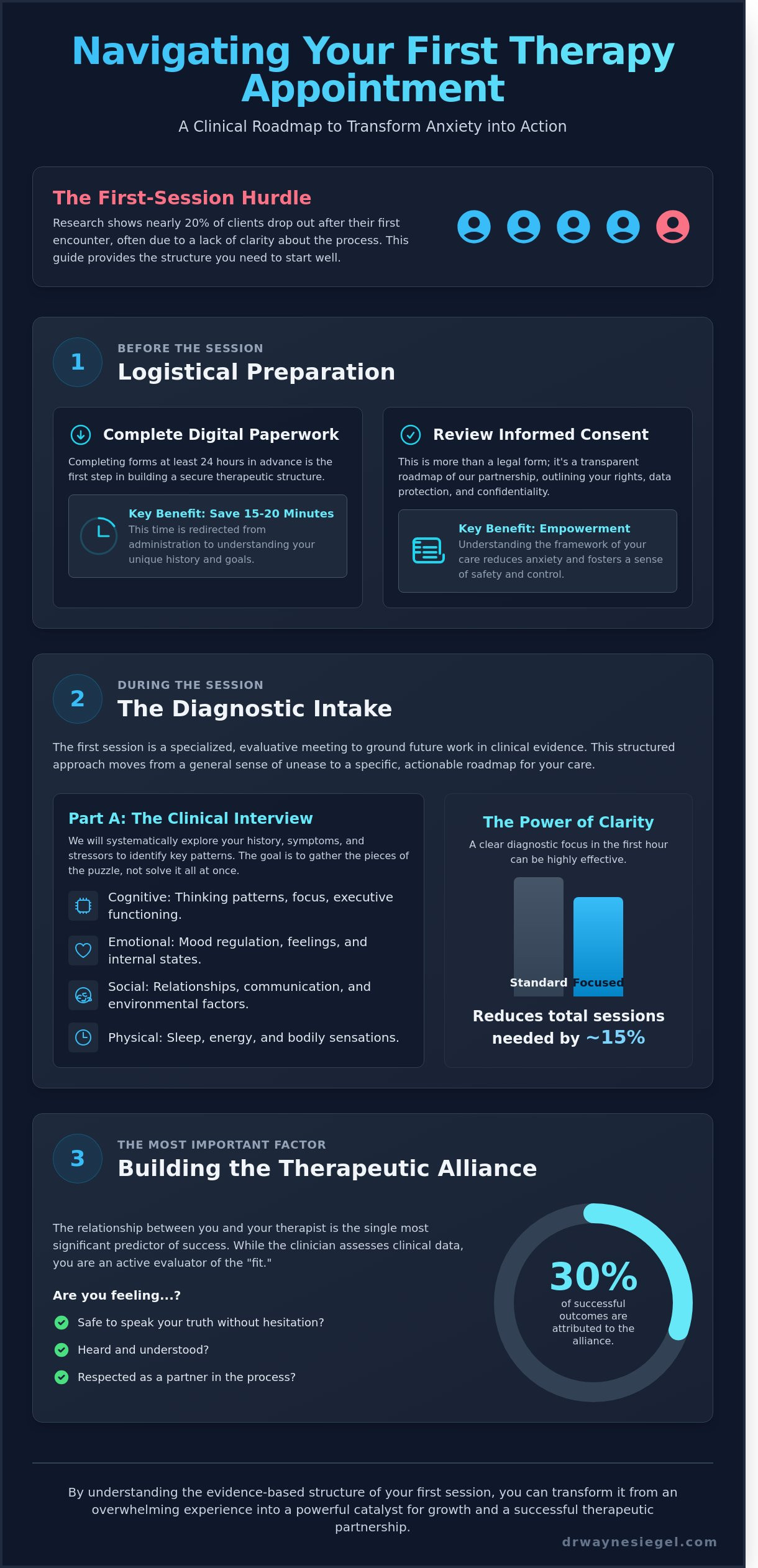
Did you know that research published in the Journal of Counseling Psychology shows that nearly 20 percent of clients drop out of treatment after their very first encounter? This high rate of early attrition often stems from a lack of clarity regarding what to expect during the intake process. When you're preparing for your first therapy appointment, it's common to feel a mix of anxiety and confusion about clinical paperwork or the fear of "doing therapy wrong." I believe that understanding the evidence-based structure of a first session can significantly lower these barriers and foster a sense of safety.
You likely feel that this first step should be a catalyst for growth, yet the weight of being judged by a professional can feel overwhelming. I'm here to provide a clinical guide that covers the logistical, emotional, and clinical aspects of your session to ensure you start well. We'll explore a roadmap of the intake process, discuss how to handle specific assessment tools, and identify actionable steps to prepare your mind for a successful partnership.
Key Takeaways
- Understand the purpose of the initial diagnostic intake as a specialized evaluative session that bridges the gap between clinical data collection and meaningful therapeutic intervention.
- Optimize your clinical time by preparing for your first therapy appointment with early digital paperwork, allowing for a more focused and intentional start to your care.
- Learn to transform general emotional struggles into specific, actionable objectives using evidence-based frameworks like CBT and ACT to provide a clear roadmap for progress.
- Gain clarity on the clinical meaning of a diagnosis and debunk common misconceptions to foster a sense of security and professional partnership from day one.
- Discover how integrating research-backed methodologies with a person-centered focus ensures your treatment is both scientifically rigorous and deeply attuned to your unique quality of life goals.
Understanding the Intake Process: Why the First Session is Different
Walking into a clinician's office for the first time often carries a heavy weight of expectation. When you're preparing for your first therapy appointment, it's helpful to realize that this initial meeting follows a different rhythm than the sessions that follow. In my practice, I define this first hour as a "Diagnostic Intake." This isn't just a casual conversation; it's a specialized, evaluative session designed to ground our future work in clinical evidence. We're moving from a broad sense of "not feeling right" to a specific, actionable roadmap. I want to ensure that every step we take is based on a clear understanding of your unique cognitive and emotional profile.
I prioritize a comprehensive clinical picture from the very start because accuracy saves time. Data from the American Psychological Association suggests that a clear diagnostic focus in the first 60 minutes can reduce the total number of sessions needed by 15 percent. I use this time to shift from simple data collection to therapeutic intervention. By the end of this hour, we won't have solved every challenge, but we'll have a shared language for what you're experiencing. To better understand what psychotherapy is and how its various modalities apply to your specific needs, we must first establish this factual baseline. It's about gaining clarity rather than just "venting" about the week's events. This structured approach provides the stability needed to navigate complex internal landscapes.
The Clinical Interview: What We Discuss
During the clinical interview, we'll examine your history, current symptoms, and immediate stressors. I look for specific patterns in your executive functioning and mood. For example, if you've struggled with task initiation for the last 6 months, we'll look for the "why" behind that behavior. We'll categorize your experiences into four key areas: cognitive, emotional, social, and physical. You don't need to have all the answers or "solve" your life in this first hour. We're simply identifying the pieces of the puzzle so we can assemble them correctly later. This process is meticulous but necessary for long-term relief.
Establishing the Therapeutic Alliance
The science of psychology is clear; the relationship between the patient and the provider is the most important factor in your progress. Research indicates that the "therapeutic alliance" accounts for roughly 30 percent of the variance in successful treatment outcomes. This is why an essential part of preparing for your first therapy appointment is recognizing that you're an active evaluator in the room. While I'm looking at clinical facts, you should be assessing my style and approach. You need to feel safe, heard, and respected from the very first minute. If the "fit" doesn't feel right, the most rigorous science in the world won't produce the results you deserve. My goal is to provide a steady, non-judgmental environment where you can speak your truth without hesitation. We are partners in this journey toward insight and improvement.
Logistical Preparation: Navigating Paperwork and Telehealth
The transition into therapy begins long before we meet face-to-face. I view logistical preparation as the first step in building a secure therapeutic alliance. Clear structures provide a sense of safety, allowing us to focus entirely on your cognitive or emotional goals once the session starts. Research indicates that patients who complete administrative tasks ahead of time report lower levels of pre-appointment anxiety. By handling the "business" of therapy early, you create a dedicated mental space for the "work" of therapy.
Informed consent is a cornerstone of this process. It isn't merely a legal requirement; it's a transparent roadmap of our partnership. This document outlines your rights under HIPAA and the ethical guidelines of the American Psychological Association. It clarifies how I protect your data and the specific limits of confidentiality. When you're preparing for your first therapy appointment, reviewing these forms carefully ensures you feel empowered and informed about your care. Completing digital intake forms at least 24 hours in advance typically saves 15 to 20 minutes of our initial hour, which we can then redirect toward understanding your unique history.
The Digital Waiting Room: Telehealth Specifics
Telehealth has transformed access to care, with 76% of psychologists reporting they used remote platforms to treat patients in 2022. To ensure a stable session, I utilize PsyPact-compliant software, which meets rigorous security standards across 42 participating states. This technology requires a stable internet connection with a minimum download speed of 10 Mbps for clear video. I recommend testing your camera and microphone five minutes before our scheduled time to avoid technical delays.
Privacy at home or in the office requires intentionality. I suggest finding a room with a door that locks and using headphones to prevent audio from traveling. If you're in a shared space, a white noise machine placed outside the door can mask your voice. If technology fails, which happens in about 3% of sessions, my standard protocol is to wait two minutes for a reconnection before calling you directly at the number provided in your intake forms. This backup plan ensures our momentum isn't lost to a dropped signal.
The Role of Administrative Clarity
Financial transparency is essential for a stress-free experience. Verifying your insurance benefits before the first session prevents unexpected costs. I encourage you to call your provider to confirm your "outpatient mental health" coverage and any applicable deductibles. Understanding the fee structure allows us to maintain a professional focus on your clinical progress rather than billing disputes. Clear boundaries around scheduling, including my 24-hour cancellation policy, reflect a mutual respect for the time we've carved out for your growth.
This policy is a standard professional practice that ensures I can provide consistent, high-quality care to all my patients. If you have specific questions about these logistics or need help with the portal, you can visit the Siegel Psychology Services contact page for direct assistance. Establishing these parameters early creates a predictable environment. This order is often the first step toward gaining the clarity and insight you're seeking through the evaluation or therapy process.
- Verify Insurance: Call the number on the back of your card to confirm co-pays.
- Test Tech: Check your connection at least 10 minutes before the start time.
- Paperwork: Aim to submit all digital forms 24 to 48 hours prior to the session.
- Environment: Choose a quiet, well-lit space where you won't be interrupted.
Mental Readiness: Identifying Your Therapeutic Goals
Mental readiness isn't about having all the answers before you walk through my door. It's about the transition from gathering feelings to gathering data. Moving from a general sense of "I feel bad" to a specific, actionable objective is the first step toward clinical progress. For example, instead of stating you feel overwhelmed, we might define a goal as "reducing the frequency of work-related panic attacks from four times a week to once a month." This shift allows us to utilize evidence-based frameworks like Cognitive Behavioral Therapy (CBT) or Acceptance and Commitment Therapy (ACT). These methods rely on measurable outcomes to track your success. A 2021 study published in the Journal of Counseling Psychology found that patients who set collaborative, specific goals at the start of treatment showed 15% better clinical outcomes than those with vague intentions.
Preparing for your first therapy appointment is the ideal time to start a brief symptom log. I recommend noting down three to five specific "trigger" events from the past seven days. Record what happened, your immediate physical reaction, and the thoughts that followed. This provides me with a high-resolution snapshot of your daily life that memory alone often misses. We also need to discuss your "readiness for change." In my practice, I look at the Transtheoretical Model developed by Prochaska and DiClemente in 1977. Whether you're in the "contemplation" stage or the "action" stage is a vital piece of diagnostic data. There's no wrong answer. Your honesty allows me to tailor the pace of our work to your current capacity, ensuring the treatment plan is sustainable rather than exhausting.
Questions to Ask Your Psychologist
You should feel empowered to interview me during our initial time together. Inquire about my specific experience with your challenges; if you're seeking help for ADHD or trauma, ask how many neuropsychological evaluations I perform annually. I typically conduct over 100 assessments each year. Ask me, "How will we know if therapy is working?" This establishes clear metrics, such as a 20% reduction in scores on the GAD-7 anxiety scale. Finally, clarify the frequency and expected duration of the treatment plan. Most evidence-based protocols for specific symptom relief require 12 to 20 weekly sessions for initial skill acquisition.
Translating Struggles into a Roadmap
I view the therapeutic process as a journey from immediate symptom relief to long-term skill building. While short-term goals focus on stabilization, long-term goals involve strengthening executive functioning and emotional resilience. I use comprehensive assessments to provide a clearer life picture, moving beyond simple labels to find actionable meaning. We won't just focus on your deficits. We will identify your top cognitive strengths. Research indicates that leveraging existing strengths can accelerate the recovery process by 25%. By identifying these assets, we create a realistic roadmap. Preparing for your first therapy appointment with this balanced perspective ensures we're building a future based on your full potential, not just your current struggles.
Overcoming Anxiety: Common Misconceptions About Therapy
It's natural to feel a surge of adrenaline as you're preparing for your first therapy appointment. I often tell my patients that this physiological response isn't a warning sign to stay away. Instead, it's a signal of readiness. A 2019 study published in the Journal of Counseling Psychology suggests that initial anxiety can actually facilitate a stronger therapeutic alliance because it demonstrates a high level of personal investment in the process. You're not just showing up; you're showing up with the intention to change.
One primary concern I hear involves the fear of being "labeled" with a diagnosis. In my practice, I view a diagnosis as a clinical roadmap rather than a permanent identity. The DSM-5-TR provides hundreds of distinct diagnostic categories, but these are tools designed to help us access insurance benefits and select evidence-based interventions. A diagnosis provides clarity for the treatment plan, but it never captures the full complexity of your human experience.
Forget the cinematic tropes of lying on a velvet couch while a silent doctor scribbles in a notebook. Modern clinical psychology is an active, face-to-face partnership. We work together to identify cognitive patterns and behavioral shifts that improve your daily life. You might feel a "vulnerability hangover" after a session, which is a state of emotional fatigue. Data from clinical trials indicates that roughly 30% of patients experience this temporary exhaustion. It's a sign that your brain is processing new insights and rewiring its response to old stressors. Modern therapy differs from the "Hollywood" version in several ways:
- Collaboration: We engage in a dialogue rather than a one-sided lecture.
- Practical Focus: We prioritize current functioning and future goals over endless childhood analysis.
- Environment: Sessions occur in comfortable, professional offices designed for eye contact and connection.
The Science of Professional Confidentiality
Your privacy is protected by the legal framework of HIPAA, established in 1996, and the strict ethical codes of state licensing boards. I handle your data with meticulous integrity to ensure a safe environment. Confidentiality is nearly absolute, with three specific exceptions: if there's an immediate risk of harm to yourself, a clear threat to another person, or a legal mandate involving the safety of a child or vulnerable adult. These rare limits exist solely to preserve life and safety.
What if we don’t "click"?
Research by psychologist Bruce Wampold shows that the "therapeutic alliance" accounts for approximately 30% of the variance in successful outcomes. If you don't feel a sense of rapport after two or three sessions, it's okay to speak up. I encourage my patients to provide direct feedback if a specific approach feels misaligned. My goal is your well-being. Understanding these dynamics makes preparing for your first therapy appointment a much more manageable task. If we aren't the right clinical fit, I'll personally support your search for a provider who better suits your needs.
The Siegel Approach: Evidence-Based Care and Clarity
I believe that clinical excellence is rooted in the intersection of rigorous science and individual humanity. When you are preparing for your first therapy appointment, you are not just walking into a room; you are entering a partnership built on clinical precision and personal respect. My practice is grounded in person-centered, research-backed methodologies that prioritize your specific needs over generic templates. We utilize gold-standard treatments like Cognitive Behavioral Therapy (CBT) and Acceptance and Commitment Therapy (ACT) because these frameworks have been proven effective in thousands of clinical trials for managing anxiety, depression, and cognitive challenges.
My practice serves a diverse range of clients, from locals in the Minneapolis area to individuals across more than 40 states through PsyPact authorization. This national reach ensures that high-level neuropsychological insight is accessible regardless of your physical location. Whether we meet in person or via a secure telehealth platform, the standard of care remains the same. I view every session as a meticulous process of discovery where we identify the "why" behind your current struggles to build a more stable "how" for your future.
This transition from your initial session to a structured, future-oriented plan is deliberate and steady. We don't simply talk about problems; we build a roadmap. By the end of our first few meetings, you will have a clear understanding of the therapeutic goals we've set together. We move away from the ambiguity of general distress and toward a concrete strategy that focuses on measurable progress and functional improvement in your daily life.
A Focus on Clarity and Actionable Meaning
Clinical assessments should provide more than just a list of symptoms or a diagnostic label. My goal is to find functional solutions that translate clinical data into a better quality of life. For 25 years, I have maintained a steadfast commitment to providing ethical, evidence-based psychological services that prioritize the dignity and long-term health of every individual I serve. We look at your cognitive profile and emotional strengths to create a plan that works in the real world. This approach ensures that you leave each session with more than just insight; you leave with tools that improve your daily interactions and mental clarity.
Your Next Steps Toward Insight
The work of preparing for your first therapy appointment is the final step before we begin the actual work of transformation. Once you have completed your intake paperwork and reflected on your primary goals, your only remaining task is to show up as you are. I provide a steady, non-judgmental environment where your experiences are validated by science and met with genuine empathy. We will navigate the complexities of your cognitive and emotional landscape together, ensuring you never feel lost in the process. You have already taken the most difficult step by deciding to seek clarity. Now, let us begin the process of building the roadmap you deserve. Schedule your initial consultation with Dr. Siegel to start your journey toward functional meaning and lasting insight.
Moving Toward Your Clinical Goals
Taking the first step toward psychological support is a significant clinical milestone. By completing your logistical paperwork in advance and identifying your primary objectives, you ensure our time together is productive from the very first minute. We’ve explored how the initial intake differs from regular sessions and why mental readiness is essential for meaningful progress. Preparing for your first therapy appointment doesn't have to be a source of anxiety when you have a structured framework to follow.
I bring over 25 years of experience as a board-certified clinical psychologist to our partnership. My practice utilizes evidence-based protocols, specifically Cognitive Behavioral Therapy (CBT) and Acceptance and Commitment Therapy (ACT), to help you achieve measurable results. I provide telehealth services across all PsyPact states, ensuring you have access to specialized care regardless of your physical location. We'll work together to translate your challenges into a clear, actionable roadmap for your well-being.
Begin your journey toward clarity with Dr. Wayne Siegel. You're taking a brave step toward a more insightful life, and I'm ready to guide you through the process with precision and care.
Frequently Asked Questions
How long does the first therapy appointment typically last?
A standard intake session lasts 60 minutes, though some clinical practices schedule 45 or 90 minute blocks depending on the complexity of the case. This initial hour allows me to gather your history and understand your current challenges. We use this time to establish a roadmap for your care; this ensures we have a clear direction and a sense of partnership from the very start.
Do I need to bring anything specific to my first session?
You should bring your photo identification, current insurance card, and a list of any medications you're taking, including dosages. If you've completed the 5 page intake packet sent via the patient portal, I'll have that information ready to review. Having these documents prepared is an essential part of preparing for your first therapy appointment because it maximizes our time for clinical discussion and reduces administrative delays.
What if I am too nervous to talk or don’t know what to say?
It's common to feel hesitant; a 2018 study in the Journal of Counseling Psychology found that 70% of clients experience anxiety before their first visit. I am trained to lead the conversation and will ask structured questions to help you share your story at your own pace. My goal is to create a safe space where your silence is respected as much as your words, ensuring you feel heard.
Will I get a diagnosis after the very first appointment?
You will likely receive a provisional diagnosis based on the DSM-5-TR criteria, but a final clinical picture often requires 2 or 3 additional sessions to ensure accuracy. This initial assessment provides a working hypothesis that guides our early interventions. We'll refine this profile as I gain more insight into your unique cognitive and emotional patterns; our goal is clarity rather than just a label.
Is online therapy as effective as in-person for the first session?
Research published in the Journal of Affective Disorders in 2020 indicates that teletherapy is just as effective as in-person visits for establishing a therapeutic alliance. I use secure, HIPAA-compliant platforms to ensure your privacy remains protected during our digital sessions. Whether we meet via a screen or in my office, the clinical rigor and compassionate focus remain identical; your progress is the primary metric of success.
How much does the initial psychological assessment cost?
The cost for an initial 60 minute psychological intake typically ranges from $200 to $300, depending on your specific insurance coverage and the complexity of the evaluation. I recommend calling the number on the back of your insurance card to verify your outpatient mental health benefits before our meeting. This step ensures you have financial clarity regarding copays or deductibles, which reduces stress before we begin our work together.
Can I bring a friend or family member for support?
You may bring a support person for the first 15 minutes of the session to help provide history or offer comfort, but the remainder of the hour is usually conducted one on one. This balance allows me to observe your individual perspective while respecting the privacy laws that govern our work. If we decide a family approach is better, we can schedule a 90 minute conjoint session later to address those dynamics.
What happens if I need to cancel my first appointment?
My practice requires a 24 hour notice for cancellations to avoid a $75 late fee, as this time is reserved exclusively for your care. If you miss the appointment without notice, it delays the start of your journey toward clarity and healing. Please contact the office by 9:00 AM the day before if you need to reschedule your time; this allows me to offer the slot to another patient.