
Twin Cities Counseling & Psychology: A Guide to Evidence-Based Care

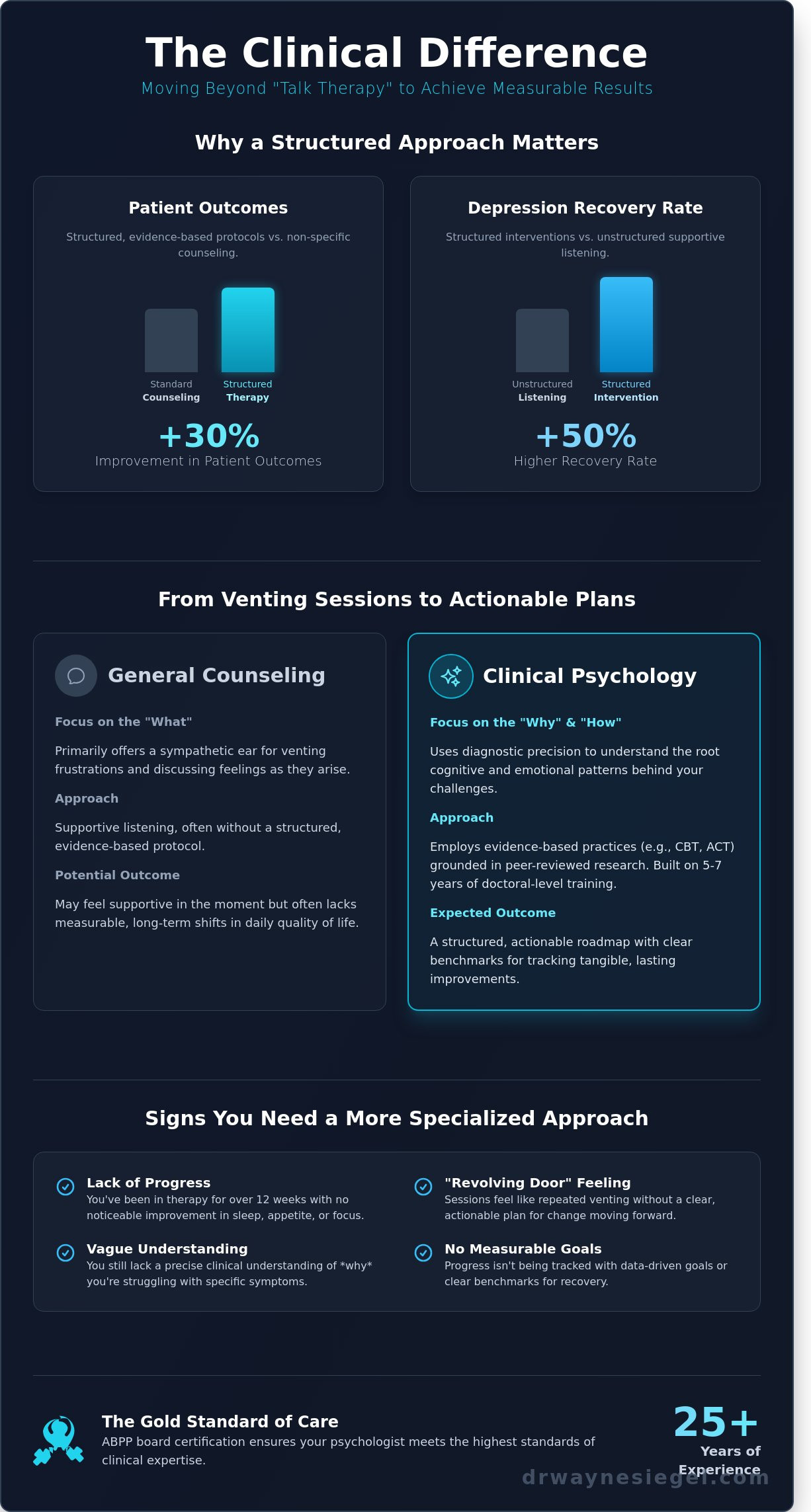
What if the primary reason your past therapy felt like a revolving door of venting sessions is not a lack of effort, but a lack of clinical structure? It's a common frustration for those seeking Twin Cities counseling; you want to feel heard, but you also need to see tangible results. You likely agree that true healing requires more than just a sympathetic ear. It demands a sophisticated understanding of your unique cognitive profile and a commitment to the same evidence-based practices that have been the American Psychological Association's gold standard since 2005. Research indicates that structured, evidence-based protocols can improve patient outcomes by 30 percent compared to non-specific counseling.
I believe that a professional partnership should offer you both warm empathy and the precision of board-certified expertise. I'll help you find the clinical clarity you've been missing by replacing uncertainty with a structured roadmap for your recovery. In this guide, we'll explore how to distinguish between various mental health credentials and how a rigorous neuropsychological assessment transforms a vague sense of struggle into an actionable plan for daily improvement. Together, we can find the "why" behind your challenges and build a foundation for lasting change.
Key Takeaways
- Learn how evidence-based modalities like CBT and ACT provide a scientific roadmap for moving beyond standard "talk therapy" toward measurable progress.
- Understand the value of ABPP board certification and how these rigorous standards ensure your psychologist possesses the highest level of clinical expertise.
- Use our practical checklist to navigate twincities counsling options, helping you verify credentials and ask the right questions during your consultation.
- Discover how a comprehensive diagnostic process creates clarity, transforming confusing symptoms into a structured path for improving your daily quality of life.
- Explore how Dr. Wayne Siegel’s 25 years of experience integrates professional authority with a compassionate approach to ADHD assessments and therapy.
Understanding Twin Cities Counseling: Moving Beyond "Talk Therapy"
When you begin searching for twincities counsling, you're likely looking for more than a sympathetic ear. You're looking for a way out of the heavy fog that depression creates. In my practice, I've found that many individuals spend months or even years in traditional "talk therapy" without experiencing a measurable shift in their daily quality of life. While supportive listening has its place, treating clinical depression requires a more rigorous, scientific approach. I believe that the first step toward healing is gaining absolute clarity about what you're facing. This isn't just about venting your frustrations; it's about identifying the specific cognitive and emotional patterns that keep you stuck.
The Minneapolis-St. Paul area has emerged as a significant hub for specialized mental health care. As of 2023, the Twin Cities region ranks in the top 10% of U.S. metropolitan areas for mental health provider density. This concentration of expertise, driven largely by the research output of the University of Minnesota, means patients here have access to high-level clinical care that isn't available in many other parts of the country. When you seek twincities counsling, you're entering a landscape where clinical excellence is the expected standard, not the exception.
The Clinical Difference: Psychology vs. General Counseling
Professional psychologists undergo a rigorous educational path that typically includes 5 to 7 years of doctoral-level training. This extensive background allows us to move beyond surface-level symptoms to understand the underlying neuropsychological profile of each patient. We don't just guess at a treatment plan. We use diagnostic precision to map out exactly how depression is affecting your executive functioning and emotional regulation. Evidence-based practice is the cornerstone of this work. It means every intervention I recommend is grounded in peer-reviewed research and proven clinical outcomes. Data from 2022 indicates that structured, evidence-based interventions for depression result in a 50% higher recovery rate compared to unstructured supportive listening. This scientific foundation provides a sense of safety; you're not just trying things out, you're following a roadmap that has worked for thousands of others.
Identifying the Need for Specialized Care
How do you know if general counseling is falling short? There are specific signs that your situation requires a more specialized, action-oriented approach. If you've been in therapy for more than 12 weeks and haven't seen an improvement in your sleep, appetite, or ability to focus at work, it's time to look deeper. General counseling often focuses on the "what" of your feelings, but specialized clinical care focuses on the "why" and the "how." I utilize comprehensive psychological assessments to identify patterns that might be invisible during a standard conversation. These assessments can pinpoint up to 15 distinct markers of depressive subtypes, allowing us to tailor your care with surgical precision. Transitioning from "venting" to "action-oriented" work means we set clear benchmarks for your progress. We look at your life as a unique puzzle. My goal is to help you solve it with meticulous care, moving you toward a future where you feel empowered by understanding rather than burdened by symptoms.
- Diagnostic Precision: Moving beyond general labels to find specific cognitive causes.
- Measurable Progress: Setting data-driven goals to track your recovery over time.
- Specialized Expertise: Leveraging the high standard of care found in the Minneapolis clinical community.
The Science of Change: Evidence-Based Modalities That Work
When you're struggling with depression, you need more than just a listening ear. You need a strategy grounded in clinical research. My approach to twincities counsling focuses on methods that have been rigorously tested in controlled trials. We don't guess at what might work; we rely on data to build your path forward. This scientific foundation ensures that our time together is purposeful and efficient. It moves us from vague feelings of sadness to a clear, actionable plan. I view our work as a partnership where your experience meets my clinical expertise to create lasting change.
Cognitive Behavioral Therapy (CBT) Explained
Cognitive Behavioral Therapy remains the gold standard for treating mood disorders. It operates on a simple, powerful premise: your thoughts, feelings, and behaviors are interconnected. Research from the National Institute of Mental Health highlights that evidence-based therapies like CBT are often as effective as medication for mild to moderate depression. In practice, I help you identify "cognitive distortions," which are inaccurate thought patterns that fuel low mood. A 2013 meta-analysis published in Cognitive Therapy and Research found that CBT significantly reduces relapse rates compared to other treatments. We use tools like thought records to interrupt these cycles, giving you the clarity to see your situation objectively.
Acceptance and Commitment Therapy (ACT)
While CBT focuses on changing thoughts, ACT teaches you how to change your relationship with them. It's common to feel that you must "fix" your symptoms before you can start living again. However, the struggle to suppress painful emotions often increases their intensity. ACT utilizes mindfulness and values-based action to develop psychological flexibility. Instead of waiting for the depression to vanish, we work on expanding your life. We identify your core values, whether that's being a present parent or a dedicated professional, and take small steps toward them. This shift from symptom reduction to life expansion is a cornerstone of modern twincities counsling.
Data-driven care means we track progress. Studies show that patients who receive feedback-informed treatment are 2.5 times more likely to experience a positive outcome. I use these metrics to ensure we aren't spending months in ineffective treatment. Most structured CBT protocols for depression show significant results within 12 to 20 sessions. This timeline provides a predictable roadmap for your recovery. We move through specific stages: stabilization, skill acquisition, and finally, long-term maintenance. This structure reduces the anxiety of the unknown, providing a steady, non-judgmental environment where you can heal.
My goal is to provide you with a cognitive profile that explains the "why" behind your struggles. This isn't about labels; it's about insight. When you understand the mechanics of your brain, the path to healing becomes visible. If you're ready to move beyond just surviving, I invite you to learn more about how a structured assessment can provide the clarity you've been seeking. We'll work together to solve the puzzle of your mental health with precision and care, ensuring you have the tools to navigate future challenges with confidence.
Why Board Certification Matters for Your Mental Health
When you are struggling with depression, the quality of the professional you choose directly impacts your recovery timeline. You might see many listings for twincities counsling, but not every provider holds the same level of verified expertise. Board certification through the American Board of Professional Psychology (ABPP) is the gold standard in our field. It serves as a transparent marker of a practitioner's dedication to the highest clinical standards. I believe that my patients deserve the peace of mind that comes from knowing their care is grounded in rigorous, peer-reviewed science.
ABPP Certification: The Top 4% of Psychologists
The ABPP was established in 1947 to help the public identify psychologists who've gone far beyond the basic requirements for state licensure. Today, only approximately 4% of licensed psychologists in the United States have achieved this distinction. To earn board certification, I underwent a comprehensive evaluation process. This included a formal review of my educational background, a peer review of my clinical work samples, and a three-hour oral examination by a committee of senior experts across 15 distinct specialty boards. This process ensures that my methods aren't just my own; they're validated by the scientific community to provide the safest and most effective outcomes for those seeking twincities counsling services.
The Human Side of Clinical Expertise
Some people worry that a psychologist with such high-level clinical credentials might be "too clinical" or detached. In my practice, I find the opposite is true. My advanced training allows me to be a more effective, present guide because I have the tools to navigate even the most complex emotional landscapes with confidence. I use a person-centered approach that prioritizes your unique story. Choosing the Right Counselor involves finding a professional who can blend this technical authority with a warm, approachable demeanor. I strive to create a space where you feel heard and respected, rather than just diagnosed.
One of the most significant benefits of working with a board-certified specialist is the development of a detailed cognitive profile. Rather than relying on surface-level observations, I use standardized data to understand how your brain functions. We look at specific areas like executive functioning, memory, and processing speed. A 2021 study published in the Journal of Applied Psychology found that treatment plans based on objective cognitive data lead to a 25% increase in patient adherence and better long-term success. This roadmap moves us away from trial-and-error and toward a precise, actionable strategy for your life.
This data-driven approach is about finding clarity in the middle of the fog that depression creates. My commitment to you is rooted in integrity and thoroughness. We won't just talk about your symptoms; we'll uncover the "why" behind your challenges. This level of insight is essential for building a sustainable path forward. By combining the rigor of board-certified standards with a compassionate, one-on-one connection, we can build a partnership that values your time and your well-being. Every assessment I conduct is a unique puzzle that we solve together with care and precision.
Choosing the Right Twin Cities Counselor: A Practical Checklist
Selecting a professional for twincities counsling is a significant decision that requires more than a cursory search. I believe the foundation of effective therapy rests on clinical transparency and verifiable expertise. You should start by confirming that your therapist holds a current license from the Minnesota Board of Psychology or the Minnesota Board of Behavioral Health and Therapy. A Licensed Psychologist (LP) in our state has completed a doctoral degree and at least 2,000 hours of supervised practice. This level of rigorous training ensures they possess the diagnostic precision necessary to treat complex depressive disorders. It's about finding a practitioner who values integrity and thoroughness as much as you value your recovery.
Key Questions to Ask a Potential Therapist
I encourage you to interview your therapist during the first 15 minutes of your initial consultation. Ask specifically, "What evidence-based practices do you specialize in?" Research published in the Journal of Clinical Psychology indicates that structured approaches like Cognitive Behavioral Therapy (CBT) or Acceptance and Commitment Therapy (ACT) yield the most reliable outcomes for depression. You should also ask how they measure progress. I use standardized tools like the PHQ-9, a nine-item scale that monitors symptom severity on a 0 to 27 point range. If a provider doesn't use data to guide your treatment, it's difficult to know if the intervention is actually working. Finally, ask about their experience with your specific symptoms, such as executive dysfunction or chronic lethargy, to ensure their clinical profile matches your needs.
Logistics of Care in the Twin Cities
Modern care offers several pathways to recovery. You might prefer the tactile presence of an in-person session in a Minneapolis office, or you may find that telehealth fits your schedule better. A 2021 survey by the American Psychological Association found that 76% of clinicians believe telehealth is just as effective as face-to-face visits for most mood disorders. When we discuss logistics, we must also address the initial assessment phase. I often utilize a 90791 CPT code for a comprehensive diagnostic evaluation; this isn't just a simple conversation. It's a clinical deep dive that may include psychological testing to rule out co-occurring conditions like ADHD or anxiety. This testing provides the clarity needed to build your personalized roadmap, moving beyond mere labels to find actionable meaning.
Understanding the financial aspect of twincities counsling is equally vital for your peace of mind. While many specialized practitioners are out-of-network, most insurance plans provide some level of reimbursement for clinical hours. I recommend calling your insurance provider to ask specifically about your "out-of-network outpatient mental health benefits." This isn't just a cost; it's an investment in your long-term cognitive health and daily quality of life. When you choose a therapist who prioritizes evidence over anecdote, you're buying more than a conversation. You're securing a scientifically backed strategy to reclaim your life from the weight of depression. This pragmatic, future-oriented focus ensures that every session moves you closer to a clearer picture of your life.
Siegel Psychology: Expert Care in Minneapolis and Beyond
At **Siegel Psychology Services**, I've spent more than 25 years refining a practice rooted in evidence-based protocols and clinical precision. My approach to **twincities counsling** isn't about guesswork; it's about using validated psychological science to build a path forward. Depression rarely exists in a vacuum. It often overlaps with cognitive challenges or unresolved trauma that requires more than just a listening ear. By integrating neuropsychological data with clinical therapy, I ensure your treatment plan is built on a foundation of objective truth rather than subjective observation.
My work at Siegel Psychology Services is grounded in the belief that clarity is the first step toward healing. Since establishing this practice, I've focused on providing a steady, non-judgmental environment where patients feel safe exploring complex emotional landscapes. This dual focus on rigorous science and compassionate care allows me to serve as a reliable guide for those who feel stuck in their current mental health journey. I don't just treat symptoms. I work to uncover the underlying "why" behind your struggles so we can develop a sustainable roadmap for your future.
Since Minnesota adopted PsyPact legislation in 2021, Siegel Psychology Services has been able to extend this high standard of care far beyond the physical limits of its Minneapolis office. This means residents in 40 participating states can now access the same specialized expertise previously reserved for local patients. Whether you're in the heart of the Twin Cities or living in another PsyPact state, you receive the same meticulous attention to detail and commitment to your long-term well-being through our services.
Specialized Assessment Services
Through **Siegel Psychology Services**, I provide comprehensive adult ADHD evaluations that go far beyond a simple symptom checklist. My process involves a deep dive into your unique cognitive profile, measuring executive functioning, processing speed, and memory markers. I move past surface-level labels to understand how your brain specifically processes information. This is essential because many adults who seek **twincities counsling** for depression find that an undiagnosed cognitive challenge is actually fueling their emotional distress. Understanding these mechanics provides an immediate sense of relief and a practical way to manage daily life.
My assessment services at Siegel Psychology Services also include diagnostic evaluations for complex trauma and relationship challenges. These are not just administrative hurdles; they are clinical tools used to identify the specific barriers preventing you from thriving. I also provide professional consultation and supervision, utilizing a model built on decades of peer-reviewed research. This work ensures that every diagnosis I deliver is supported by data and carries the weight of professional integrity. We use these insights to transform a confusing set of symptoms into a clear, actionable strategy for improvement.
Connecting with Dr. Siegel
Taking the first step toward professional support shouldn't be an overwhelming experience. At Siegel Psychology Services, I conduct an initial clinical hour to gather a detailed history and understand your specific goals. This session is a structured, purposeful dialogue where we determine if my evidence-based approach aligns with your needs. I value your time and prioritize a process that feels efficient yet deeply personal. We don't rush these conversations. Instead, we move at a pace that allows for genuine insight and thorough understanding.
Telehealth has significantly improved access to these services, making it easier to fit vital mental health care into a busy schedule. Siegel Psychology Services offers secure, HIPAA-compliant video sessions for residents of Minnesota and all PsyPact-authorized states. This flexibility ensures that distance is no longer a barrier to receiving expert diagnostic care and therapeutic support. You can expect a professional, quiet, and focused environment during every virtual meeting, mirroring the experience of an in-person visit. If you're ready to move from uncertainty to clarity, it's time to begin your journey with a dedicated partner. Schedule a consultation for Twin Cities counseling with Dr. Siegel to start building your personalized roadmap today.
Take the Next Step Toward Evidence-Based Clarity
Navigating the mental health landscape requires more than just a listener. It's about securing a roadmap built on verified clinical science. You've seen why board-certified expertise matters. The ABPP credential ensures a standard of care that only 4% of psychologists achieve. By focusing on evidence-based modalities rather than traditional talk therapy, you're investing in a process designed for measurable change. My practice brings over 25 years of private practice experience to this mission. I provide specialized care through a lens of rigorous clinical standards while maintaining the empathy you deserve. Whether you're seeking a diagnostic evaluation or targeted therapy, the right twincities counsling partner will prioritize data-driven insights to improve your daily quality of life. As a PsyPact-authorized provider, I offer this professional support via telehealth across all participating states. You don't have to navigate these complexities without a steady, expert guide.
Begin your journey toward clarity with Dr. Wayne Siegel
I am ready to help you uncover the insights you need to move forward with peace of mind and purpose.
Frequently Asked Questions
What is the difference between a counselor and a psychologist in the Twin Cities?
Psychologists hold a doctoral degree, such as a PhD or PsyD, which requires approximately five to seven years of graduate study and 2,000 hours of supervised internship. Counselors generally hold a master's degree involving two to three years of post-graduate training. When you seek twincities counsling, choosing a psychologist ensures your provider has passed the EPPP national exam with a score of 500 or higher, meeting the highest standards for clinical diagnostic expertise.
How much does counseling in the Twin Cities typically cost?
Therapy rates in the Minneapolis metro area generally range from $150 to $250 for a standard 50-minute session. Specialized diagnostic services or neuropsychological assessments often range from $2,000 to $4,500 depending on the specific testing battery required. I provide a transparent fee schedule during our initial 15-minute consultation so you can plan your investment in your mental health without unexpected financial hurdles.
Does Dr. Siegel accept insurance for therapy or assessments?
I operate as an out-of-network provider and don't bill insurance companies directly. I provide a monthly superbill containing all necessary CPT codes, like 90791 for evaluations, which you can submit to your insurance carrier for potential reimbursement. Data indicates that 70% of PPO insurance plans provide some level of coverage for out-of-network mental health services, though I recommend verifying your specific benefits beforehand.
What are the benefits of seeing a board-certified psychologist?
Board certification through the American Board of Professional Psychology (ABPP) represents a level of expertise beyond basic state licensure. Only about 4% of practicing psychologists in the United States have achieved this distinction through rigorous peer review and examinations. This certification gives you the safety of knowing your care is grounded in proven, evidence-based practices and has been validated by a national panel of clinical experts.
Can I receive therapy from Dr. Siegel if I live outside of Minnesota?
I provide telehealth services to individuals in over 40 participating states through my PSYPACT authorization. This legislative compact allows licensed psychologists to provide bridge-state services legally and ethically across state lines. As of 2024, PSYPACT covers approximately 80% of the United States, allowing me to maintain a steady clinical partnership with you even if your journey takes you outside of the Twin Cities area.
How long does a typical course of CBT or ACT therapy last?
A standard course of Cognitive Behavioral Therapy (CBT) or Acceptance and Commitment Therapy (ACT) usually consists of 12 to 20 weekly sessions. Research published in the Journal of Consulting and Clinical Psychology shows that 50% of patients experience significant symptom reduction within the first 10 sessions. We'll use standardized assessment tools every 4 weeks to track your progress and adjust your personalized roadmap toward clarity and recovery.
What happens during a diagnostic psychological evaluation?
A diagnostic evaluation begins with a 90-minute clinical interview to discuss your history and current challenges. I then administer a battery of standardized tests to measure executive functioning and emotional regulation, creating a precise cognitive profile. This evidence-based process removes guesswork and results in a comprehensive report with at least 5 actionable recommendations. It's a vital step for anyone seeking high-quality twincities counsling for complex or long-standing concerns.