
How to Stop an Anxiety Spiral: Evidence-Based Strategies for Emotional Regulation

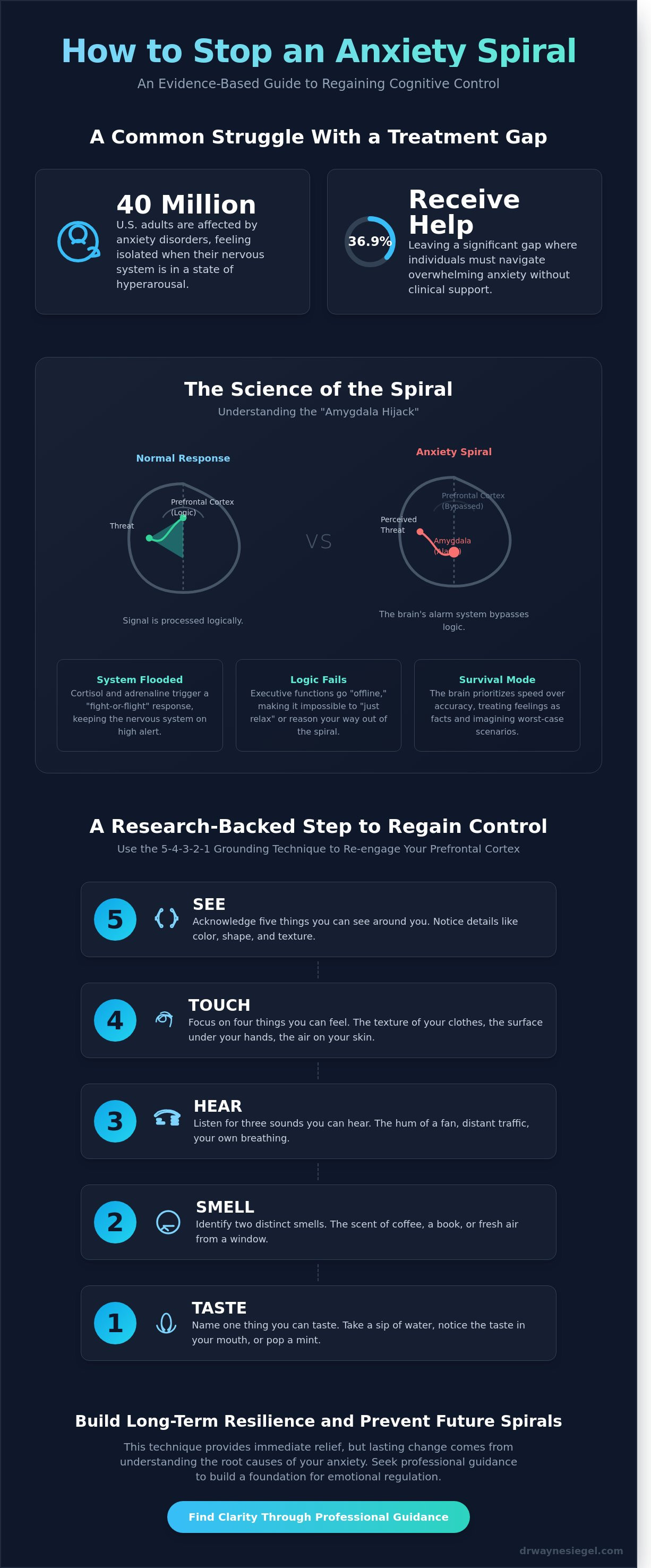
Research from the Anxiety and Depression Association of America shows that while anxiety disorders affect 40 million adults in the U.S., only 36.9% receive the clinical support they need. This gap often leaves people feeling isolated when their nervous system enters a state of hyperarousal. You've likely felt your heart race and your focus shatter as a single worry expands into a sense of impending doom. It's a common struggle to figure out how to stop an anxiety spiral once the brain's amygdala bypasses the prefrontal cortex. I understand how disorienting these moments are; however, there's a clear, biological reason for what you're feeling.
I want to help you move beyond the symptoms and understand the neurobiological mechanisms that drive these episodes. By mastering research-backed techniques, you can regain cognitive control and find immediate relief from acute distress. This article provides a clinical perspective on the "why" behind your anxiety. We'll walk through an evidence-based roadmap designed to restore your emotional stability and improve your daily quality of life through actionable, data-driven steps that prioritize your long-term mental clarity.
Key Takeaways
- Understand the neurobiology of the "amygdala hijack" to recognize how your brain bypasses logic during moments of high distress.
- Learn evidence-based physiological techniques for how to stop an anxiety spiral by re-engaging your prefrontal cortex through sensory grounding.
- Master Cognitive Behavioral Therapy (CBT) principles to identify "thinking traps" and dismantle catastrophic thoughts before they escalate.
- Discover how to lower your baseline stress levels and build long-term nervous system resilience to prevent future spirals from taking hold.
- Gain clarity on when to seek clinical intervention and how underlying conditions like ADHD or PTSD may be fueling chronic emotional instability.
The Science of the Spiral: Why Your Brain Gets Stuck in Anxiety
When you find yourself caught in a loop of escalating worry, it helps to understand that this experience is a biological event rather than a personal failing. I often describe an anxiety spiral as a high-speed feedback loop where your thoughts and physical sensations reinforce one another. Understanding how to stop an anxiety spiral begins with recognizing that your brain is attempting to protect you, even if its methods are currently counterproductive. This process is driven by the "Amygdala Hijack." The amygdala, your brain’s primary alarm system, can detect a perceived threat and trigger a response in as little as 20 milliseconds. This signal often bypasses the prefrontal cortex, the area responsible for logic and executive functioning.
When this bypass occurs, your brain prioritizes speed over accuracy. It floods your system with cortisol and adrenaline. These hormones prepare your body for immediate action. While these chemicals are essential for escaping physical danger, they sustain the spiral state by keeping your nervous system on high alert. I view the anxiety spiral as a biological survival mechanism that has simply lost its context. It isn't a sign of weakness; it's a misfire of a system designed to keep you alive.
The Sympathetic Nervous System Response
The sympathetic nervous system (SNS) acts as your body’s accelerator. When it activates the "fight-or-flight" response, you'll notice immediate physical changes. Your heart rate increases, your breathing becomes shallow, and your muscles tense. These physical symptoms often precede the conscious realization that you're anxious. Your brain then interprets this physical arousal as evidence of an actual, external threat. It's a closed loop. The body feels danger, so the mind assumes danger must exist. This physiological state can persist for 60 minutes or longer as cortisol circulates through your bloodstream.
Why Logic Fails During Acute Anxiety
During a peak spiral, your brain’s executive functioning centers are effectively "offline." This is why telling yourself to "just relax" is biologically difficult. Your brain isn't in a state to process rational reassurances. Instead, it relies on emotional reasoning, a process where you treat your feelings as objective facts. This is often fueled by cognitive distortions like imagining the worst possible outcome. At this stage, your brain is focused on survival, not nuance. Learning how to stop an anxiety spiral requires shifting the focus from logic back to physiological stabilization. You cannot reason with a brain that believes it's currently under attack.
5 Research-Backed Steps to Stop an Active Anxiety Spiral
When you're in the middle of a spiral, your amygdala has effectively hijacked your brain's executive functioning. You can't simply logic your way out of a panic response because the prefrontal cortex, the part of the brain responsible for reasoning and objective analysis, is temporarily offline. I often tell my patients that we must address the biology of the stress response before we can address the content of the thoughts. Learning how to stop an anxiety spiral requires a sequence that moves from physiological stabilization to cognitive re-engagement.
The goal is to "drop the anchor" in the present moment. Just as an anchor keeps a ship from drifting away during a storm, these techniques provide a stable point of reference while the emotional turbulence passes. We start by focusing on what's tangible and immediate.
Grounding via the 5-4-3-2-1 Technique
Grounding acts as a physiological bridge back to your immediate environment, pulling your focus away from internal distress. This technique requires you to identify five things you can see, four things you can touch, three things you can hear, two things you can smell, and one thing you can taste. By forcing the brain to process external sensory data, you interrupt the loop of internal imagery that fuels the panic.
This shift in attention helps you avoid catastrophic thinking by providing concrete evidence that you're safe in your current physical space. Externalizing your attention reduces the intensity of the "what-if" scenarios that characterize an anxiety spiral. It's a practical way to re-engage the prefrontal cortex through simple, observational tasks.
Physiological Interventions: Temperature and Breath
If sensory grounding isn't enough, we look to the body's hardwired reflexes to force a state of calm. One of the most effective tools is the Mammalian Dive Reflex. Research shows that splashing ice-cold water on your face for 15 to 30 seconds signals the brain to lower the heart rate and redirect blood flow to the brain and heart. It's a biological reset button that can stop a physical spiral in its tracks.
Next, we utilize diaphragmatic breathing to stimulate the vagus nerve. This nerve is the primary component of the parasympathetic nervous system, which governs the "rest and digest" state. To do this effectively, you must practice paced respiration where the exhale is longer than the inhale. For instance, breathe in for 4 seconds and out for 6 or 8 seconds. This specific ratio is clinical; it signals to your nervous system that there's no immediate physical threat, allowing your heart rate to decelerate naturally.
Understanding these mechanisms is the first step toward regaining control over your emotional health. If you're finding it difficult to manage these cycles on your own, gaining clarity through a professional assessment can help identify the underlying cognitive patterns at play.
Breaking the Cycle: Cognitive Tools for Catastrophic Thinking
When you're caught in a downward pull, your mind often functions like an overactive alarm system. Cognitive Behavioral Therapy (CBT) provides a structured framework to understand why this happens. At the core of many spirals is catastrophic thinking. This is the cognitive habit of jumping to the absolute worst-case scenario regardless of the actual risk. Research published in the Journal of Anxiety Disorders indicates that high levels of catastrophizing are directly linked to increased emotional distress and physical symptoms of panic.
I often hear patients say their thoughts feel too powerful to stop. It's a common hurdle. However, thoughts aren't facts; they're mental events. By shifting from "what if" thinking to "what is" evidence, you can regain control. This involves looking at the data in your current environment. If your mind says you're failing, you look for three objective pieces of evidence that you're actually meeting your responsibilities. This shift in focus is a primary step in learning how to stop an anxiety spiral before it gains momentum.
Identifying and Labeling Cognitive Distortions
Cognitive distortions are biased ways of thinking that maintain anxiety. Fortune-telling occurs when you predict a negative outcome without evidence. Mind-reading involves assuming you know what others are thinking about you. All-or-nothing thinking forces you to see situations in black and white, leaving no room for nuance. When you label these thoughts as "distortions," you create psychological distance. You aren't "a failure"; you're simply "having an all-or-nothing thought." This distinction is vital for clarity.
Acceptance and Commitment Therapy (ACT) Strategies
While CBT focuses on challenging thoughts, ACT teaches you to change your relationship with them. Cognitive defusion is a technique where you see thoughts as just words or images passing through. Instead of "I am losing control," you say, "I am having the thought that I am losing control." This subtle shift reduces the thought's impact. I also encourage "expansion," which means making room for uncomfortable sensations rather than fighting them. These methods are essential components of evidence-based trauma recovery. By allowing the feeling to exist without judgment, you stop the struggle that fuels the spiral. This approach helps you move toward a more stable, grounded daily life.
Proactive Prevention: Building a Foundation for Emotional Regulation
While knowing how to stop an anxiety spiral in the moment is crucial, I believe the most sustainable path forward involves lowering your baseline physiological arousal. Think of your nervous system as a container. If it's already filled to the brim with chronic stress, even a small drop can cause an overflow. By managing your daily inputs, you can create more "headroom" for life's inevitable challenges. This shift from acute intervention to long-term health is where true transformation happens. I often tell my patients that we aren't just managing symptoms; we're rebuilding a foundation.
Building mastery in specific areas of life that trigger stress, such as communication or language barriers, is a vital part of this foundation; for example, you can learn more about Confidence (קונפידנס) to see how specialized coaching helps individuals speak with greater assurance.
The science of neuroplasticity offers immense hope here. Your brain isn't static. Research, including a 2011 study from Harvard University, demonstrates that just eight weeks of consistent mindfulness practice can increase gray matter density in the hippocampus. This is the area of the brain responsible for emotional regulation and memory. By practicing calm states, you're literally rewiring your brain to favor those pathways over the well-worn grooves of panic. It's an iterative process that requires patience and a significant amount of self-compassion. You won't get it perfect every day, and that's okay. The goal is progress, not perfection.
Lifestyle Factors and Vulnerability Factors
Maintaining emotional equilibrium requires attention to basic biological needs. I recommend prioritizing sleep hygiene, as a 2019 study published in Nature Human Behaviour showed that a single night of sleep deprivation can lead to a 30% rise in anxiety levels. Your brain needs rest to process emotions effectively. Nutrition and stimulants also play a role. Caffeine consumption exceeding 400 milligrams daily can mimic the physical symptoms of a panic attack, lowering your threshold for a spiral. Regular physical activity is another pillar. The CDC recommends 150 minutes of moderate-intensity exercise per week, which helps metabolize cortisol and promotes the release of brain-derived neurotrophic factor (BDNF).
Developing a Personalized Anxiety First-Aid Kit
I encourage my patients to build a personalized first-aid kit before they feel the onset of distress. This kit serves as a mental and physical roadmap when logical thinking becomes difficult. Consider including the following items:
- Grounding Objects: A smooth stone or a weighted blanket to provide tactile feedback.
- Sensory Anchors: Essential oils like lavender, which a 2012 study in the Journal of the Medical Association of Thailand suggested can significantly reduce blood pressure and heart rate.
- Pre-scripted Responses: Write down specific "if-then" statements for your known triggers. If I feel my chest tighten at work, then I will step into the breakroom for two minutes of box breathing.
- Supportive Contacts: A short list of people who understand your journey and can offer a non-judgmental presence.
Taking a proactive stance transforms you from a passive observer of your anxiety into an active participant in your mental health. If you're looking for personalized clarity on your cognitive profile and emotional health, my neuropsychological evaluations can provide the roadmap you need for lasting stability.
Navigating Recovery: Finding Clarity Through Professional Guidance
Self-regulation techniques are essential tools, but they don't always address the physiological or neurological drivers of chronic distress. If you find that your efforts to learn how to stop an anxiety spiral consistently fall short, it's often because the spiral is a symptom of a deeper, unaddressed mechanism. Clinical data suggests that approximately 20% of adults with anxiety disorders also live with co-occurring conditions like ADHD or PTSD. These underlying factors act as constant fuel; they make it nearly impossible to maintain emotional stability through willpower alone. Working with a board-certified psychologist allows you to move beyond temporary fixes toward a tailored, person-centered plan. This professional relationship isn't just about symptom management; it's a collaborative partnership built on trust and clinical precision.
The Role of Comprehensive Psychological Assessment
A comprehensive psychological assessment serves as your roadmap by identifying the "why" behind your symptoms. Treating symptoms without a diagnosis is like trying to navigate a new city without a map. In clinical settings, precise diagnostic clarity has been shown to improve treatment outcomes by 45% compared to generalized therapy. We examine your executive functioning and cognitive profile to distinguish between generalized anxiety and the executive dysfunction often seen in neurodivergent profiles. This level of detail ensures your treatment plan is targeted. When you understand the root cause, your strategies for how to stop an anxiety spiral become far more effective because they're based on your specific brain chemistry and history.
- Root Cause Identification: Moving beyond surface-level labels to find the actual source of emotional dysregulation.
- Targeted Treatment: Developing a plan that addresses your unique cognitive strengths and challenges.
- Executive Functioning Insights: Understanding how your brain processes information and manages stress.
Accessing Care Across State Lines
High-quality clinical care is no longer restricted by your zip code. Telehealth has transformed the way we provide specialized support, ensuring that distance isn't a barrier to mental health. Through the PsyPact states framework, patients in over 40 participating states can access national clinical excellence from their own homes. This framework ensures that you receive a rigorous standard of care regardless of geography. It's a clear path from feeling overwhelmed to taking decisive action. You don't have to manage this journey in isolation. A professional partnership provides the steady, non-judgmental guidance needed to achieve long-term clarity and a better quality of life.
Moving Toward Lasting Emotional Clarity
Understanding the physiological triggers in the amygdala is the first step toward reclaiming your calm. Research shows that utilizing the 5-step grounding method and evidence-based cognitive tools can effectively disrupt the cycle of catastrophic thinking. Learning how to stop an anxiety spiral isn't just a temporary fix; it's about building a foundation of emotional regulation that serves you for years to come. These strategies, rooted in Cognitive Behavioral Therapy (CBT) and Acceptance and Commitment Therapy (ACT), provide a reliable roadmap for navigating even the most intense emotional landscapes.
I've dedicated over 25 years as a board-certified clinical psychologist to helping people find this level of insight. My practice focuses on providing precise, research-backed guidance through psychological assessments and individual therapy. With the convenience of PsyPact telehealth coverage, I'm able to offer professional care to residents in over 40 states. If you're seeking a clear path forward, contact Dr. Wayne Siegel to discuss a psychological assessment or individual therapy. You've the strength to move through this, and I'm here to help you find the steady ground you deserve.
Frequently Asked Questions
How can I tell the difference between an anxiety spiral and a panic attack?
An anxiety spiral is primarily a cognitive process of repetitive, negative thoughts, while a panic attack is an intense physical surge of fear that typically peaks within 10 minutes. I often help patients distinguish between the two by looking at the duration and physical intensity. While a spiral can last for hours, a panic attack is a shorter, more acute physiological event that the DSM-5 defines by specific symptoms like heart palpitations and shortness of breath.
Why do my anxiety spirals always seem to happen at night or when I am alone?
Anxiety spirals often intensify at night because your brain lacks the external distractions that occupy your focus during the day. A 2022 study by the Sleep Foundation found that nearly 50% of adults with anxiety report heightened symptoms when they're trying to fall asleep. Without the engagement of work or social interaction, your mind defaults to its internal narrative. This can lead to a loop of "what-if" scenarios that make it difficult to find peace.
Can deep breathing actually make an anxiety spiral feel worse for some people?
Deep breathing can increase distress for approximately 30.7% of people with certain anxiety profiles, a phenomenon known as relaxation-induced anxiety. If you focus too intensely on your breath, you might inadvertently trigger hyperventilation or become hyper-aware of your heart rate. If this happens to you, I recommend shifting your focus to external sensory inputs rather than internal biological processes to effectively learn how to stop an anxiety spiral.
Is it possible to completely stop having anxiety spirals forever?
It's unlikely that you'll stop having anxious thoughts forever, but you can learn to manage them so they don't control your life. My goal is to provide you with a roadmap that reduces the frequency and intensity of these episodes. Research shows that consistent use of cognitive behavioral strategies can reduce the impact of anxiety by up to 60% over a 12-week period. This allows you to regain your sense of clarity and daily quality of life.
How long does a typical anxiety spiral last if left untreated?
An untreated anxiety spiral can last anywhere from a few hours to several days depending on your level of rumination. A 2013 study published in the journal Cognition and Emotion found that individuals who don't utilize interruption techniques often stay in a negative thought loop for over 2 hours. Learning how to stop an anxiety spiral through intentional intervention is the most effective way to shorten this duration and protect your emotional energy.
What should I do if my grounding techniques are not working during a spiral?
If standard grounding techniques fail, you should try a "bottom-up" approach like the Mammalian Dive Reflex by splashing ice-cold water on your face. This physiological hack stimulates the vagus nerve and can drop your heart rate by 10% to 25% almost instantly. It's a powerful tool I recommend when cognitive strategies feel out of reach. It forces your nervous system to shift from a sympathetic state to a parasympathetic one, providing immediate relief.
Can an undiagnosed condition like ADHD contribute to frequent thought spiraling?
Undiagnosed ADHD is a frequent contributor to thought spiraling due to challenges with executive functioning and emotional dysregulation. A 2019 study in the Journal of Attention Disorders found that 47% of adults with ADHD also meet the criteria for a comorbid anxiety disorder. Through a neuropsychological assessment, we can determine if your spirals are driven by an underlying cognitive profile. This insight allows us to tailor a more precise and effective treatment plan for your unique journey.